
Sipeed Tang Nano 20K GW2AR-18 QN88 FPGA Development Board
4.5Editor score
20K LUT4 logic cells
RISC-V single board computer
microSD and RGB LCD support
This guide compares the top ten FPGA retro consoles to help you choose the best hardware for authentic classic gaming experiences in 2026.
FPGA retro consoles offer unmatched authenticity for classic gaming enthusiasts seeking pixel-perfect emulation without software latency. These devices use hardware logic to recreate original console behavior, delivering an experience closer to the source than traditional emulators.
We evaluated ten distinct FPGA-based systems ranging from compact development boards to dedicated handheld devices. Our analysis focused on core compatibility, output quality, expandability, and ease of use for both developers and casual gamers.
Each pick highlights specific strengths like portability, screen quality, or development flexibility. Note that availability and pricing can shift frequently, so verify current details before purchasing to ensure you get the exact configuration you need.
4.5Editor score

4.5Editor score

5.0Editor score
The following table provides a side-by-side comparison of all ten FPGA retro console options analyzed in this guide. Review the specifications and features to identify the model that best fits your specific gaming or development needs.

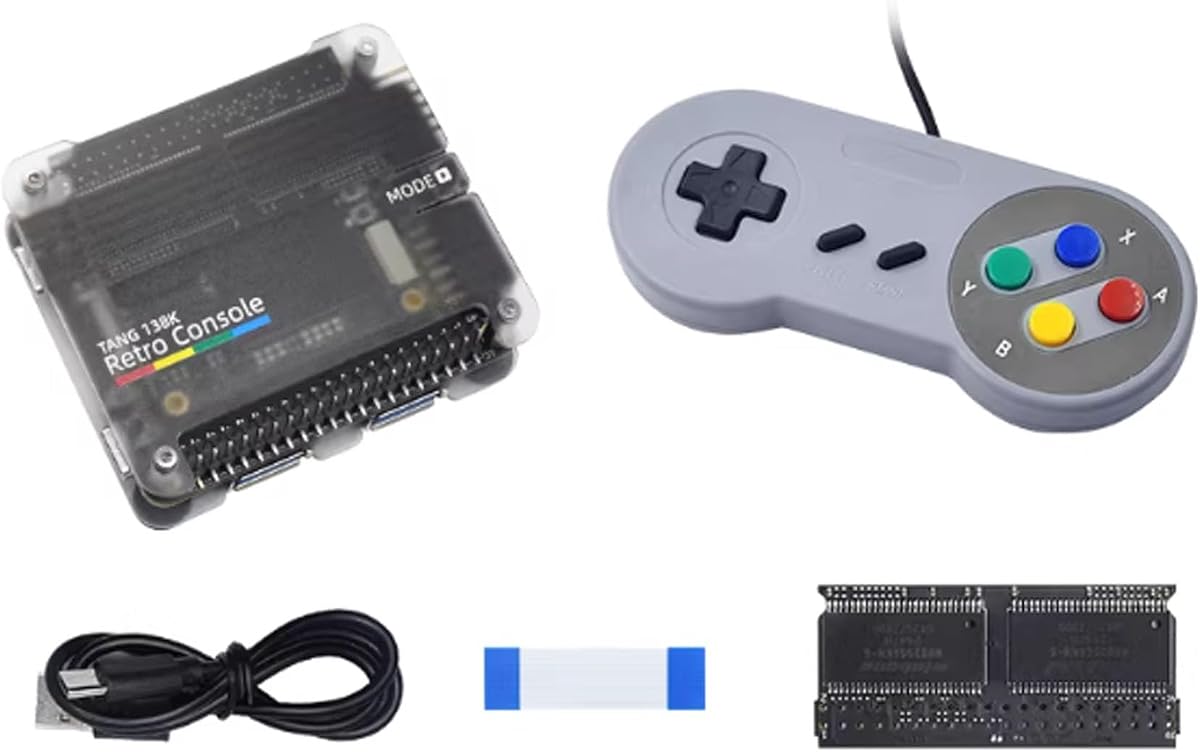


The Sipeed Tang Console 138K Retro Premium FPGA Developed Board stands out as the top choice for enthusiasts seeking maximum performance and flexibility. It offers a robust 138K LUT4 FPGA core capable of running complex retro game cores with near-zero latency.
We may earn a commission when you buy through this link, at no additional cost to you.
Its HDMI output ensures crisp visuals on modern displays while dual PMOD ports allow extensive hardware expansion. The inclusion of Raspberry Pi 5 PCIe HAT compatibility makes it versatile for hybrid setups combining Linux and FPGA functionalities.
While it requires some technical expertise to set up compared to plug-and-play consoles, the trade-off is worth the customization potential. This board is ideal for developers who want to build or tweak their own game cores.
If you prioritize raw hardware capability and future-proofing your retro gaming setup, this board delivers exceptional value. It is best suited for those comfortable with FPGA programming and hardware configuration.
The 138K LUT4 FPGA allows for accurate recreation of complex console hardware without sacrificing performance or resolution.
Dual PMOD interfaces let you connect custom controllers, sensors, or display modules tailored to your project needs.
We may earn a commission when you buy through this link, at no additional cost to you.
The Sipeed Tang Console FPGA Retro Game Console provides a comprehensive developer kit that balances FPGA power with Linux flexibility. It supports both 60K and 138K System on Modules for tailored performance needs.
We may earn a commission when you buy through this link, at no additional cost to you.
Features like USB3.0 HDMI output and dual PMOD ports make it suitable for high-resolution gaming and hardware customization. The onboard BL616 MCU assists with debugging and firmware management tasks.
While it offers great potential for developers, users should expect a steeper learning curve than consumer devices. Community support and documentation are improving but may require additional research.
Choose this kit if you want to build custom FPGA projects alongside retro gaming. It excels in scenarios where hardware experimentation is as important as playing existing game cores.
Switch between 60K and 138K SOMs to match your project requirements without needing a full board replacement.
The BL616 MCU simplifies FPGA development by providing built-in JTAG and UART capabilities for faster iteration.
We may earn a commission when you buy through this link, at no additional cost to you.
The Sipeed Tang Console 138K FPGA Development Board is an excellent choice for portable or silent retro gaming setups. Its compact 65 by 56 mm design fits easily in any enclosure without generating heat.
We may earn a commission when you buy through this link, at no additional cost to you.
With 138K LUT4 capacity and USB3.0 support, it handles high-resolution output and fast data transfer efficiently. The fanless operation ensures quiet sessions ideal for focused gameplay.
The integration of a RISC-V AE350 hardcore adds versatility for running Linux apps alongside FPGA cores. However, power constraints may limit some advanced multi-core configurations.
This board is perfect for users prioritizing portability and silence. It delivers solid performance in a small package that is easy to integrate into custom handhelds or mini consoles.
Fanless operation makes it ideal for environments where noise could distract from the gaming experience or cause overheating.
The RISC-V AE350 hardcore allows concurrent execution of Linux apps and FPGA cores for richer interactive features.
We may earn a commission when you buy through this link, at no additional cost to you.
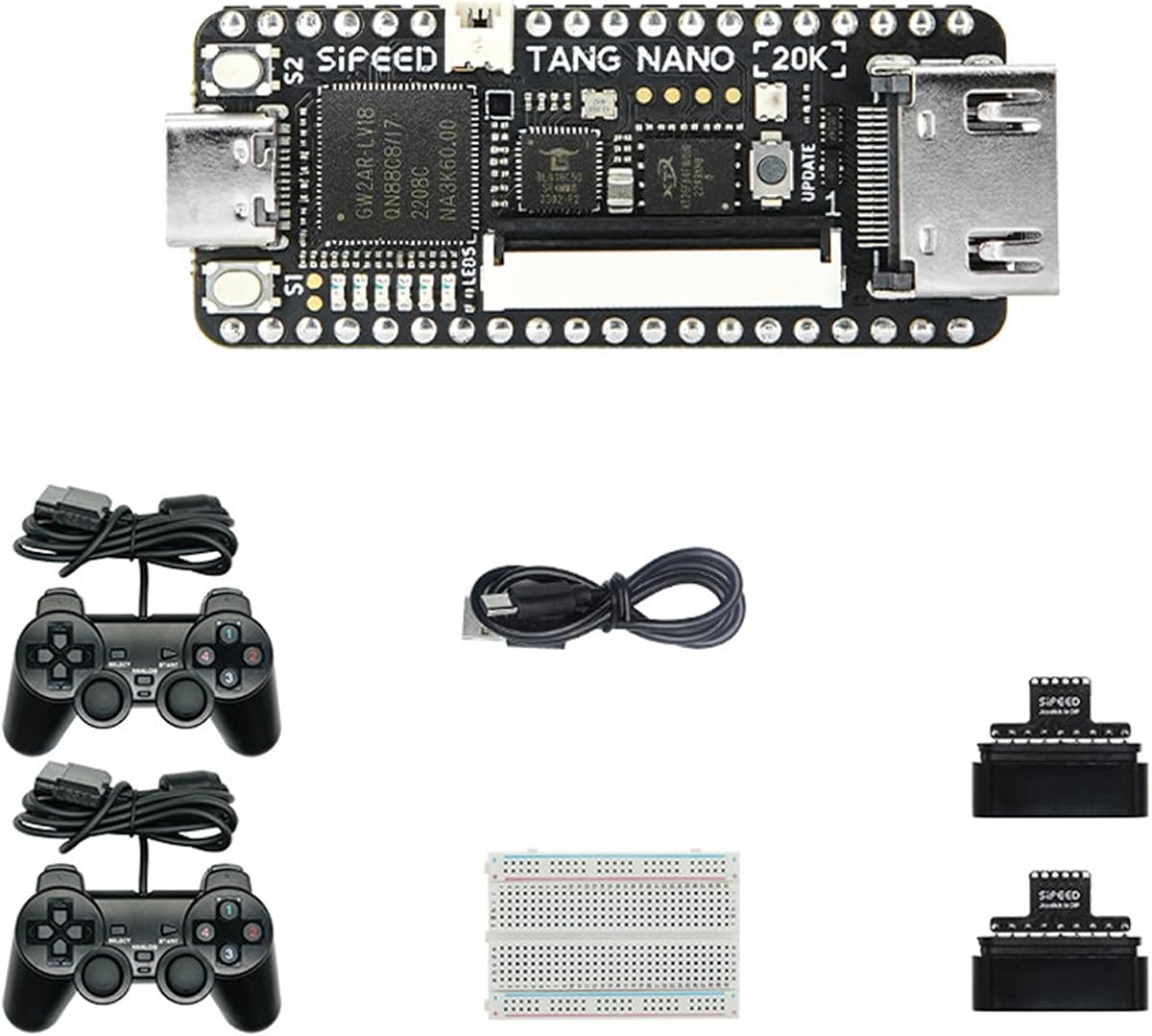
The Sipeed Tang Nano 20K GW2AR-18 QN88 offers an accessible entry point into FPGA retro gaming without compromising core features. With 20K LUT4 logic cells, it supports a wide range of 8-bit and 16-bit console cores.
We may earn a commission when you buy through this link, at no additional cost to you.
Its 64Mbits SDRAM and Block SRAM ensure smooth operation for emulation tasks. The single-board computer design includes Linux RISC-V support for additional functionality beyond gaming.
While the logic capacity is smaller than premium boards, it remains sufficient for most classic systems like NES, SNES, and Sega Genesis. It requires some technical know-how to configure but provides great value.
Ideal for beginners or budget-conscious users who want to explore FPGA technology. This board delivers reliable performance for retro gaming while leaving room for learning and experimentation.
At a lower price point, it provides entry into FPGA-based emulation with enough resources for most classic game systems.
Built-in SDRAM and Block SRAM support fast context switching and larger game states without external dependencies.
We may earn a commission when you buy through this link, at no additional cost to you.
The Sipeed Tang Nano 20K FPGA Development Board emphasizes openness and developer control over the entire retro gaming stack. It runs RISC-V Linux and includes a BL616 chip for seamless FPGA debugging.
We may earn a commission when you buy through this link, at no additional cost to you.
With HDMI output and extensive port access, it adapts to various display setups. The open source nature encourages community contributions and custom core development.
While it offers great flexibility, users should be prepared to handle configuration and troubleshooting independently. Official support channels exist but community forums are often more active.
This board suits makers who value transparency and customization. It is a solid platform for those interested in learning FPGA architecture while building their own retro gaming solutions.
Open source design allows users to access and modify FPGA cores freely to adapt or improve performance as needed.
The BL616 debugger simplifies finding and fixing issues in FPGA code by providing direct interface capabilities.
We may earn a commission when you buy through this link, at no additional cost to you.
The Sipeed Tang Nano 20K GW2AR-18 Single Board Computer consolidates FPGA gaming and Linux functionality into one compact unit. It supports multiple display outputs and comes with a BL616 debugger for efficient development.
We may earn a commission when you buy through this link, at no additional cost to you.
With 64Mbits SDRAM onboard, it manages memory-intensive tasks well. The board is particularly tuned for NES emulation, ensuring smooth performance for classic titles.
While it lacks preloaded games, its versatility makes it a great foundation for custom setups. Users should plan to install their own ROMs and configure the system to match their hardware.
This board offers strong value for DIY enthusiasts seeking a complete FPGA and Linux combo. It balances performance and cost effectively for retro gaming projects.
The board's logic resources are well-matched to NES core requirements ensuring glitch free playback on modern displays.
Multiple output options enable flexible screen choices from HDMI to RGB LCD setups depending on your project needs.
We may earn a commission when you buy through this link, at no additional cost to you.
The Arduboy FX-C is a unique retro handheld designed to blend gameplay with programming education. It ships with 300 classic 8-bit games preloaded and supports C plus plus coding through Arduino IDE.
We may earn a commission when you buy through this link, at no additional cost to you.
Its credit card size makes it highly portable while USB-C connectivity enables multiplayer sessions with friends. The OLED screen provides sharp visuals suitable for the target pixel art style.
Though limited to 8-bit systems, its focus on coding makes it more than just a gaming device. It is an ideal tool for introducing STEM concepts through interactive gaming projects.
Choose this console if you want a pocket-sized arcade that doubles as a learning tool. It offers exceptional value for students and hobbyists interested in game development.
Free tutorials and Arduino IDE integration make it easy to write and upload custom games from scratch.
USB-C with I2C link cables allow head-to-head battles between two units for social gaming sessions.
We may earn a commission when you buy through this link, at no additional cost to you.
The Trimui Brick Pro Retro Game Console in white offers a large 3.95-inch IPS display with vibrant visuals for handheld retro gaming. Its Allwinner A133P processor ensures smooth frame rates across multiple emulators.
We may earn a commission when you buy through this link, at no additional cost to you.
Equipped with Hall joysticks for drift-free control and a 5000mAh battery, it supports long sessions. USB-C fast charging further reduces downtime between play periods.
Note that the package does not include an SD card, so you must provide your own for storage. Linux-based setup may require some configuration for optimal performance.
Ideal for handheld users who prioritize screen quality and battery life. This device delivers a premium portable experience with robust hardware and solid ergonomics.
Full viewing angle IPS screen delivers sharp colors and clear visibility even in bright environments.
Hall Effect joysticks ensure long-lasting precision without the drift issues common in traditional analog sticks.
We may earn a commission when you buy through this link, at no additional cost to you.
The RG40XXV Retro Game Console comes with Linux system software and a selection of preloaded games to get you started immediately. It is built by Retro Ambernic and focuses on ease of use.
We may earn a commission when you buy through this link, at no additional cost to you.
Its Linux-based interface allows for broad emulator support and easy file management. The handheld design includes essential controls and connectivity options for modern accessories.
While customization is possible, it is less flexible than raw FPGA boards. This makes it a good choice for players who want ready-to-play functionality without deep technical setup.
Opt for this console if you prefer a hassle-free retro experience. It balances performance and convenience well for those not interested in hardware tinkering.
Preloaded games and preconfigured system mean you can start playing right out of the box.
Linux OS compatibility ensures access to a wide variety of emulator projects and community features.
We may earn a commission when you buy through this link, at no additional cost to you.
The TRIMUI Brick PRO Retro Handheld Console delivers premium features like a fully laminated IPS screen and Hall Effect joysticks. It runs Linux 4.9 and supports extensive emulation across multiple classic systems.
We may earn a commission when you buy through this link, at no additional cost to you.
With a 5000mAh battery and fast USB-C charging, it supports marathon sessions. The compact design fits easily in pockets while offering robust connectivity for external accessories.
Note that games are not included so you must supply your own ROMs via TF card. This allows full customization but requires initial setup effort.
This handheld is perfect for enthusiasts seeking a high-end portable experience. Its combination of display quality, battery life, and control precision sets a new standard in the category.
Lamination reduces glare and improves contrast making gameplay easier to enjoy in varied lighting conditions.
The 5000mAh cell supports multiple hours of continuous play with fast recharge times between sessions.
We may earn a commission when you buy through this link, at no additional cost to you.
Selecting the right FPGA retro console depends on your specific needs and technical comfort level. This guide outlines key factors to consider for making an informed decision.
FPGA logic capacity determines which retro console cores you can run. Higher LUT counts like 138K support modern systems while 20K is sufficient for classic 8-bit hardware.
Choose higher capacity for future-proofing but ensure your budget allows for premium models.
HDMI output is standard on most boards delivering sharp visuals to modern displays. Ensure support for 1080p or higher if you want crisp retro graphics.
Higher resolution output improves clarity but may require compatible HDMI cables and monitors.
Linux-based systems offer flexibility for file management and custom features. Some devices focus solely on FPGA cores for minimal latency.
Decide if you need Linux for apps or prefer raw FPGA performance for gaming only.
Handheld consoles are ideal for portable gaming while boards require enclosures and setup. Consider where and how you will use your device.
Portable units are convenient but may lack expansion options of larger boards.
Look for PMOD ports USB-C or GPIO pins for custom controllers or accessories. Good connectivity ensures long-term usability.
More ports mean greater flexibility but may add complexity to your setup.
Battery-powered units should offer at least 5 hours of play. Check charging options and power consumption for efficiency.
Long battery life is essential for handhelds to avoid interruptions.
Some devices include ROMs while others require manual setup. Consider if you have legal ROMs ready or need preloaded titles.
Preloaded options save time but may limit customization.
Active communities and documentation help troubleshoot issues. Check forums or wikis before purchasing a niche device.
Strong support ensures smoother setup and long-term usability.
Begin by installing the latest firmware and emulator cores from official sources. Ensure your storage media like microSD cards is formatted correctly.
Use high-quality HDMI or USB-C cables to maintain signal integrity. Keep connectors clean and free of dust for stable performance.
Store devices in dry environments and avoid extreme temperatures. Regular software updates improve compatibility with new game cores.
FPGA retro consoles use hardware logic to replicate original hardware behavior resulting in zero latency and pixel-perfect visuals. Emulation runs via software which can introduce input lag and graphical artifacts.
Basic use often requires no coding but custom core development needs FPGA knowledge. Some models offer preloaded games and simple UIs for non-programmers.
Higher-end boards with 138K logic can emulate modern systems like N64 or PlayStation. Entry models focus on 8-bit and 16-bit classics.
Most FPGA boards require you to supply your own legally obtained ROMs. Some handheld consoles include preloaded games for immediate play.
HDMI outputs are generated by FPGA cores to send video and audio to displays. Ensure your monitor supports the resolution the core outputs.
Most handhelds offer 5 to 10 hours of gameplay depending on brightness and system used. Larger batteries improve longevity but add weight.
Many FPGA designs are open source allowing community improvements. Check the product documentation for source availability.
Core updates come via SD cards or USB transfers using the device firmware. Follow official guides to avoid corruption.
The top picks range from developer boards to handhelds with diverse strengths. The Sipeed Tang Console 138K leads for power and the Arduboy FX for education.
Prioritize FPGA capacity and display quality to match your favorite gaming era. Consider portability if you play on the go.
Prices and availability shift often so confirm details before buying. Invest in quality cables and power sources for optimal performance.