
Handheld Fish Finder Portable
4.2Editor score
Portable and lightweight design
Shows depth and fish location
Battery powered operation
Finding the right depth finder does not have to cost a fortune. Anglers and boaters can access reliable sonar technology that helps locate fish and navigate safely without breaking the bank. Affordable models now offer features once reserved for premium units.
This guide compares ten highly rated options based on real user feedback and technical specifications. We evaluated each device on ease of use, display quality, depth range, and overall reliability. Our goal is to help you choose the best fit for your specific needs.
Each pick highlights key strengths and potential limitations to guide your decision. Prices and availability change frequently so always check the current listing before purchasing. This list covers everything from handheld units to fixed dash models for various boat sizes.
4.2Editor score
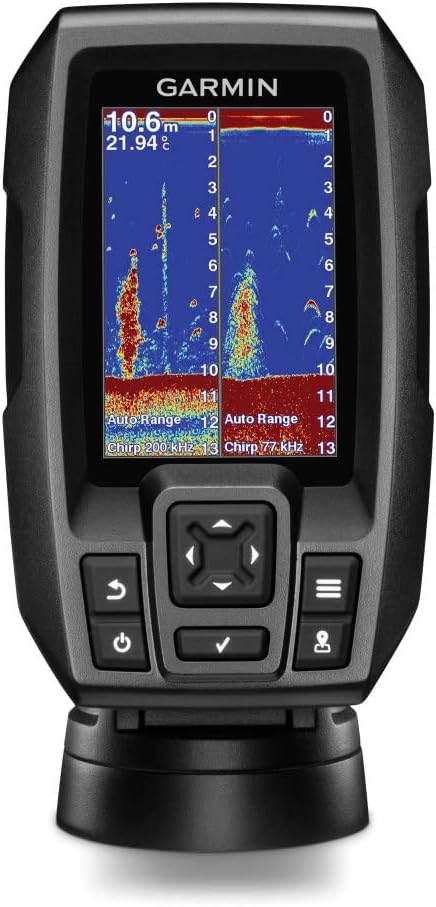
4.5Editor score

4.5Editor score
As an Amazon Associate we earn from qualifying purchases.
The following table provides a side-by-side look at all ten models reviewed. It highlights key specifications and core features to help you quickly identify the right device for your fishing style.


The Garmin Striker 4 stands out as a top contender for budget conscious anglers seeking reliable performance. It holds a strong rating from users who appreciate its clarity and ease of use. This unit combines essential sonar features with a user-friendly design that fits well on small boats.
We may earn a commission when you buy through this link, at no additional cost to you.
Its Clear Vu scanning Sonar provides near photographic images of underwater objects and fish. The Chirp Sonar technology creates crisper fish arches which aids in target separation. The interface uses dedicated buttons that make operation simple even in rough conditions. The waypoint map helps you navigate to specific spots like brush piles or docks.
While the display is smaller than premium models it remains clear and functional. The IPX7 water rating ensures durability against splashes and rain. Installation is straightforward with all necessary mounting hardware included. This device balances cost and capability effectively for most recreational fishing scenarios.
It is ideal for anglers who want trusted technology without overspending. The flasher mode is useful for vertical jigging and ice fishing. If you need a dependable depth finder that works well out of the box this is a great choice.
The high frequency sonar gives detailed representations of objects and structure in the water.
Waypoint maps let you mark locations easily for future fishing trips.
We may earn a commission when you buy through this link, at no additional cost to you.
This handheld unit offers exceptional value for casual anglers and kayak fishermen on a tight budget. It delivers essential depth and fish location data without complex wiring or mounting. Users find it incredibly easy to set up and use right away in various environments.
We may earn a commission when you buy through this link, at no additional cost to you.
The device shows water depth and approximate fish size with clear icons. It features a neck strap for convenient carrying while you manage your gear. You can use it on a moving kayak at speeds below five mph for effective scanning. The sensitivity settings allow adjustments for different water conditions.
While it lacks advanced mapping its core functions are reliable for spot checking depths. The transducer is easy to throw into the water and retrieve quickly. Battery life is decent for several hours of continuous use which suits most trips. It is a practical tool for quick checks.
Buy this if you need a no fuss tool for casual fishing. It is perfect for docks, ice holes, or small kayaks. The low cost makes it an accessible entry point into sonar technology for beginners.
Its compact size and neck strap make it easy to take anywhere you fish.
Works effectively in both fresh and salt water environments for broad utility.
We may earn a commission when you buy through this link, at no additional cost to you.
The LUCKY FFC1108 provides premium features like wireless casting in a portable package. It connects easily to your kayak or boat hull for continuous monitoring while moving. Anglers appreciate the clarity of the display even in bright sunlight due to the backlight.
We may earn a commission when you buy through this link, at no additional cost to you.
This model displays short and tall weeds plus sand and rocks on the bottom. You can switch units between feet and meters for convenience. The sensor can be tied to a fishing line and cast into hard to reach spots. It works in freshwater and saltwater for all season use.
The fish alarm alerts you when schools pass by so you do not miss strikes. Battery life supports long sessions on the water without frequent changes. Its small size means it does not clutter your tackle box or gear setup. The design focuses on practical utility over flashy extras.
Choose this if you want a balance of features and portability. It suits kayak anglers who need to cover more ground efficiently. The wireless aspect saves time on installation and allows flexible fishing positions.
Switch between feet and meters easily to match your preference or local standards.
Compact design makes it a perfect companion for travel and spontaneous fishing trips.
We may earn a commission when you buy through this link, at no additional cost to you.
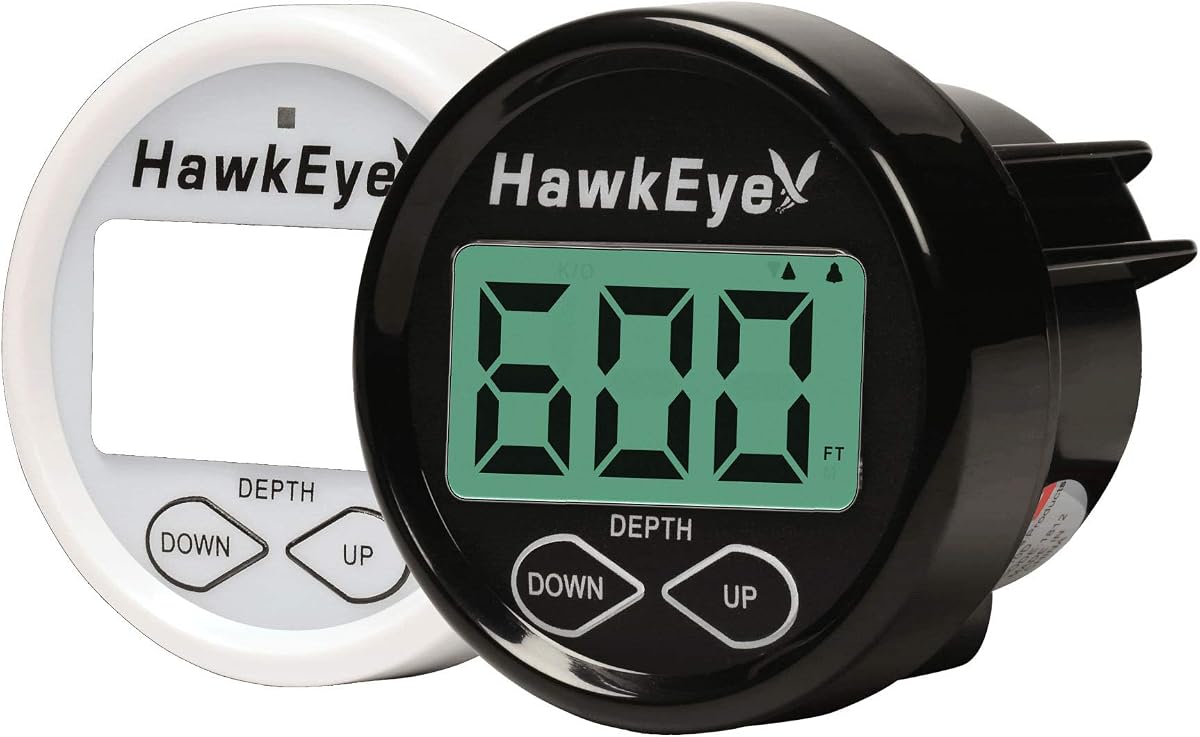
The DepthTrax 2B delivers uninterrupted depth readings for boats moving at speed up to 60 mph. It offers a large display that remains clear even in bright light conditions. Users value the advanced warning system that alerts them to shallow water quickly.
We may earn a commission when you buy through this link, at no additional cost to you.
It includes a transducer that can shoot through solid fiberglass or aluminum hulls. The polarized LCD icon display prevents glare for spot free viewing without sunglasses. Algorithmic programming helps produce unmatched precision by reducing false echoes. The warning system uses sound and lights for clear alerts.
Installation involves careful placement to avoid cored sections or thick aluminum. The transducer is versatile for many hull types. This unit is built to handle the rigors of frequent use on larger vessels. It provides reliable data for navigation and fishing alike.
Select this for serious boaters needing a fixed dash solution. It works well for powerboats where speed is a factor. The durability and precision make it a solid investment for regular use on the water.
Delivers uninterrupted readings from 2.5 to 600 feet on the largest display available.
No glare polarized LCD icon display with storage sun cover allows for spot free viewing.
We may earn a commission when you buy through this link, at no additional cost to you.
The PiranhaMAX 4 offers dual beam sonar that helps you identify fish and structure accurately. You can choose between a narrow beam for detail or a wide beam for coverage. The tilt and swivel mount allows quick adjustment of your viewing area angle.
We may earn a commission when you buy through this link, at no additional cost to you.
It includes the fish finder transducer and all necessary mounting hardware. The display is clear enough to see fish icons and contours easily. Users report reliable performance in both shallow and deep water conditions. The build quality feels sturdy for outdoor use on small boats.
While it lacks GPS the core sonar performance is solid for the price. The swivel mount is a great feature for finding the best screen position. It is easy to set up and use immediately out of the box. This model is a reliable tool for basic fishing needs.
It is a good choice for anglers needing straightforward sonar without extra cost. The dual beam technology provides flexibility in how you scan the water. If you want a proven brand with essential features this model fits well.
Choose from a narrow and a wide beam for great detail or a generous coverage area.
Tilt and swivel mount quickly adjust your viewing area angle for comfort.
We may earn a commission when you buy through this link, at no additional cost to you.
The Lowrance Eagle features an IPS portrait screen that stays clear in bright sunlight. Wide viewing angles ensure visibility from different positions on the boat. Auto-Tuning Sonar provides optimized settings so you can focus on finding fish without constant adjustments.
We may earn a commission when you buy through this link, at no additional cost to you.
It includes a 200 kHz Bullet Skimmer for a broad beam angle suitable for small boats. Simple fish identification shows icons with depth for quick understanding of data. The twist-lock connector makes connecting and removing the display simple. A compact portrait design fits well in limited spaces.
The screen is visible even through polarized sunglasses which is a practical feature. Setup is faster than models with more complex wiring. The fish alarm works without loud beeps which many users prefer for calm conditions. It balances simplicity and modern display technology well.
Buy this for a clean and bright display at a reasonable price. It suits small boat owners who need reliable sonar. The ease of use makes it accessible for those new to digital depth finders.
The 4-inch IPS portrait screen stays clear in bright sunlight from wide viewing angles.
Auto-Tuning Sonar automatically provides optimized settings so you can focus on finding fish.
We may earn a commission when you buy through this link, at no additional cost to you.
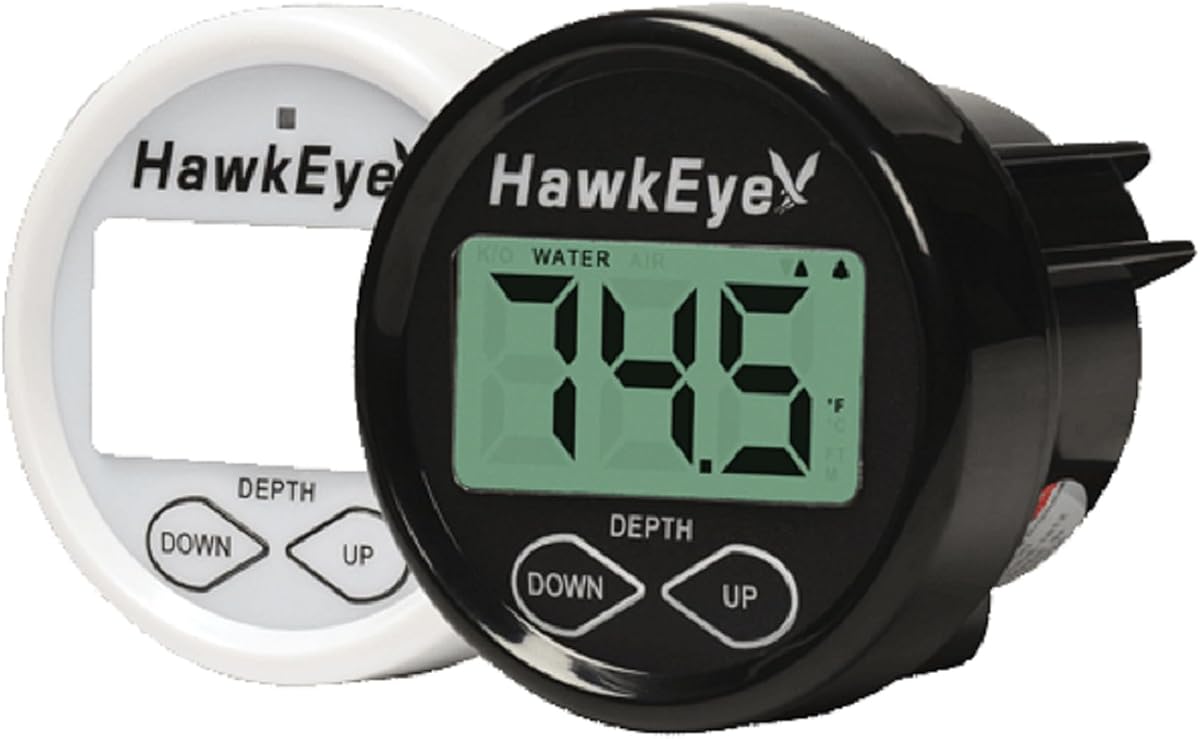
This HawkEye model delivers uninterrupted depth readings on a large display for dash mounting. It shows both water and air temperature readings in Fahrenheit or Celsius. The soft glow backlit LCD display ensures visibility in low light conditions easily.
We may earn a commission when you buy through this link, at no additional cost to you.
The transducer comes with 30 feet of cable for flexible mounting on the transom. A 3-stage Advanced Warning System signals shallow water with alarm and light. The polarized LCD icon display allows spot free viewing with sunglasses. The unit requires a two-inch hole for flush mounting.
Algorithmic programming reduces false readings to improve precision in different waters. It is built to withstand the marine environment with durable materials. The sun cover protects the display when not in use. This setup provides essential data for safe navigation on the water.
Choose this if you want a reliable dash unit with temperature data. It fits well in boats with standard dash cutouts. The combination of depth and temp readings helps plan fishing strategies effectively.
Water or air temperature readings are displayed in degrees Fahrenheit or Celsius on the LCD.
3-stage Advanced Warning System signals alarm condition with alarm sound and light.
We may earn a commission when you buy through this link, at no additional cost to you.
The Hawkeye DT1H is a straightforward handheld unit ideal for quick depth checks. It displays temperature alongside depth data for useful environmental context. Users find it easy to hold and operate with minimal setup or configuration needed.
We may earn a commission when you buy through this link, at no additional cost to you.
The 300 foot range covers most common fishing waters. It is small enough to fit in a pocket or tackle box. You can use it in freshwater or saltwater for a variety of scenarios. The build is rugged enough for occasional use without worry.
While it lacks advanced sonar modes the basic depth function is reliable. The button layout is intuitive even for first time users. Battery life is sufficient for a day on the water. This model prioritizes simplicity over complex electronics.
It suits anglers who need a backup or simple tool. The temperature reading helps identify fish zones effectively. If you want a no fuss handheld depth finder this is a practical option.
Its handheld form factor ensures it is easy to carry and store anywhere.
Provides temperature data to help locate fish holding zones.
We may earn a commission when you buy through this link, at no additional cost to you.
This portable unit detects and displays water depth with contour readouts for detail. It shows fish groups and size which helps in identifying potential targets. The device updates data four times per second for real-time information.
We may earn a commission when you buy through this link, at no additional cost to you.
It includes a two-color lure fish lamp to attract light sensitive fish in dark water. The water resistant construction withstands splashing and is waterproof to 100 feet. This allows use as a target for snorkeling or diving beyond just fishing. You can use it for off shore or river fishing.
The design is lightweight and stylish for easy transport to various spots. It works well in ice fishing scenarios with quick setup. The depth range supports most standard fishing zones. It is a versatile tool for different fishing methods.
Select this for multi-purpose use in ice or shore environments. The contour readout helps visualize bottom structure clearly. It is a good choice for casual anglers needing more than just basic depth.
Two-color lure fish lamp default on slide switch twice to turn on and off lights.
Durable and rugged construction withstands splashing allowing use as a target for snorkeling.
We may earn a commission when you buy through this link, at no additional cost to you.
The LUCKY MT-202 features a massive 853 feet operation distance for wireless freedom. It reveals the exact depth of fish and their location relative to structure clearly. The display shows fish icons with depth numbers for easy tracking.
We may earn a commission when you buy through this link, at no additional cost to you.
It scans schools of fish with a wide 90-degree beam in a 3FT to 147FT depth area. The portable and castable design allows you to tie the sensor to a line and cast it. No drilling or brackets are needed for setup which saves time.
The rechargeable battery ensures you do not need to replace disposable cells often. It is light enough to carry in a pocket with the floating sensor. This model works in shore and ice fishing without changing settings. It balances range with ease of use effectively.
Choose this if you need to cover more ground from shore. The wireless aspect is perfect for kayaks without mounting. It is a strong choice for tech savvy anglers on a budget.
Experience the ultimate freedom with the LUCKY portable fish finder featuring a massive operation distance.
The LUCKY sonar fish finder is pocket-sized powerful and lighter than a 1-liter water bottle.
We may earn a commission when you buy through this link, at no additional cost to you.
Choosing the right depth finder requires evaluating several factors to match your specific fishing style. Understanding key features ensures you get reliable performance without overspending on unnecessary extras.
The display is how you interact with the sonar data so clarity matters. Look for screens with backlighting for low light or glare conditions. A larger screen helps you read icons and depth numbers at a glance. Smaller displays are portable but may be harder to read in bright sun.
Prioritize a screen that is readable in your typical fishing environment.
Sonar frequency affects how detailed the images of underwater structures appear. Higher frequencies provide better detail while lower frequencies offer wider coverage. Beam width determines how much area the sonar scans beneath your boat or kayak. Wider beams help find fish quickly while narrow beams show precise structure.
Select a frequency and beam width that suit the water depth you fish.
Different models support different maximum depth ranges based on their sensors. Shallow water fishing may not require extreme depth capabilities. Ensure the device can reach depths common in your local lakes or rivers. A wider range gives flexibility if you move to different bodies of water.
Check the max depth specification to match your fishing locations.
Some units run on disposable batteries while others use rechargeable packs. Battery powered models are simple but require ongoing cost for replacements. Rechargeable options save money long term and reduce waste. Consider how long your typical trip lasts before power runs out.
Choose a power source that aligns with your trip length and convenience.
Mounting needs vary by boat type and your preference for permanence. Fixed mounts stay in place but require drilling and installation effort. Handheld and castable units offer flexibility for kayaks or shore fishing. Consider where you plan to fish most often for best fit.
Balance portability with stability based on your typical vessel setup.
Marine environments are tough on electronics so water resistance ratings matter. Look for models rated to withstand splashes and rain easily. Rugged builds prevent damage from accidental drops or rough handling. A durable unit lasts longer and requires less maintenance over time.
Ensure the device has enough water resistance for your conditions.
A complicated interface can slow you down when fish are biting. Simple menus and dedicated buttons help you access features quickly. Auto-tuning settings reduce the need for manual adjustments. Training time should be minimal to enjoy fishing faster.
Choose a model with an intuitive layout for stress free use.
Extra features like temperature readings or fish alarms add value. Some models include GPS waypoints for marking successful spots. However extra features can increase price or complexity. Decide which extras you truly need for your routine trips.
Prioritize must have features to avoid paying for unused functions.
Start by reading the user manual to understand all features and settings specific to your model. Connect the transducer securely and ensure it is level in the water for accurate readings. Turn on the device and let it initialize before casting or mounting for best results.
Adjust sensitivity settings based on water conditions and depth to reduce noise. In clear water you may lower sensitivity to remove clutter. In turbid water increase sensitivity to detect fish or objects clearly. Use the alarm function to alert you when fish pass by so you react quickly.
Clean the unit with fresh water after each use to remove salt or debris. Dry the display and transducer thoroughly to prevent moisture damage during storage. Store the device in a protective case to avoid drops or scratches. Check battery levels regularly and replace or recharge as needed for reliability.
Handheld or portable castable models are ideal for kayaks since they are lightweight and easy to store. Devices like the LUCKY portable fish finder offer wireless casting which saves mounting space. Look for units with long battery life and waterproof construction for safety on the water.
Most budget models support depths up to 300 or 600 feet which covers most inland waters. Some higher end options reach over 1000 feet for deeper lakes or coastal areas. Check the max depth spec to ensure it meets your local fishing conditions.
Yes many affordable models are rated for both fresh and salt water use. Ensure the transducer and display are water resistant to prevent corrosion from salt spray. Rinse the unit with fresh water after each saltwater session for longevity.
Dash mounted models like the DepthTrax 2B are designed to work at speeds up to 60 mph. Handheld units work best at slow speeds below five mph for stable readings. Speed affects sonar accuracy so match the unit to your typical boat speed.
Rechargeable batteries are cost effective for frequent users who go on long trips. Disposable AAA batteries work well for occasional or short duration use. Consider battery life per charge and availability of replacements on the water.
Fish alarms help alert you when schools pass by without constant screen watching. They are useful for beginners or distracted anglers to focus on casting. Some units offer silent visual alerts if you prefer not to be disturbed by beeps.
Use the included cover or a waterproof bag when not in use to prevent splashes. Ensure all ports are closed tightly to stop water entry. If the device gets wet dry it thoroughly before powering it on again.
GPS is helpful for marking waypoints but not essential for basic depth detection. If you fish familiar waters GPS can be skipped to save cost. Look for models with basic maps if navigation is a priority for you.
Choosing a cheap depth finder means balancing performance with affordability. The top picks like the Garmin Striker 4 and LUCKY portable units offer excellent value for most anglers. Each model has unique strengths tailored to different boat sizes and fishing styles.
Prioritize display quality and battery life to ensure you can fish longer without interruptions. Consider your typical fishing spots to decide between handheld and fixed mounting options. Features like alarm alerts and temperature readings add practical utility without huge cost.
Always check current availability and user reviews before finalizing your purchase. Prices may shift so comparing recent data helps you get the best deal. A reliable depth finder can transform your fishing experience by revealing the underwater world.