
VIVOSUN AeroDrain D12
4.3Editor score
12L Daily Removal
Smart App Integration
Auto Restart Feature
Find the best dehumidifier for grow tents. This guide compares ten top models for precision control, low noise, and optimal humidity management in indoor
Maintaining optimal humidity levels is crucial for healthy plant growth in indoor grow tents. A quality dehumidifier ensures your environment stays within the ideal range, preventing mold and maximizing yield potential for your crops.
We evaluated ten top models based on capacity, noise levels, smart features, and efficiency. Our analysis focuses on units designed specifically for enclosed grow spaces to help you make an informed decision for your setup.
Each pick highlights specific strengths and ideal use cases for different tent sizes. Please note that product availability and pricing can fluctuate, so verify current details before making your final purchase decision.
4.3Editor score

3.8Editor score

3.9Editor score
This table provides a side-by-side overview of the ten selected dehumidifiers, highlighting their key specifications and unique features to help you quickly compare options for your grow tent needs.


The AC INFINITY HYDRONE 5 stands out as a top choice for growers needing precise humidity control. With its proprietary PWM-controlled rotary motor, it offers 10 distinct drying levels for accurate adjustments.
We may earn a commission when you buy through this link, at no additional cost to you.
This unit is engineered for both hot and cold environments, maintaining low relative humidity levels effectively. The exhaust port allows you to duct dry air directly into your tent, optimizing the closed-loop system efficiency.
While the price is higher than standard models, the precision and smart compatibility justify the investment. You can connect it to smart controllers for WiFi access and data tracking.
Growers who demand exact climate control and integration with automation systems should choose this model. It is particularly well-suited for professional setups where environment consistency is key.
The PWM-controlled motor allows instant on-off response for unmatched precision in drying levels.
Compatible with smart controllers for app access and VPD automation features.
We may earn a commission when you buy through this link, at no additional cost to you.
The VIVOSUN AeroDrain D12 offers superior humidity control with a high-efficiency compressor removing up to 12L daily. It is perfect for larger grow tents needing reliable performance.
We may earn a commission when you buy through this link, at no additional cost to you.
Smart control features allow connection to the Vivosun app for remote monitoring. It integrates seamlessly with the Vivosun Smart Grow System for automated synchronization with other devices.
The unit includes caster wheels for easy mobility and a tool-free setup process. Automatic restart after power outages ensures your environment remains stable even during interruptions.
For growers seeking a premium smart home experience, this model delivers exceptional integration. It is recommended for tents up to 5×5 feet for optimal coverage.
Seamlessly integrates with the Vivosun Smart Grow System for automated synchronization.
Removes up to 12L of moisture daily to maintain perfect conditions.
We may earn a commission when you buy through this link, at no additional cost to you.
The MARS HYDRO 38 Pints unit is designed with a unique air duct system. This allows the humidifier to sit outside your grow tent, preventing extra heat from disrupting plant growth.
We may earn a commission when you buy through this link, at no additional cost to you.
It features a high-efficiency compressor that removes up to 38 pints of moisture daily. Smart auto mode lets you set desired humidity levels between 30% and 90% for hands-free comfort.
Maintenance is convenient with a washable dust filter and auto shut-off when the tank is full. Integrated handles and caster wheels allow for effortless movement around your growing area.
This model offers excellent value for growers needing high capacity on a budget. It suits tents ranging from 2×4 to 4×4 feet effectively.
Channeling moisture outside without introducing extra heat to the tent.
Set humidity between 30% and 90% for automated control.
We may earn a commission when you buy through this link, at no additional cost to you.
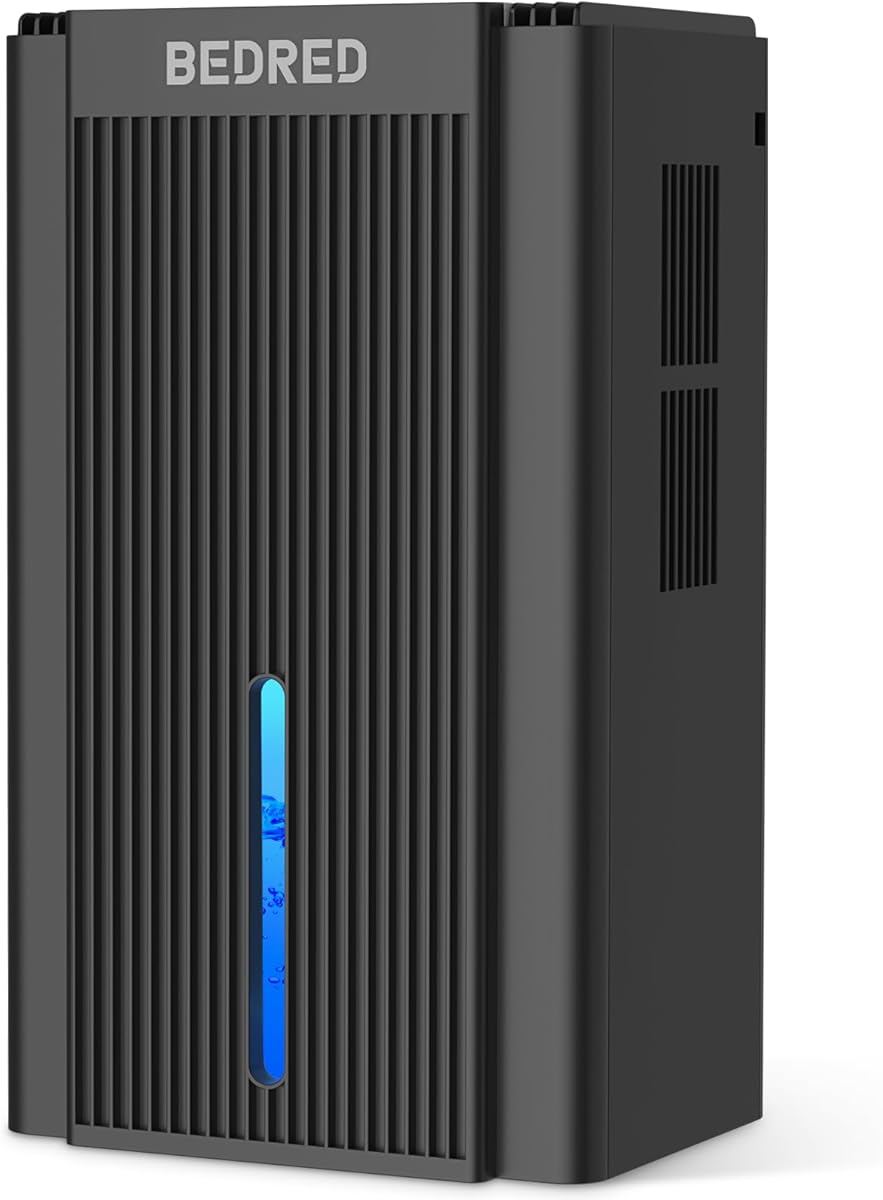
The BEDRED Dehumidifier uses semiconductor thermoelectric cooling to remove moisture quietly. It is ideal for smaller grow tents where noise might be a concern.
We may earn a commission when you buy through this link, at no additional cost to you.
Sleep mode creates a perfect environment by turning off lights and reducing noise to a whisper. The unit features auto-shutoff when the water tank is full for safety.
You can choose from a spectrum of soothing ambient light colors. While designed for home use, its compact footprint makes it adaptable for small cultivation spaces.
Consider this model if noise reduction and aesthetics are your priorities. It is best for very small setups or drying rooms.
Sleep mode turns off lights and noise fades to a whisper.
Uses thermoelectric cooling for a drier and more comfortable environment.
We may earn a commission when you buy through this link, at no additional cost to you.
This compact dehumidifier is ideal for tight spaces like small grow tents or storage cabinets. It actively condenses airborne water vapor for superior efficiency over passive methods.
We may earn a commission when you buy through this link, at no additional cost to you.
It features an external professional grade humidity sensor for accurate measurement. The unit has a clear LED display and supports both automatic and manual modes of operation.
Condensation can be efficiently drained through a flexible hose for easy maintenance. The device can be set up in minutes using the included manual and tools.
Choose this for very small enclosed areas where moisture control is needed. It fits well in electrical cabinets or small grow boxes.
Upgraded with external professional grade humidity sensor for accuracy.
Flexible hose included for efficient condensation drainage.
We may earn a commission when you buy through this link, at no additional cost to you.
The OWAAE dehumidifier is designed to reduce excess moisture in living spaces. It works best in moderate-to-high humidity environments to improve overall air comfort at home.
We may earn a commission when you buy through this link, at no additional cost to you.
Ultra-quiet operation under 30 dB makes it suitable for bedrooms or quiet grow rooms. Automatic shut-off protects against spills when the water tank is full or improperly positioned.
The unit features integrated 7-color LED lighting for ambient mood setting. Its compact design makes it easy to place in various spaces.
Ideal for general moisture control needs in home-based grow setups. It provides reliable performance without complex installation.
Built-in safety protection stops operation when water tank is full.
Sleep mode operates under 30 dB for uninterrupted rest.
We may earn a commission when you buy through this link, at no additional cost to you.
This small dehumidifier is designed specifically for confined spaces like electric boxes. It operates efficiently on AC and DC power supplies for versatile use across different systems.
We may earn a commission when you buy through this link, at no additional cost to you.
Features include a built-in temperature control switch for maintaining optimal humidity levels. The auto shut-off function enhances safety and energy efficiency when the desired level is reached.
Its compact size allows for easy placement in tiny spaces. It effectively removes excess moisture from the air to protect equipment.
Best used for protecting electronics or small enclosed growing areas. It is a simple solution for targeted moisture control.
Operates efficiently on AC/DC 85-265V power supplies.
Built-in switch helps maintain optimal humidity levels.
We may earn a commission when you buy through this link, at no additional cost to you.
This compact 44oz dehumidifier efficiently removes excess moisture in rooms up to 215 sq ft. It collects water in 24 hours while maintaining ideal humidity levels of 45%-55%.
We may earn a commission when you buy through this link, at no additional cost to you.
Three working modes meet various needs including sleep, normal, and performance. Auto defrost protection ensures continuous operation even in colder seasons.
Built-in timer offers flexible operation with auto shut-off settings. The unit is lightweight and portable, fitting easily into small spaces.
A good option for small grow tents or drying cabinets. It balances functionality with energy-efficient operation.
Auto defrost function ensures operation in cold season.
Continuous run or auto shut-off after 24 to 72 hours.
We may earn a commission when you buy through this link, at no additional cost to you.
Designed for lasting home use, this bathroom dehumidifier works gently to maintain balanced humidity. The large 44 OZ water tank minimizes emptying frequency for convenience.
We may earn a commission when you buy through this link, at no additional cost to you.
Auto-defrosting system activates in lower temperatures to prevent frost buildup. This ensures longer product life and efficient operation throughout the year.
Features 5 timer settings and 3 working modes for flexible control. FCC, CE, UKCA, and RoHS approvals provide rigorous international standards.
Reliable as a closet or RV dehumidifier for small grow setups. It provides peace of mind with safe design.
FCC, CE, UKCA, and RoHS approvals meet rigorous standards.
Activates in lower temperatures to ensure continuous operation.
We may earn a commission when you buy through this link, at no additional cost to you.
This mini dehumidifier removes up to 18 oz of water per day. It covers up to 250 sq ft and operates without a compressor for quiet performance.
We may earn a commission when you buy through this link, at no additional cost to you.
Thermo-Electric Cooling Technology provides whisper quiet operation in bedrooms or tents. It has a low running cost of just $0.12 per day for efficiency.
The water tank has auto shut-off when full with an LED indicator. It functions well in areas with high humidity like basements or garages.
Best for small grow rooms where energy costs are a concern. It maintains fresh air quietly but works above 59°F.
Running cost of just $0.12 per day for efficiency.
Thermo-Electric Cooling operates without a compressor.
We may earn a commission when you buy through this link, at no additional cost to you.
Selecting the right dehumidifier for your grow tent involves considering capacity, noise, smart features, and placement options to ensure optimal plant health.
The daily moisture removal capacity is the most critical factor for grow tents. Units with higher pints or liters per day are better for larger tents or humid climates. If your tent is small, a lower capacity unit will suffice and save energy.
Match the capacity to your tent size and local humidity to prevent mold effectively.
Noise can be a concern if your grow tent is near living areas. Look for units with sleep modes or thermo-electric cooling that operate quietly. Excessive noise can disrupt rest and indicate compressor vibration.
Prioritize ultra-quiet models if the unit will be in a shared space.
Smart features allow remote monitoring and automation of humidity levels. App connectivity and integration with other smart home devices help maintain precise VPD levels. This reduces the need for manual adjustments and checks.
Choose units with smart integration if you want a hands-free environment.
Placement affects temperature control since dehumidifiers generate heat. Models that can sit outside the tent and duct air in keep the interior cooler. Internal placement should be managed carefully to avoid heat stress on plants.
Look for units with exhaust ports if you need to place the device outside.
A larger water tank means less frequent emptying, which is convenient for long sessions. Automatic shut-off and continuous drainage hose options are also essential for worry-free operation. Manual emptying can interrupt automated systems.
Opt for larger tanks or hose drainage for easier maintenance.
Energy efficiency impacts your electricity bills significantly over time. Compressor units are generally more efficient for large removal, while thermo-electric ones are better for small spaces. Check wattage to estimate running costs.
Select energy-efficient models to lower ongoing operational expenses.
Dehumidifiers operate best within specific temperature ranges. Some models shut down in very cold environments which can be a limitation for cold rooms. Verify the minimum operating temperature matches your grow room climate.
Ensure the unit functions in your minimum grow room temperature.
Safety features like auto shut-off when the tank is full prevent water damage. Auto-defrost functions are also useful for preventing ice buildup in cold conditions. Certified safety standards add an extra layer of reliability.
Prioritize models with auto shut-off and defrost capabilities for safety.
Place the dehumidifier in a stable location. the grow tent or connected via ducting. Ensure the intake and exhaust vents are not blocked by walls or equipment to allow proper airflow.
Set the humidity target according to the plant stage, usually between 45% and 60% for vegetative growth. Use the auto mode to let the device maintain the level automatically without manual intervention.
Regularly clean the filter and empty the water tank to maintain performance. Check for any frost buildup or unusual noises that might indicate a maintenance need before they become major issues.
You should calculate the volume of your tent and consider the local humidity. A general rule is to choose a unit that removes at least the amount of water produced by your plants and lighting heat daily. For standard tents, look at capacity per day to match.
Yes, but you need to ensure the heat generated does not disrupt the temperature. Units designed for grow tents often allow outside placement or have specific controls. A standard one might require extra ventilation management.
Proper humidity prevents mold and bud rot while promoting healthy transpiration in plants. Too much moisture can lead to disease, while too little can stress the plants and reduce growth. Consistency is key for high yields.
During flowering, the humidity should be lower to protect buds, typically between 40% and 50%. Lower levels reduce the risk of mold developing inside the flower clusters as they mature.
Yes, standard compressors generate heat which can raise the tent temperature. Placing the unit outside and ducting dry air inside is a common solution to mitigate this heat effect effectively.
Cleaning the filter every two weeks and checking the tank regularly is recommended for optimal performance. Dust can restrict airflow and reduce efficiency, so regular maintenance is essential for consistency.
We explored ten top models ranging from precision controllers to budget-friendly portable units. Each offers unique benefits for different grower needs and setup sizes.
Prioritize capacity and smart features if you manage complex environments. Simpler setups may only need a quiet and efficient standard unit for control.
Always verify the current specifications and availability before purchasing to ensure you get the best deal and fit for your garden.