
Rokinon DSX85 DSX 85mm T1.5
4.7Editor score
T1.5 to T34 aperture range
9 elements in 7 groups
72mm filter size standard
This guide compares the best cine lenses for filmmakers, covering aperture, mounts, optical performance, and build quality to help you choose the right cinema
Cine lenses are essential tools for professional filmmakers seeking cinematic looks with precise control over focus and exposure. They offer consistent framing and smooth manual operation that standard photo lenses often lack.
We compared ten top-rated cine lenses based on optical quality, build construction, mount compatibility, and value. Our analysis highlights key features like aperture range, focal length, and focus breathing to guide your purchase.
Each pick includes detailed specs and pros and cons to help you decide. Note that prices and availability change frequently, so verify current listings before buying to ensure you get the best deal available today.
4.7Editor score
5.0Editor score

5.0Editor score
Below is a side-by-side comparison of all ten cine lenses reviewed. Check the specs to find the focal length, aperture, mount, and key optical features that match your production needs.


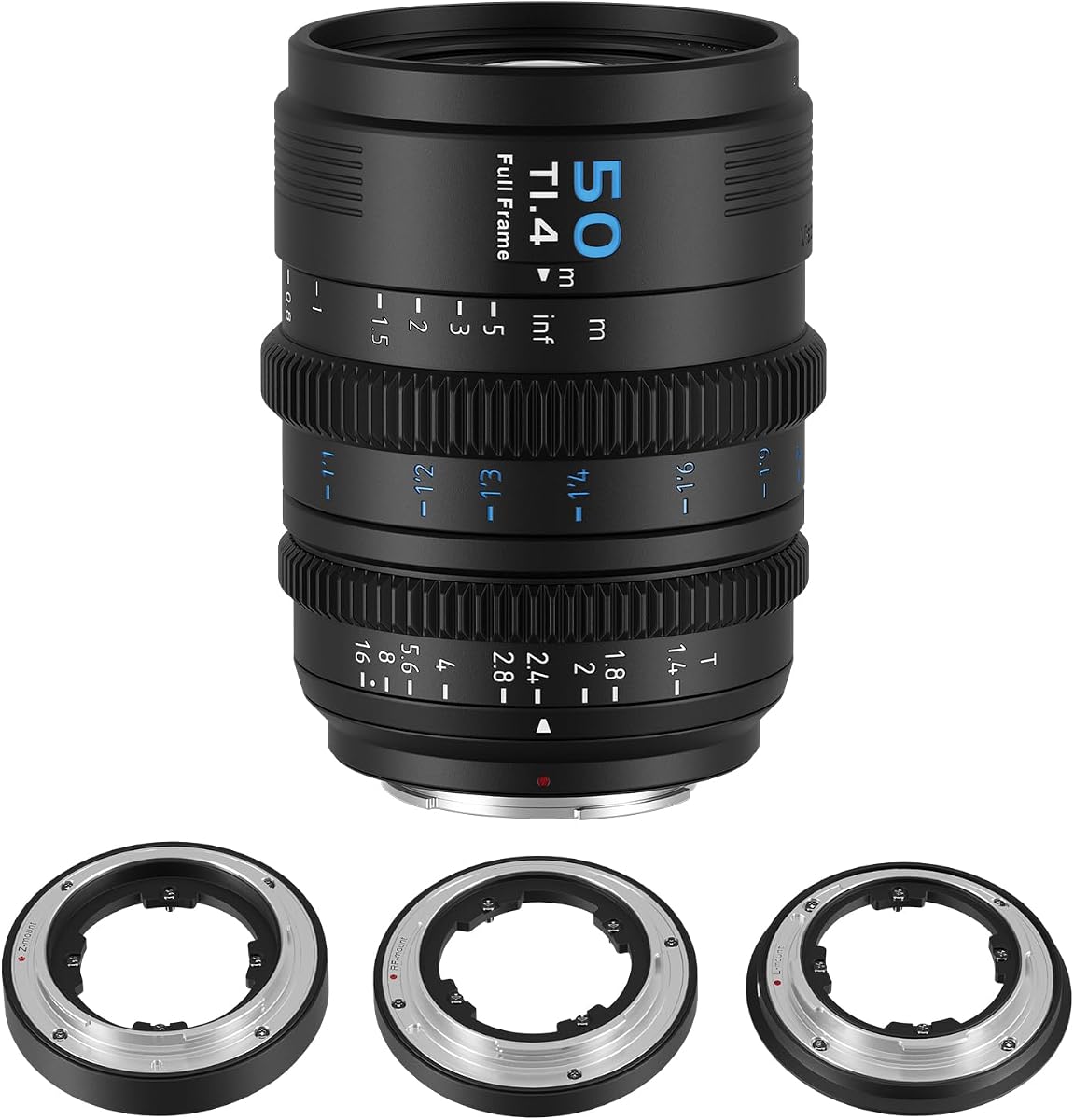

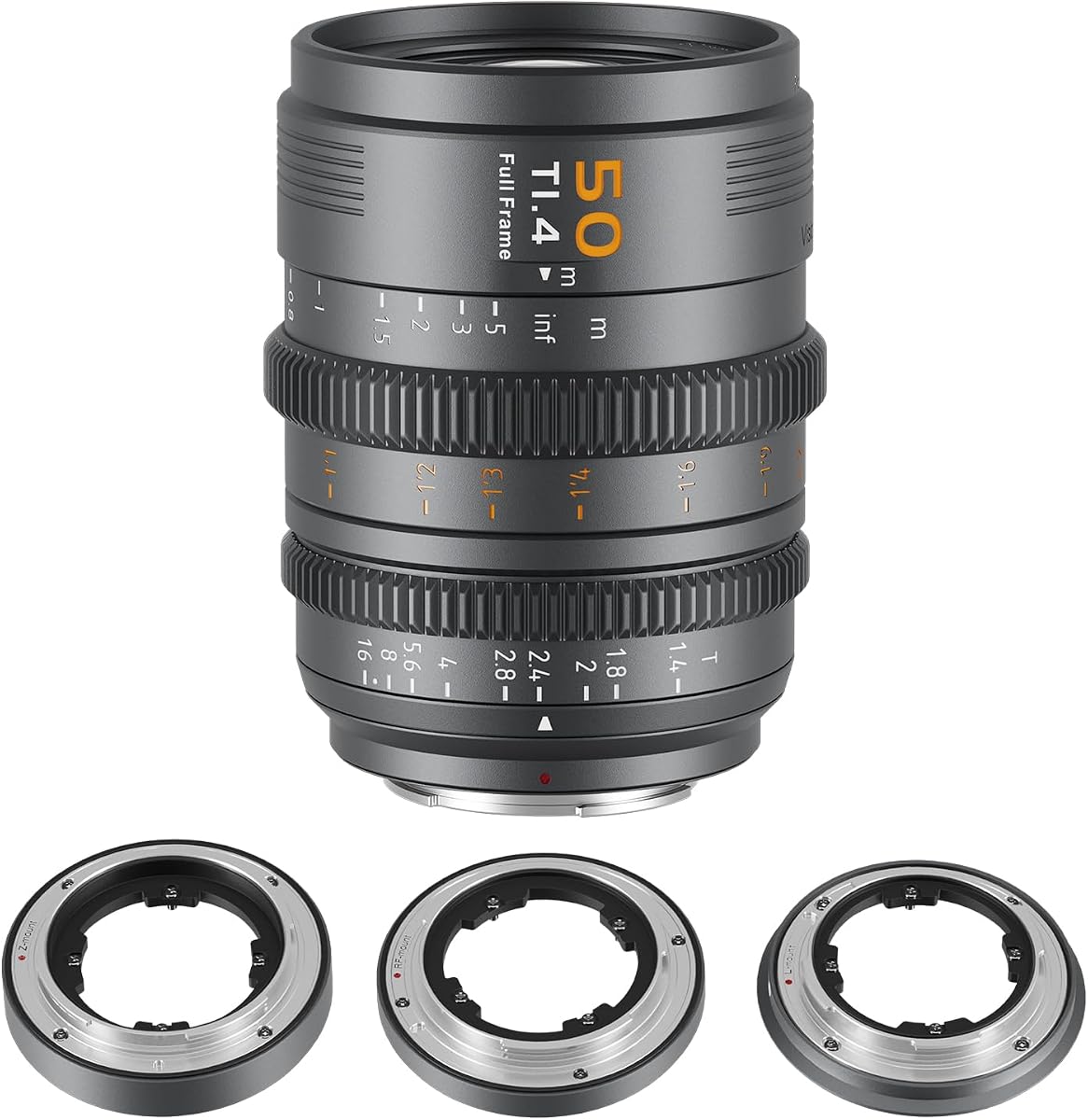
The SIRUI VP-1 Vision Prime 1 50mm T1.4 is a standout full-frame cine lens designed for versatile shooting. It received top ratings for its optical sharpness and innovative mount system.
We may earn a commission when you buy through this link, at no additional cost to you.
This lens integrates aspherical elements and advanced glass to deliver edge-to-edge sharpness while minimizing chromatic aberrations. The T1.4 aperture allows for beautiful subject separation and low-light shooting without high ISO noise.
While the interchangeable mount system is a huge benefit for workflow flexibility, swapping mounts needs care to avoid damage. Also, this is a prime lens, so you will need multiple focal lengths for varied compositions.
It is ideal for filmmakers using Sony E, Canon RF, Nikon Z, or Panasonic L mounts who want a lightweight, consistent set of primes. This lens offers a great balance of performance and portability for modern productions.
The pre-installed E mount with user-interchangeable RF/Z/L mounts allows seamless switching between camera systems for flexible professional workflows.
Engineered for 8K storytelling, this lens uses HRI glass and advanced coatings to ensure high-resolution clarity and minimal distortion.
We may earn a commission when you buy through this link, at no additional cost to you.
The ROKINON CINE DS T1.5 Kit provides a complete set of four prime lenses for Canon EF mount. It scored highly for its consistency and professional features.
We may earn a commission when you buy through this link, at no additional cost to you.
This kit includes 24mm, 35mm, 50mm, and 85mm lenses all color matched with unified gear and aperture positions. Each lens features dual side focus and T-stop scales with de-clicked aperture rings for precise control.
The main drawback is the higher initial investment compared to buying singles, and the weight may be challenging for handheld work. However, the consistency across lenses makes it a strong choice for narrative work.
It is perfect for filmmakers who need a reliable Canon EF kit for multi-camera or story productions. The de-clicked aperture rings are particularly useful for smooth exposure transitions in video.
All lenses in the kit have unified gear and aperture positions, making it easy to switch lenses without remounting accessories.
The DS line ensures lenses are color matched, so images look consistent across different focal lengths in the same production.
We may earn a commission when you buy through this link, at no additional cost to you.
The Rokinon DSX85 DSX 85mm T1.5 is a budget-friendly cine lens for Canon EF. It offers impressive optical performance at a low price point.
We may earn a commission when you buy through this link, at no additional cost to you.
With an aperture range from T1.5 to T34, this lens lets you shoot in low light while maintaining detail. It features 9 elements in 7 groups with ultra multi-coated glass and 9 aperture blades for attractive bokeh.
It lacks gear rings for follow focus systems, requiring manual adjustment with the focus ring. Still, its affordability and solid optics make it a great entry-level choice for aspiring filmmakers.
This lens is ideal for those on a tight budget who need a fast 85mm prime for portraits or detail shots on full-frame Canon cameras. It delivers a professional look without the professional price tag.
The T1.5 aperture allows for shallow depth of field and excellent low-light performance, capturing nuanced image details even in dark scenes.
Constructed with 9 elements in 7 groups and ultra multi-coated glass, this lens ensures high clarity and minimal aberrations for sharp footage.
We may earn a commission when you buy through this link, at no additional cost to you.
The Rokinon 35mm T1.5 Cine DS is a versatile lens for general shooting. It received strong ratings for its balanced field of view and professional features.
We may earn a commission when you buy through this link, at no additional cost to you.
It offers a 63.1 degree angle of view on full frame, ideal for environmental shots. The DS line ensures color matching with other Rokinon DS lenses, and it includes unified gear positions for easy rigging.
The main con is its weight, which can be challenging on gimbals, and it lacks autofocus. However, the optical quality and build make it a reliable workhorse for narrative or documentary use.
Filmmakers needing a wide standard lens on Canon EF will appreciate its performance and compatibility. It fits well into a growing Cine set with other matching lenses for consistent production quality.
The 63.1 degree angle of view on full frame provides a natural perspective suitable for landscapes, interiors, and documentary storytelling.
As part of the DS line, this lens is color matched with other Rokinon Cine DS lenses, ensuring visual consistency across your set.
We may earn a commission when you buy through this link, at no additional cost to you.
The SIRUI Night Walker 35mm S35 is built for low-light shooting on E mount cameras. It stands out with its exceptionally fast T1.2 aperture and lightweight design.
We may earn a commission when you buy through this link, at no additional cost to you.
This lens achieves perfect sharpness even at max aperture with minimal focus breathing and well-controlled aberrations. The T1.2 aperture lets you shoot pure low noise night scenes without excessive ISO, enhancing aesthetics.
It is restricted to APS-C/S35 sensors and E mount, which may limit versatility. However, its premium aluminum housing and low weight make it perfect for gimbal or handheld work in challenging light.
Ideal for documentary makers or travel shooters with Sony APS-C cameras needing a bright lens. It delivers cinematic expressiveness and clear subject separation in dark environments where other lenses fail.
The fast T1.2 aperture captures more light, reducing noise and allowing for better image quality in dark conditions without high ISO settings.
Built with a strong aluminum cine housing, the lens protects optical elements while staying lightweight at around 500g for easy portability.
We may earn a commission when you buy through this link, at no additional cost to you.
The SIRUI Night Walker 24mm S35 RF is a wide lens for Canon RF and RED Komodo. It brings a T1.2 aperture to the RF mount for S35 sensors.
We may earn a commission when you buy through this link, at no additional cost to you.
The 24mm focal length is versatile for landscapes and street scenes with a broad field of view. Advanced optics deliver high sharpness with minimal breathing, and the 270-degree focus rotation enables smooth manual operation.
It is not compatible with full-frame RF lenses but works well on S35 setups. Close focus at 0.3m allows for immersive environmental shots. It is a solid choice for creators needing a fast wide on RF.
This lens is best for cinematographers shooting environmental storytelling or interiors. The RF compatibility bridges the gap between professional cinema features and modern mirrorless camera systems.
The 24mm focal length delivers a versatile perspective that balances a broad field of view with natural-looking composition for storytelling.
With 270-degree focus rotation and precise manual focus, this lens enables smooth, repeatable focusing essential for professional video production.
We may earn a commission when you buy through this link, at no additional cost to you.
The SIRUI VP-1 Vision Prime 1 50mm T1.4 is another top-rated lens for travel filmmaking. It emphasizes lightweight portability and multi-mount versatility.
We may earn a commission when you buy through this link, at no additional cost to you.
Built with durable aluminum alloy, it weighs around 600g, allowing for effortless stabilization on gimbals or handheld. The T1.4 aperture ensures nuanced image details and soft bokeh for artistic shots.
As part of the Vision Prime 1 lineup, it offers uniform design and color consistency if you expand with other lenses. It is compact but carries a premium price for the technology involved.
This lens is ideal for travel and documentary filmmakers needing a reliable full-frame option. Its multi-mount capability ensures you can adapt to different cameras without buying multiple lenses.
The compact design and 600g weight make stabilization effortless, perfect for travel, documentary recording, and gimbal filmmaking.
The lineup shares uniform design and matched color temperature, allowing for easy swaps and high consistency in production when using multiple lenses.
We may earn a commission when you buy through this link, at no additional cost to you.
The SIRUI Night Walker 24mm S35 M4/3 offers a fast wide lens for Micro Four Thirds cameras. It scored nearly perfect ratings for optical performance and build.
We may earn a commission when you buy through this link, at no additional cost to you.
The T1.2 aperture and S35 coverage make it perfect for low-light filming and pleasing bokeh. It weighs only 500g and features 12 elements in 11 groups for perfect sharpness at max aperture.
It does not work on full-frame bodies, limiting its scope to APS-C or M4/3 systems. Still, for users of GH6 or BMPCC cameras, it is a highly effective tool for cinematic storytelling.
This lens is best for documentary and travel filmmakers on Micro Four Thirds rigs. Its combination of speed, weight, and optical quality ensures exceptional low-light capabilities.
SIRUI Night Walker achieves perfect sharpness and minimal focus breathing, improving optical performance even at the maximum T1.2 aperture.
The strong aluminum cine housing is portable and protects inner elements, with a minimum weight of around 500g per lens.
We may earn a commission when you buy through this link, at no additional cost to you.
The Rokinon DSX85 DSX 85mm T1.5 is another option focused on portrait work. It repeats as a strong entry-level lens for Canon EF users.
We may earn a commission when you buy through this link, at no additional cost to you.
With an angle of view of 28.4 degrees on full frame, it isolates subjects beautifully. The ultra multi-coated glass and 9 aperture blades create soft backgrounds. It supports a 72mm filter size for convenience.
This lens requires manual focusing and lacks motorized features. However, for static subjects or controlled sets, its optical construction and affordability make it a reliable portrait tool.
It is ideal for filmmakers on a budget needing a fast 85mm for interviews or close-ups. The full frame coverage ensures you can use it across different Canon EF body options.
The 85mm focal length provides a classic portrait perspective with an angle of view of 28.4 degrees on full frame cameras.
With an aperture range of T1.5 to T34, this lens offers flexibility in controlling depth of field and exposure in various lighting.
We may earn a commission when you buy through this link, at no additional cost to you.
The DZOFILM Pictor 50-125mm T2.8 is a professional zoom lens for Super35 format. It stands out with its parfocal design and minimal breathing.
We may earn a commission when you buy through this link, at no additional cost to you.
It maintains focus across the entire zoom range, crucial for dynamic shots without refocusing. The 16-slat iris offers smooth bokeh and a 2.8 to T25 aperture range. It fits standard cine lens accessories.
It is heavy and expensive compared to primes, which limits mobility. However, for controlled studio or event work, its parfocal capability makes it invaluable for maintaining composition and focus.
This lens is best for cinematographers needing a reliable zoom on PL or Canon EF mounts. Its professional specs ensure high-quality production value with minimal focus issues during zooming.
This lens maintains focus across the entire zoom range, allowing seamless zooming without losing subject sharpness during production.
Minimal focus breathing ensures that the image size remains stable during focusing, which is essential for professional cinematic shots.
We may earn a commission when you buy through this link, at no additional cost to you.
Choosing the right cine lens requires balancing optical quality, compatibility, and budget. Consider these factors before making your purchase to ensure the lens meets your production needs.
Ensure the lens mount matches your camera system, such as Canon EF, E mount, RF, or M4/3. Some lenses like the SIRUI VP-1 offer interchangeable mounts for flexibility.
Always verify the mount type before buying to avoid additional adapters that may compromise focus or image quality.
Look for a wide aperture like T1.2 to T1.5 for low-light shooting and shallow depth of field. Higher maximum apertures allow better detail in dark environments.
Choose a lens with a useful maximum aperture based on your typical shooting conditions and desired look.
Select focal lengths that suit your storytelling style. Wide lenses like 24mm are great for landscapes, while 85mm primes excel at portraits.
Consider buying a kit with multiple focal lengths to cover diverse shots without changing setups often.
Cine lenses typically feature robust metal bodies and precise gears for manual operation. Ensure the weight balances well on your rig for stable handheld or gimbal work.
Lightweight lenses are preferable for travel and documentary work where portability is key.
Smooth focus rings with consistent resistance and clear markings are essential for manual focusing. Look for lenses with 270-degree rotation for precision.
Check that the focus ring is easily accessible and allows for repeatable focus pulls during production.
Advanced optical elements like ED glass and multi-coatings reduce flare and chromatic aberration. These features ensure sharp, clear images even in challenging lighting.
Review optical construction details to confirm the lens uses high-quality materials for professional results.
If you plan to buy multiple lenses, ensure they have uniform gear positions and color matching. This consistency makes workflow smoother and reduces post-production corrections.
Opt for sets from the same series, like the Rokinon DS kit or SIRUI VP-1 lineup, to maintain visual and mechanical uniformity.
Set a realistic budget while prioritizing essential features. Entry-level lenses may lack gear rings but offer excellent optics, while premium options include parfocal zooms.
Balance cost with performance requirements to avoid overspending on features you may not need.
Always attach the lens securely to your camera body and use a proper support system like a tripod or gimbal. Manual focus requires careful monitoring of your subject to maintain sharpness throughout the shot.
Clean the glass with a microfiber cloth and appropriate solution regularly to avoid smudges that could reduce image quality. Store the lens in a dry, padded case to protect it from moisture and dust when not in use.
Avoid exposing the lens to extreme temperatures or direct sunlight for prolonged periods to prevent internal element damage. If using an interchangeable mount system, handle the connectors with care to prevent wear over time.
A cine lens is a specialized lens designed for video production featuring manual focus, consistent aperture markings, and robust build quality. Unlike photo lenses, they minimize focus breathing and offer precise control for cinematic looks.
T-stop measures actual light transmission through the lens, while f-stop is theoretical. T-stops are more accurate for exposure in video, ensuring consistent brightness when switching lenses.
No, they depend on the lens mount like Canon EF, RF, or E mount. Some lenses offer interchangeable mounts for broader compatibility. Always check your camera's mount type before purchasing.
Most cine lenses are designed for manual focus to allow precise control. Autofocus is often less reliable in cinematic workflows where smooth, intentional focus pulls are preferred over motorized systems.
Cine lenses offer higher build quality, consistent aperture across zooms, and optimized optics for video. They include features like de-clicked aperture rings and parfocal design that justify the higher cost.
Generally no, as cine lenses require specific mounts and larger sensor sizes. You need dedicated mirrorless or DSLR cameras that support these lenses properly to achieve the intended results.
Our top picks highlight the SIRUI VP-1 Vision Prime 1 for versatility, the Rokinon DSX85 for budget, and the DZOFILM Pictor for premium zoom needs. Each lens brings unique strengths to your filmmaking toolkit.
Prioritize mount compatibility and aperture range based on your typical shooting conditions. Lightweight designs are great for travel while heavier kits suit controlled studio environments.
Remember that prices and availability change frequently so verify current listings before buying to ensure you get the best deal available today for your production.