FNIRSI HRM-10
4.4Editor score
Automatic Resistance Testing
HD Color Display Screen
Wide Voltage Measurement Range
Historical Data Recording
This guide compares the top 10 Battery Internal Resistance Testers available in October 2026, evaluating accuracy, features, and usability for diverse
Finding a reliable Battery Internal Resistance Tester is crucial for anyone managing power systems. These devices measure the internal resistance of batteries to determine their health and remaining useful life accurately.
We compared ten leading models based on measurement precision, build quality, display clarity, and feature sets. Our analysis covers everything from basic testers to advanced multimeter hybrids for professionals.
Each pick highlights specific strengths for different needs, whether you are a hobbyist or a technician. Please note that prices and availability change frequently, so verify current details before purchasing.
4.4Editor score

4.5Editor score

2.2Editor score
This table provides a side-by-side comparison of the ten selected Battery Internal Resistance Testers. Each entry highlights the core specifications that differentiate these models for specific user needs and applications.




The ZOYI ZT-XR1 stands out as the top choice for those needing a versatile tool. It combines a 25000-count True RMS multimeter with a dedicated battery internal resistance tester. This integration saves space and cost for professionals working on electronics and battery packs.
We may earn a commission when you buy through this link, at no additional cost to you.
Its key strength lies in the 4-wire Kelvin sensing capability. This ensures high accuracy when measuring low resistance values in batteries like 18650 or lead-acid. The device supports a wide range of battery chemistries, making it ideal for repair work.
One trade-off is the learning curve due to its extensive features. Users might find the initial setup slightly complex compared to simpler testers. However, the adjustable brightness screen and bilingual menu help mitigate this usability issue.
If you need a device for both general electronics repair and specific battery testing, this model is highly recommended. It offers professional-grade precision without requiring two separate tools in your toolkit.
Combining multimeter and resistance testing reduces the need for carrying multiple devices to the job site.
The 4-wire Kelvin method eliminates lead resistance errors, ensuring accurate readings for sensitive battery health checks.
We may earn a commission when you buy through this link, at no additional cost to you.
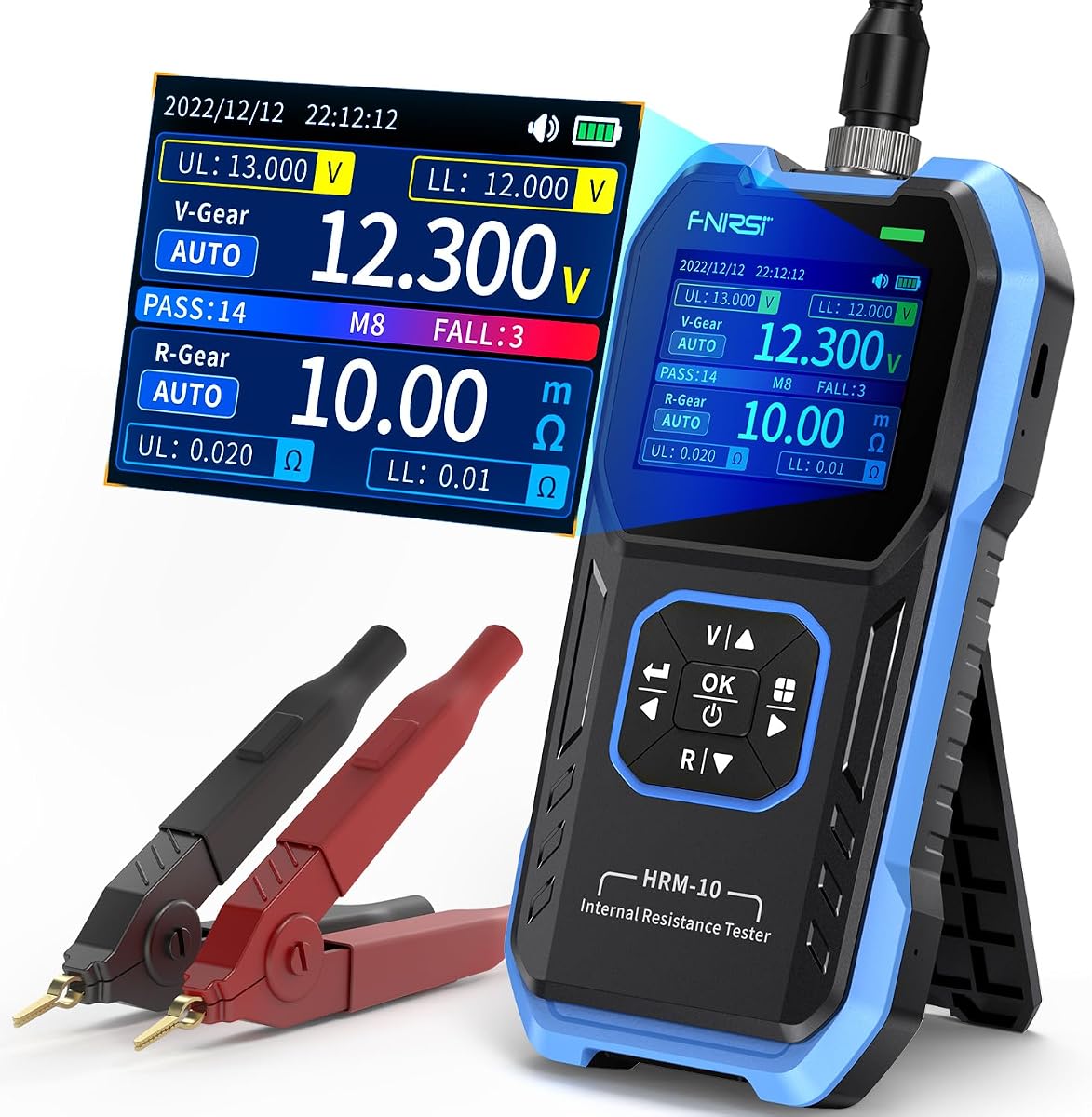
The FNIRSI HRM-10 is an excellent entry-level option for hobbyists and casual users. It provides accurate internal resistance and voltage measurements using a customized Kelvin four-wire connection. This method improves accuracy by avoiding wire resistance errors.
We may earn a commission when you buy through this link, at no additional cost to you.
Its standout feature is the TFT HD Color Display. Unlike older monochrome screens, this makes test results vivid and easy to read in various lighting conditions. Users can manually adjust voltage and resistance ranges for specific testing needs.
While it lacks some advanced data logging options found in pricier models, it supports historical record viewing. You can view eight sets of data at once to batch select batteries efficiently. This is sufficient for home use.
For those on a budget who still want reliable accuracy, this tester is a top recommendation. It strikes a great balance between cost and performance for testing household and car batteries effectively.
The color display significantly enhances readability compared to standard black and white testers.
Automatic modes simplify the process, allowing users to get results without complex manual configuration.
We may earn a commission when you buy through this link, at no additional cost to you.
The T-685 is designed for laboratory and professional applications requiring extreme precision. It measures resistance from 1 micro-ohm to 200 ohms and voltage from 1mV to 100V DC. This range covers almost any battery or capacitor testing scenario.
We may earn a commission when you buy through this link, at no additional cost to you.
Its advanced capabilities include automatic range switching and fast test pacing of five times per second. The unit supports both AC and DC resistance measurement, which is rare in standard testers. It also offers a USB port for connecting to a computer.
The device includes a balance system measuring input and LCR Kelvin 4-wire clamp probes. These ensure high accuracy for sensitive components. However, it is powered by AC input rather than a rechargeable battery, limiting field portability.
If you need top-tier accuracy for R&D or detailed battery pack analysis, this premium model is ideal. It provides the data depth and control necessary for professional battery engineering and maintenance tasks.
Designed for labs, this unit delivers the precision needed for critical battery health assessments.
USB data export allows for detailed analysis and record keeping over long-term battery monitoring.
We may earn a commission when you buy through this link, at no additional cost to you.
The WESTOBIG Battery Tester offers a robust set of features for identifying problematic batteries efficiently. It uses a Kelvin four-terminal sensing method to measure values less than 0.1 ohm accurately. This is crucial for high-quality battery analysis.
We may earn a commission when you buy through this link, at no additional cost to you.
A notable feature is the data preset function. You can preset eight sets of standard data to quickly check if batteries meet specific requirements. Additionally, test records can be saved and transferred to a PC via Excel for further analysis.
The device supports a wide range of battery types including AA, AAA, and lead-acid. Its display technology is similar to other high-end models, providing clear and vivid test results. It balances usability with functional capabilities well.
This model is a solid choice for users who want automated checking capabilities. The ability to set standards and compare against them makes it useful for screening large batches of batteries quickly.
Preset data functions allow for rapid validation against known standards without manual reference.
Excel export enables easy record keeping and trend analysis over time for maintenance teams.
We may earn a commission when you buy through this link, at no additional cost to you.
The Dlyfull Universal Tester is designed for general household battery checks. It covers a wide variety of common batteries like AA, AAA, C, D, and button cells. This makes it perfect for checking remote controls and toys regularly.
We may earn a commission when you buy through this link, at no additional cost to you.
It provides battery capacity percentage and internal resistance readings. The large LCD screen gives clear information so you can decide if a battery needs replacing. This helps avoid overcharging partially full rechargeable batteries unnecessarily.
While it may not have the micro-ohm precision of dedicated lab units, it offers sufficient accuracy for daily use. The rotary dial selection is straightforward, ensuring that anyone can use it without training or technical knowledge.
For households managing multiple types of disposable and rechargeable batteries, this tester is a practical addition. It keeps devices powered correctly and helps save money by identifying weak batteries early.
Specifically designed to cover the most common battery sizes found in consumer electronics.
Identifying capacity issues early prevents unnecessary battery replacement and device downtime.
We may earn a commission when you buy through this link, at no additional cost to you.
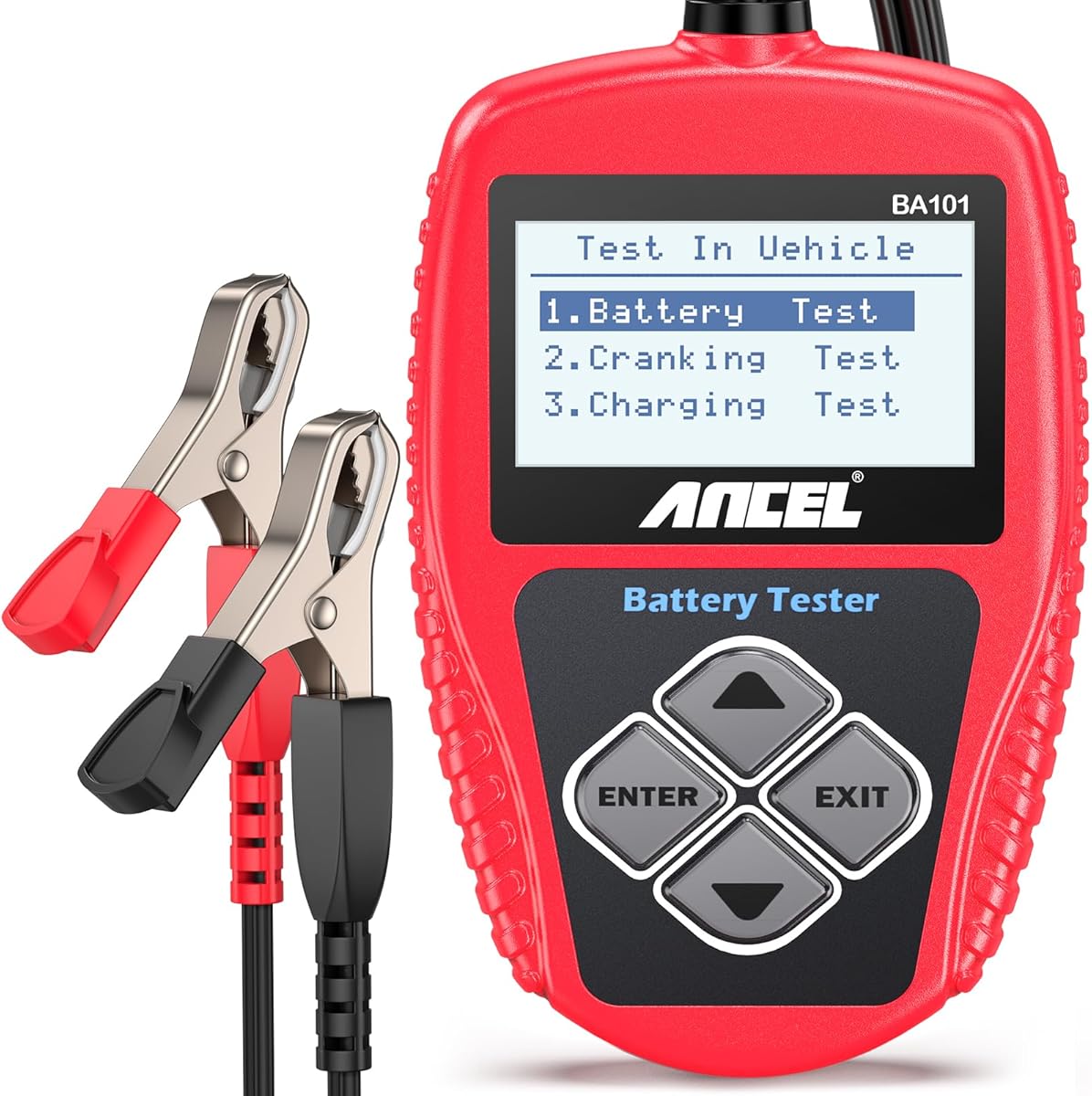
The ANCEL BA101 is a specialized tool for automotive 12V battery systems. It measures State of Health and Charge along with CCA capacity. This helps users understand the real condition of their vehicle's power source.
We may earn a commission when you buy through this link, at no additional cost to you.
It supports global standards and works with flooded, AGM, and GEL batteries. The device draws power directly from the vehicle battery so there is no need for internal batteries to deal with. The screen has adjustable contrast for outdoor use.
Safety is a key consideration with built-in protection against reverse polarity and overvoltage. This ensures safe testing even if connections slip. However, it is not designed for small lithium or alkaline batteries outside the vehicle context.
If your primary need is maintaining car, truck, or marine batteries, this tester is an essential tool. It provides the specific metrics needed to avoid unexpected breakdowns and ensure reliable starts.
Tailored for 12V systems to provide accurate diagnostics for vehicles and boats.
Protection features ensure safe operation in tight engine bays where mistakes can happen.
We may earn a commission when you buy through this link, at no additional cost to you.
The ZOYI XR1 integrates a digital multimeter with battery internal resistance testing. It supports AC DC voltage, capacitance, and temperature functions. This versatility makes it a handy tool for general maintenance tasks.
We may earn a commission when you buy through this link, at no additional cost to you.
It uses 4-wire Kelvin clips to minimize contact resistance errors. Users can adjust voltage and resistance ranges manually. The display offers enhanced clarity with adjustable brightness settings for better visibility.
One drawback is that it may not match the precision of dedicated higher-end units. However, its compact design and modern Type-C charging port make it convenient for quick checks on the go.
For users needing a portable hybrid solution, this model offers a good middle ground. It handles basic resistance checks alongside standard electrical measurements without taking up much space.
The compact size makes it easy to carry in a toolkit for field maintenance.
Combining two devices reduces clutter and increases versatility for general electrical tasks.
We may earn a commission when you buy through this link, at no additional cost to you.
The RC3563 Tester is a handheld analyzer designed for lead lithium and NiCd batteries. It measures resistance and voltage simultaneously using a Kalman filter algorithm for better precision. This intelligent control improves measurement efficiency.
We may earn a commission when you buy through this link, at no additional cost to you.
It is lightweight and energy-saving, making it suitable for research laboratories and production testing. The device has a built-in battery that charges via 5V. This convenience ensures it is ready for field work without external power.
While the design is simpler than modern color screens, its high precision remains competitive. It can also measure AC resistance of capacitors and resistors. This expands its utility beyond just battery health checks.
For users in research or production environments, this model provides a balance of accuracy and portability. Its algorithm ensures consistent results even under varying conditions.
Kalman filtering helps reduce noise and improves the reliability of resistance readings.
Ideal for scientific and production settings where accurate data logging is essential.
We may earn a commission when you buy through this link, at no additional cost to you.
The YR1035+ is a dedicated internal resistance tester known for its accuracy. It uses a true four-wire testing system to measure resistance and voltage simultaneously. This is critical for precise diagnostics in battery configurations.
We may earn a commission when you buy through this link, at no additional cost to you.
Its large LCD screen presents real-time measurement results clearly. The design is compact and lightweight, making it ideal for field work and bench testing alike. It serves multiple types of batteries effectively.
While it lacks some complex data export features, its focus on core measurement quality makes it reliable. Users value its ability to provide consistent readings across different battery chemistries without needing extensive setup.
For field technicians who need a reliable, portable tool for battery screening, this model is excellent. It ensures that performance testing is accurate without unnecessary complexity.
Instant results speed up the workflow for technicians testing multiple batteries on site.
Eliminating lead resistance ensures that readings reflect the battery true internal state.
We may earn a commission when you buy through this link, at no additional cost to you.
This variant of the YR1035+ includes specialized accessories for measuring various battery terminals. The Kelvin clamp is suitable for clamping positive and negative electrodes. This frees up hands during testing for better safety.
We may earn a commission when you buy through this link, at no additional cost to you.
It supports a wide voltage range and includes a Type-C charging port. This modernizes the power delivery compared to older models. The unit can measure resistance from zero to 200 ohms accurately.
The addition of specialized clamps makes it easier to handle irregular battery shapes. It is perfect for testing lead-acid, lithium, and button batteries. The setup ensures stability and secure connections during measurement.
For users who need hands-free testing capabilities, this kit offers a significant convenience boost. It combines standard testing accuracy with practical accessories for diverse battery formats.
Specialized clamps allow for secure contact without holding probes manually.
Type-C charging provides fast and convenient power replenishment in the field.
We may earn a commission when you buy through this link, at no additional cost to you.
Choosing the right tester involves considering specific factors related to your application. This section breaks down the key elements to evaluate before making a purchase.
Accuracy is critical for determining battery health reliably. Look for devices that use 4-wire Kelvin sensing to eliminate lead resistance errors. This method ensures that low resistance values are measured correctly.
Prioritize testers with high precision and stable readings for professional results.
Check the voltage and resistance ranges supported by the device. Some units cover 0 to 100 volts while others have specific limits for automotive use. Ensure the range matches the batteries you plan to test.
Select a model that covers the full spectrum of your battery types.
A clear display helps in reading results quickly. Color TFT screens offer better visibility than monochrome LCDs especially in outdoor conditions. Adjustable brightness is a useful feature for varied lighting.
Choose a display that ensures readability during your typical working environment.
Different batteries require different testing parameters. Ensure the device supports lithium, lead-acid, NiMH, and other chemistries. Versatility reduces the need for multiple specialized tools.
Verify compatibility with all the battery types you encounter regularly.
Modern testers often include data logging features. Some allow you to transfer records to a PC via USB for analysis. This helps in tracking battery degradation over time.
Look for data storage options if you need to maintain detailed records.
Consider whether the device is battery powered or requires AC input. Rechargeable lithium batteries offer better portability for field work. Built-in batteries in automotive testers eliminate the need for internal power.
Match the power source to your usage scenario.
Safety features like reverse polarity protection are essential. CAT ratings indicate the safety level for different electrical environments. Always prioritize models with appropriate safety certifications.
Ensure the tester has safety protections to prevent damage to devices.
User-friendly interfaces save time. Features like automatic mode switching and preset data checking simplify the workflow. Menus should be intuitive and support your preferred language.
Select a tester that minimizes setup time and manual adjustments.
To start using your tester, ensure the device is charged or powered correctly. Connect the probes or clips to the battery terminals matching positive and negative. The Kelvin clips are essential for accurate resistance readings.
Set the appropriate range or let the device auto-detect the voltage and resistance values. Wait for the reading to stabilize before recording the result. Most units provide simultaneous voltage and resistance data.
For care, store the device in a dry place and protect it from extreme temperatures. Clean the probes regularly to prevent corrosion. Update firmware if available to ensure long-term performance and accuracy.
Internal resistance measures the opposition to current flow within a battery. Higher values indicate the battery is older or damaged and may not deliver peak power. Monitoring this helps predict when a battery needs replacement.
Use the two current probes to pass current and the two voltage probes to measure. This setup eliminates wire resistance errors ensuring accurate results for low resistance values. Most modern testers automate this process automatically.
Color displays provide better contrast and readability especially in bright sunlight or dim environments. They can show more information clearly such as graphs or status indicators. This reduces eye strain and improves usability.
Yes many testers support lithium chemistries like 18650 or LiFePO4. Ensure the device has the right voltage range to avoid damage. Proper testing helps maintain safe operation of these sensitive cells.
DC resistance measures resistance under direct current conditions while AC resistance measures it under alternating current. AC is often used for capacitors and complex circuits. Some professional testers support both modes for versatility.
Testing frequency depends on usage and battery type. For backup systems test every six months. For daily use devices check when performance drops. Regular testing extends battery life and prevents unexpected failures.
The ZOYI ZT-XR1 stands out as the top overall choice for its combination of multimeter and battery testing features. It offers high resolution and versatility suitable for both professional and serious hobbyist use cases.
For budget-conscious buyers the FNIRSI HRM-10 provides excellent value with accurate Kelvin testing and a clear display. It is a practical option for everyday battery checks without compromising essential measurement accuracy.
Ultimately choose a device that fits your specific application and frequency of use. Always check current availability and details as offerings change frequently in the market to ensure the best fit for your needs.