
Low Noise RF Amplifier 0.1-2000MHz 32dB Gain
4.2Editor score
0.1-2000MHz coverage
32dB gain and low noise
9-12V DC operation
Compare the top ham radio amplifier for boosting signal options to find the best signal booster for your radio station and weak signal reception needs.
Finding the right ham radio amplifier for boosting signal is essential for clear communication. A quality unit enhances weak receptions and extends your reach across bands with reliable performance.
This guide compares ten top-rated amplifiers based on gain, frequency range, and compatibility. We evaluate each model to help you choose the best signal booster for your specific setup.
Each pick highlights key features, pros, and cons to simplify your decision. Prices and availability change frequently, so verify details before purchasing to ensure you get the best value.
4.2Editor score

4.2Editor score

5.0Editor score
The table below provides a side-by-side comparison of all ten amplifiers. Review key specs like frequency range and output power to identify the right model for your radio station.



This Low Noise RF Amplifier offers an affordable way to boost weak signals across a broad spectrum. With a 4.2 rating and 32dB gain, it is ideal for improving reception in ham radio setups.
We may earn a commission when you buy through this link, at no additional cost to you.
Its 0.1 to 2000MHz range covers FM, shortwave, and SDR needs effectively. The low 27mA consumption allows use with 9V to 12V power supplies like lithium batteries in field operations.
Trade-offs include limited output power, making it unsuitable for transmission boosting. Users should avoid overdriving it in noisy urban areas to prevent signal distortion or clipping.
Buy this if you need a reliable receiving preamp for ham radio or SDR without high costs. It is best for hobbyists seeking improved sensitivity on a budget.
The 0.1 to 2000MHz range supports FM broadcast, VHF/UHF, and shortwave reception for versatile use across multiple bands.
Low 27mA power consumption enables operation with standard 9V or 12V batteries, making it perfect for field use or temporary setups.
We may earn a commission when you buy through this link, at no additional cost to you.
The Xiegu GPA100 delivers clean 100W output for HF transceivers, rated at 4.2. It is designed for operators seeking reliable linear amplification without distortion.
We may earn a commission when you buy through this link, at no additional cost to you.
Features include smart cooling and automatic band tracking for seamless transitions. The Bluetooth integration allows cable-free band control with compatible radios like the IC-705.
Users may find the price higher than basic models. Proper power and cooling setups are necessary to avoid overheating during long transmission sessions.
Choose this for a robust HF station upgrade. It is perfect for QRP owners needing reliable 100W power across multiple amateur bands.
Manual or auto mode selects from 7 bands instantly, ensuring smooth operation during CW SSB digital mode changes.
Connect via BT to compatible radios without extra cables for convenient automatic band synchronization and setup.
We may earn a commission when you buy through this link, at no additional cost to you.
This RF Wideband LNA Amplifier earns a perfect 5.0 rating for its high-performance receiving capabilities. It covers 10MHz to 6GHz, ideal for SDR and ham radio front ends.
We may earn a commission when you buy through this link, at no additional cost to you.
Key strengths include 30dB gain and low noise figures. The aluminum case ensures stable thermal performance while Type C power keeps it convenient for modern setups.
Trade-offs involve its receiving-only design. Do not use it with high-power transmitters as it may saturate or damage internal components if overdriven.
Buy this for top-tier weak-signal reception. It is best for SDR enthusiasts who need high fidelity across a broad frequency span.
With NF 5dB and 30dB gain, it strengthens weak signals while maintaining clear reception quality.
Type C 5V power and SMA female connectors integrate easily with RF cables and devices for setup.
We may earn a commission when you buy through this link, at no additional cost to you.
The AURSINC ZK09-BM LNA Amplifier improves sensitivity for TinySA Ultra or SDR receivers. It has a 3.8 rating and supports 100k to 10GHz frequencies.
We may earn a commission when you buy through this link, at no additional cost to you.
Key strengths include a 300mAh battery for up to 5 hours of field use. The compact metal housing provides shielding against interference in outdoor environments.
However, the lower rating suggests some users face issues with distortion in noisy areas. Avoid using it with the TinySA's internal LNA to prevent overload.
Buy this for portable testing setups. It suits field technicians needing extra reach without being tethered to wall outlets.
The integrated battery allows continuous operation for up to 5 hours, making it ideal for outdoor antenna tuning.
Solid metal housing provides durable protection against interference and physical shocks during transport.
We may earn a commission when you buy through this link, at no additional cost to you.
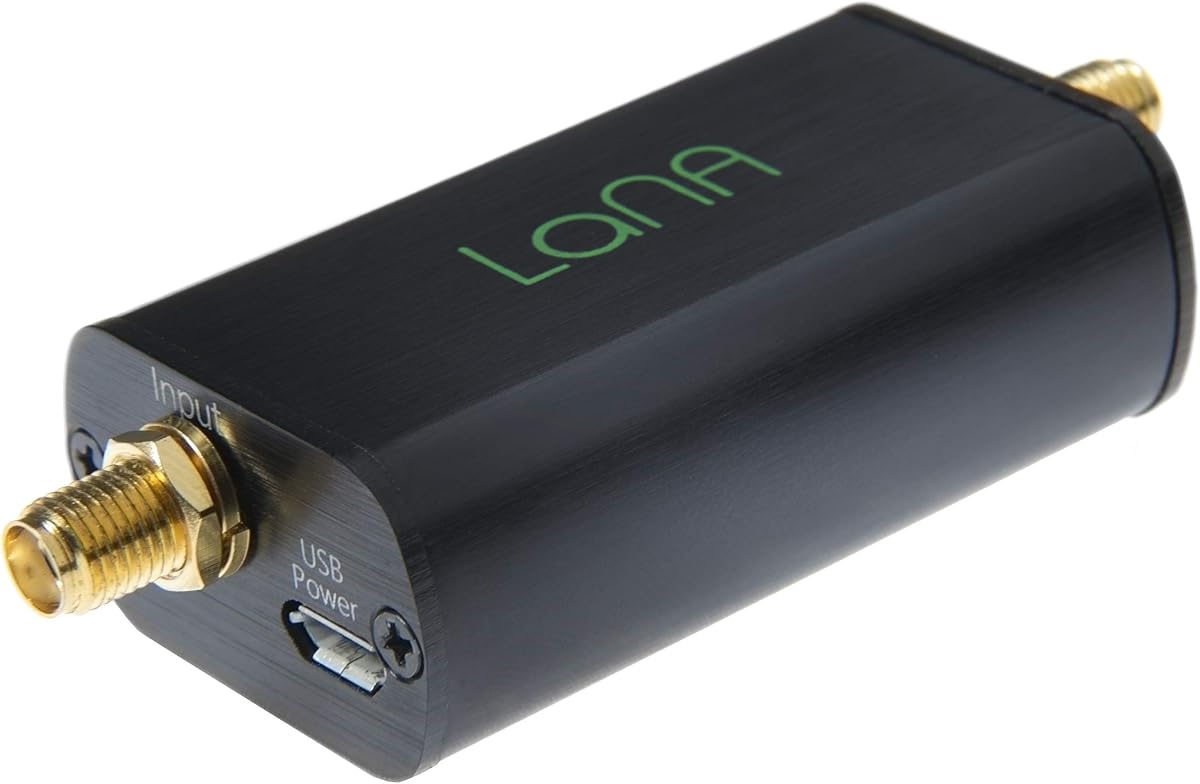
The Nooelec Lana module improves SNR for RTL-SDR and other radio units. With a 4.2 rating, it offers a wideband 20MHz to 4GHz capability.
We may earn a commission when you buy through this link, at no additional cost to you.
Its low noise figure and higher gain enhance signal clarity. The unit can be powered via bias tee, USB, or DC adapter for flexible integration.
Users should note that some SDRs require a DC block between the LNA and radio when using external power. This avoids potential compatibility issues.
Buy this if you need a versatile LNA module. It is best for SDR hobbyists seeking better linearity than standard SPF5189Z modules.
Bias tee, USB, or DC power allows easy integration with various radio setups and enclosures.
20MHz to 4000MHz coverage supports FM broadcast, ham radio, and general RF monitoring applications.
We may earn a commission when you buy through this link, at no additional cost to you.
The Generic Taurus MK2 pre-amplifier is designed for scanner receivers but supports ham needs. It has a 4.1 rating and covers 25 to 2000MHz with 6 to 20dB gain.
We may earn a commission when you buy through this link, at no additional cost to you.
Its PP3 battery operation makes it portable for field monitoring. The included BNC patch lead simplifies connecting it to antennas or scanners.
Gain may vary depending on the setup and environment. It is best used in weak signal areas rather than strong signal urban zones.
Buy this for scanner-focused listening. It is suitable for hobbyists needing a simple amplifier to boost signals across a wide span.
25 to 2000MHz range allows reception of various bands including shortwave and ham frequencies.
BNC patch lead included helps connect to scanners quickly without extra cabling.
We may earn a commission when you buy through this link, at no additional cost to you.
This BJ-300 Plus amplifier delivers 150W SSB output for CB and ham operations. It has a 3.1 rating and supports AM, FM, SSB, and CW modes.
We may earn a commission when you buy through this link, at no additional cost to you.
Key strengths include a high-efficiency cooling fan and polarity protection. Simple controls allow adjustment of high or low power based on needs.
Users might notice lower ratings due to reliability concerns. Ensure proper ventilation and use only with compatible low-power transceivers to avoid damage.
Buy this if you need high power on a budget. It is best for users who prioritize output wattage over advanced features.
Large aluminum heat sink and cooling fan prevent overheating during extended operation.
Electronic polarity reversal protection and fuses safeguard the amplifier from incorrect connections.
We may earn a commission when you buy through this link, at no additional cost to you.
The AURSINC ZK09-UM LNA Module scores a 4.9 for low noise and frequency range. It covers 100kHz to 10GHz with 21dB gain ideal for TinySA ULTRA.
We may earn a commission when you buy through this link, at no additional cost to you.
Key strengths include high PSRR LDO to suppress noise. USB powered interface provides convenience for desktop or portable test setups.
Trade-offs include sensitivity to damp environments and input power limits. Avoid excessive input to prevent saturation or permanent damage.
Buy this for high-frequency testing. It is best for users needing better high-band performance than onboard LNAs provide.
High PSRR LDO suppresses power supply noise for obvious noise floor improvement over standard USB modules.
USB powered design makes it easy to connect to computers or hubs without additional adapters.
We may earn a commission when you buy through this link, at no additional cost to you.
This amplifier delivers 150W SSB output with compatibility across AM/FM/SSB/CW modes. It holds a 3.1 rating and requires 13.8V input power for operation.
We may earn a commission when you buy through this link, at no additional cost to you.
Key strengths include a high-efficiency cooling fan and polarity protection. Simple controls help new or experienced users set high or low power quickly.
Some users report reliability concerns, leading to lower ratings. Proper ventilation and matched input power are essential to maintain stability.
Buy this for high-power needs. It suits operators looking for affordable power boosting with basic protection features.
Supports AM, FM, SSB, and CW for versatile communication across amateur radio bands.
Electronic polarity protection and dual fuses protect against electrical surges or incorrect connections.
We may earn a commission when you buy through this link, at no additional cost to you.
This model offers 150W max output for HF transceivers. It supports AM, FM, SSB, and CW with 13.8V power. No rating data is available yet.
We may earn a commission when you buy through this link, at no additional cost to you.
Key strengths include HI/LO power switches and overvoltage protection. Aluminum alloy heat sinks ensure efficient dissipation for stable operation.
Trade-offs include input limits that may require low-power radios. Ensure your transceiver matches the 3-5W input requirement.
Buy this for reliable power boosting. It suits HF operators needing a robust amplifier with protection features.
HI/LO power selection switches let users adjust output based on operating needs quickly.
Compact aluminum alloy heat sink construction helps maintain stable temperatures during operation.
We may earn a commission when you buy through this link, at no additional cost to you.
Selecting the right amplifier requires understanding your needs and technical specifications. Here are key factors to consider before you buy.
Ensure the amplifier covers the bands you use most. Some models support broad ranges like 0.1 to 2000MHz while others focus on HF or VHF.
Check if the unit includes all bands required for your station to avoid incompatibility.
Gain affects weak signal reception while output power impacts transmission strength. Higher gain improves sensitivity but may saturate in noisy areas.
Choose gain and output levels that match your radio's capabilities for balanced performance.
A lower noise figure means clearer reception. LNA units often feature low noise figures to enhance weak-signal clarity.
Prioritize low noise figures when planning for weak signal or DX operations.
Check if the amplifier needs mains power or batteries. USB or DC options provide flexibility for field use.
Match the power source to your environment for portable or fixed installations.
Verify that the amplifier works with your transceiver or receiver model. Some units are designed for QRP radios while others handle high power.
Review specs to ensure your equipment matches input and output requirements.
Look for polarity reversal, overcurrent, or overheating protection. These features safeguard your equipment from damage during operation.
Choose units with built-in protection to avoid costly repairs or replacements.
Portable models may be smaller while home station amplifiers could be larger. Size affects mounting and transport options for field use.
Select a form factor that fits your operating space or portable kit.
Common connectors include SMA and PL-259. Matching your antenna and radio connectors avoids the need for extra adapters.
Confirm connector types before purchase to simplify setup and reduce losses.
Connect the amplifier between your antenna and radio receiver using the correct connectors. Ensure tight connections to prevent signal leakage or loss.
Monitor the temperature during use and ensure adequate airflow to avoid overheating. Clean dust from heat sinks periodically for consistent performance.
Store portable units in dry conditions to prevent moisture damage. Check cables and connectors regularly for wear to maintain reliable operation.
It is a device that strengthens weak incoming or outgoing radio signals. Amplifiers improve reception and communication range for amateur operators.
No. Many units are receiving-only LNAs. Always check if the model supports transmit power to avoid damage.
Match the amplifier's range to the bands you use. HF needs differ from VHF or SDR monitoring.
Some models require external power while others use USB or batteries. Check the product specs for power requirements.
Ensure proper ventilation and avoid continuous high-power transmissions. Use units with built-in cooling fans if available.
Yes. Many LNAs support SDR setups to improve signal clarity. Verify compatibility before purchasing.
SMA and PL-259 are standard. Match these with your equipment to avoid adapters.
Inspect connectors and cables monthly. Clean dust from heat sinks to ensure stable performance.
This guide highlighted top amplifiers for boosting signal. The Xiegu GPA100, RF Wideband LNA Amplifier, and Low Noise RF Amplifier offer reliable options for different needs.
Prioritize features like frequency range and protection based on your setup. Choose units that align with your power requirements for stable operation.
Always verify current prices and availability before purchasing. Specifications and availability change, so stay informed.