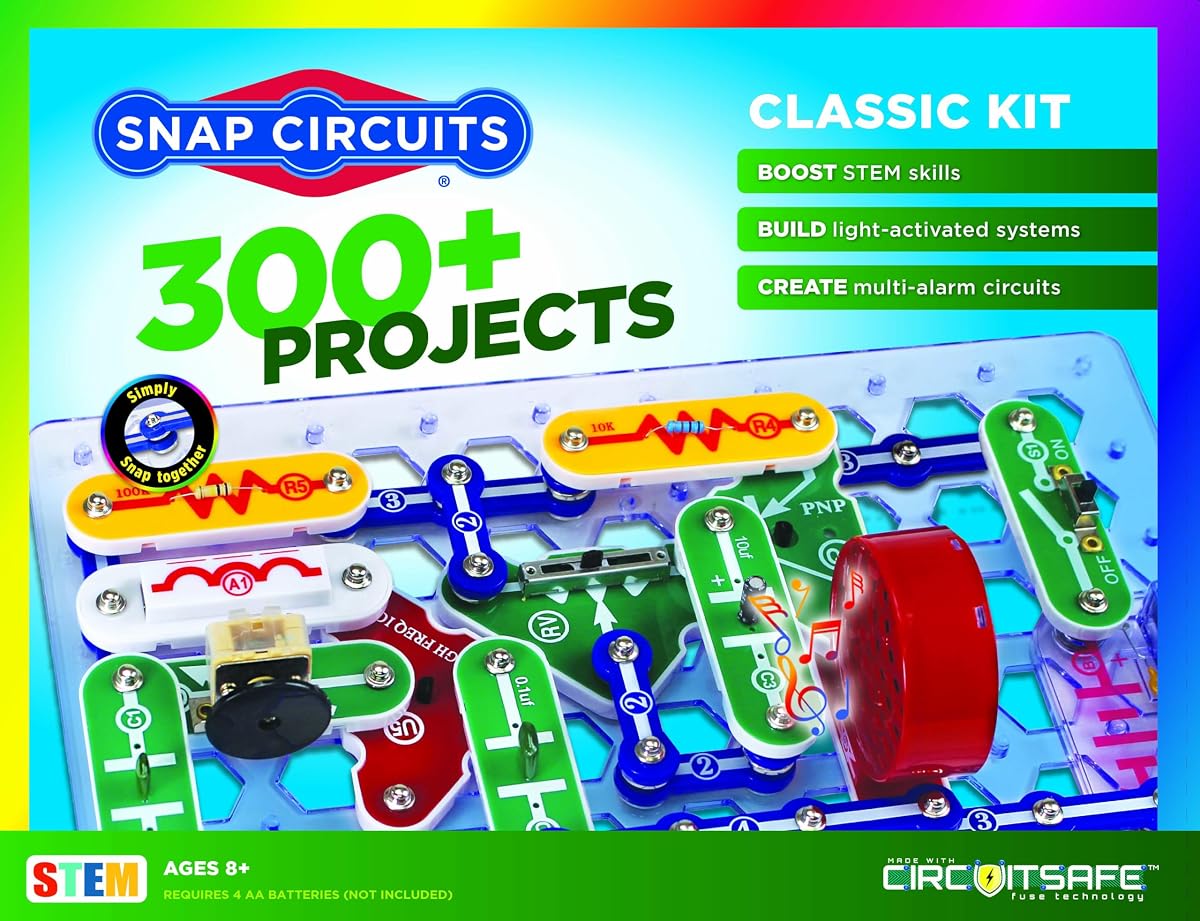
SNAP CIRCUITS Classic SC-300
4.8Editor score
300+ exciting projects to build
No tools or soldering needed
Color-coded pieces snap together
This guide compares the top electronics kits for teens including Arduino starters, soldering projects, and robotics to help you find the perfect STEM learning
Finding the right electronics kits for teens can transform a hobby into a lifelong passion. These sets introduce coding, circuitry, and engineering concepts through hands-on builds that challenge and inspire young makers.
We evaluated ten highly rated kits based on component quality, tutorial support, and project variety. Each option offers unique features suited for beginners or those ready to tackle advanced soldering and programming tasks.
Every pick highlights key strengths and ideal use cases to simplify your choice. Note that prices and availability change frequently so check current listings before purchasing your next STEM adventure.
4.8Editor score

4.7Editor score

4.5Editor score
The following table compares the essential specifications and features of all ten kits to help you quickly identify the best fit for your teen's skill level and interests.


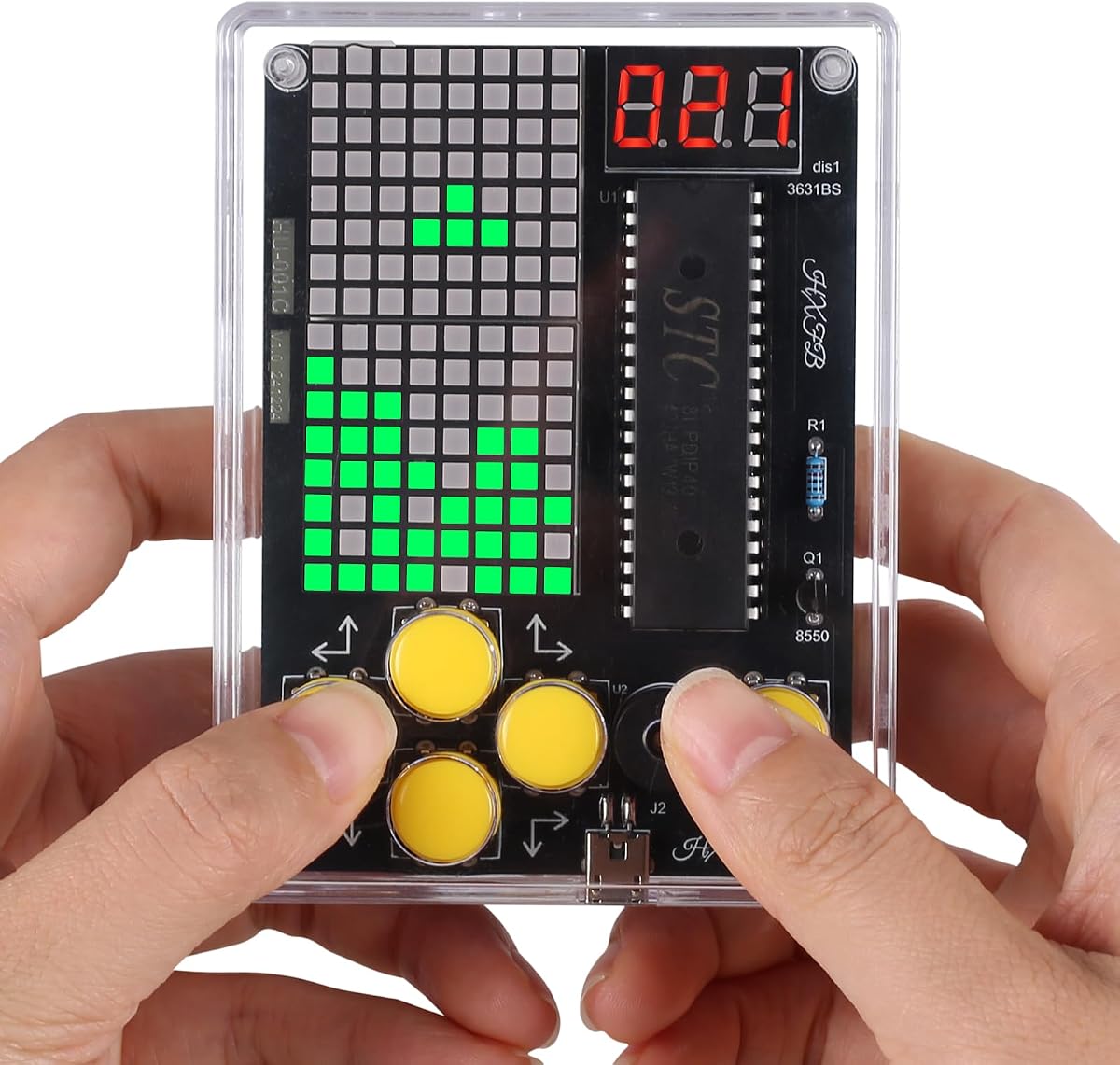
This kit offers an impressive array of components and guided projects ideal for teens ready to dive deep into electronics. With a rating of 4.7 it stands out for its comprehensive nature and educational value.
We may earn a commission when you buy through this link, at no additional cost to you.
The MEGA 2560 R3 provides significantly more memory and I/O pins than standard boards allowing for complex builds combining multiple sensors and displays. Included modules like RFID readers and servo motors expand project possibilities beyond simple LED blinking.
While the price is higher than basic starter kits the sheer volume of parts justifies the cost. Teens can progress from basic tutorials to custom interactive systems without needing immediate upgrades.
It is the ideal choice for students who want a long-term learning platform. The organized storage and detailed lessons ensure that teens stay engaged and motivated throughout their STEM journey.
The enhanced memory and pin count support larger projects that would overwhelm standard boards.
Structured lessons help teens understand logic and circuitry without feeling overwhelmed by complexity.
We may earn a commission when you buy through this link, at no additional cost to you.
This kit balances affordability and content perfectly for teens starting their electronics journey. Its 4.7 rating reflects consistent quality and reliable performance across multiple projects.
We may earn a commission when you buy through this link, at no additional cost to you.
The UNO R3 board is the standard for Arduino learning making it easy to find additional resources online. The included components cover a wide range of sensors and actuators ensuring diverse project opportunities.
Teens can move from guided lessons to original creations quickly thanks to clear example code. The pre-soldered modules reduce frustration allowing focus on coding and logic rather than wiring.
It serves as an excellent foundation for classroom use or home hobbies. Teens who master this kit will be well-prepared for more advanced robotics or engineering challenges.
Using the UNO R3 ensures teens can access thousands of online tutorials and project ideas.
Included power supplies mean teens can run projects without needing extra batteries or adapters.
We may earn a commission when you buy through this link, at no additional cost to you.
This robot car kit transforms coding into a tangible physical experience that teens find incredibly engaging. With a 4.5 rating it offers a unique blend of engineering and programming skills.
We may earn a commission when you buy through this link, at no additional cost to you.
The FPV camera and Wi-Fi module allow for remote control and live video feeds which adds a modern tech twist to traditional robotics. Line tracking and obstacle avoidance features teach sensor integration effectively.
Assembly involves keyed connectors that reduce wiring errors making it accessible for beginners. Teens can modify code to create custom behaviors fostering creativity and problem-solving abilities.
It is perfect for family projects or coding clubs where collaboration is key. The rechargeable battery ensures extended playtime so teens can test ideas repeatedly without interruption.
The live video feed makes programming feel like operating a real remote vehicle.
Built-in sensors teach how robots perceive and react to their physical environment.
We may earn a commission when you buy through this link, at no additional cost to you.
This classic kit is renowned for making electronics accessible without any specialized tools. A 4.8 rating highlights its reliability and enduring popularity among parents and educators alike.
We may earn a commission when you buy through this link, at no additional cost to you.
The snap-on design allows teens to build over 300 projects quickly from radios to alarms. This rapid feedback loop keeps motivation high and concepts easy to grasp without frustration.
While it lacks soldering practice it excels at teaching circuit logic and component functions. The color-coded layout helps teens visualize connections and understand how electricity flows.
It is ideal for teens who want immediate results before committing to complex builds. The affordability and durability make it a safe entry point for household STEM exploration.
The snap mechanism enables fast builds so teens can test ideas instantly without delays.
No tools or heat sources mean teens can build safely without adult supervision constantly nearby.
We may earn a commission when you buy through this link, at no additional cost to you.
This kit focuses on practical soldering skills while resulting in a usable Bluetooth speaker. The 3.9 rating suggests mixed results but the unique value of building a real audio device remains strong.
We may earn a commission when you buy through this link, at no additional cost to you.
Teens get to assemble dual speakers and connect components on a board that plays music. The included acrylic case gives the finished product a professional look worth displaying.
While the soldering requirements mean it is best for those with some experience the manual guides each step. Teens can enjoy their creation daily reinforcing the value of the effort spent.
It is suitable for teens aiming to learn hardware skills for future engineering studies. The ability to play music adds a rewarding functional element missing from abstract learning kits.
Unlike dummy projects this speaker produces real sound making the build feel worthwhile.
The soldering practice builds confidence for more complex PCB projects later on.
We may earn a commission when you buy through this link, at no additional cost to you.
Designed for absolute beginners this kit simplifies the entry into electronics and coding. With a 4.7 rating it is known for clear instructions and reliable component quality.
We may earn a commission when you buy through this link, at no additional cost to you.
The UNO R3 controller drives projects that include LCD displays and motor control. Teens can learn digital and analog logic through straightforward examples without needing extra parts.
The compact size makes storage easy while still providing enough components for meaningful builds. Teens can adjust thresholds and speeds to customize their creations as skills improve.
It is an excellent starting point for younger teens or those new to STEM. The PDF tutorials ensure that help is always available to overcome any initial confusion.
The step-by-step lessons break down complex topics into manageable chunks for new learners.
Includes enough sensors and motors to demonstrate key electronic principles effectively.
We may earn a commission when you buy through this link, at no additional cost to you.
This kit adds a vibrant visual element to electronics learning with a dynamic LED light show. A 4.7 rating shows that teens find the visual feedback engaging and rewarding to build.
We may earn a commission when you buy through this link, at no additional cost to you.
The transparent acrylic case lets teens see the circuit work while listening to music. The high-resolution manual guides each soldering step ensuring success even for those new to the process.
While it is less complex than robot kits the visualizer feature makes it appealing for creative teens. It balances technical skill building with a fun aesthetic outcome.
It is perfect for teens interested in design as well as engineering. The finished speaker doubles as a personal gift or desk accessory showing off their skills.
The pulsing LEDs sync with music making the circuit's activity visible and exciting.
Photos in the guide reduce uncertainty so teens can solder confidently without errors.
We may earn a commission when you buy through this link, at no additional cost to you.
This kit offers a unique twist on electronics by building an instrument played without touch. Its 4.5 rating highlights the fun and educational value of creating music with hand movements.
We may earn a commission when you buy through this link, at no additional cost to you.
Teens learn about electric fields and capacitance while assembling parts on a breadboard. The absence of soldering makes it accessible for anyone eager to explore sound and physics.
The detailed manual explains the science behind the instrument ensuring teens understand the principles at work. It serves as a great demonstration of electronics beyond standard circuitry.
It is ideal for teens interested in music or physics who want something different. The interactive nature keeps them engaged for hours as they experiment with sound variations.
Playing the instrument teaches how electric fields interact with physical objects.
The ability to make music immediately after build keeps enthusiasm high.
We may earn a commission when you buy through this link, at no additional cost to you.
This kit acts as a versatile expansion pack allowing teens to add specific capabilities to existing builds. A 4.7 rating reflects its utility for prototyping and diverse applications.
We may earn a commission when you buy through this link, at no additional cost to you.
With modules for light, sound, and motion teens can customize projects to fit their goals. The tutorials help them understand how to integrate each sensor into a control system.
It is particularly useful for teens who already own an Arduino board and want more options. The modular design means they can swap parts without buying new kits.
Ideal for advanced hobbyists or classrooms with multiple students. The variety ensures that teens can always find a new challenge to explore and master.
Allows teens to upgrade basic projects with advanced sensors quickly.
Provides access to niche sensors like flame or hall effect not in starter kits.
We may earn a commission when you buy through this link, at no additional cost to you.
This kit turns electronics into a gaming challenge with seven interactive functions to explore. A 4.1 rating indicates solid performance with some room for improvement in component quality.
We may earn a commission when you buy through this link, at no additional cost to you.
Teens can choose difficulty levels to match their skill progression. Video guidance helps clarify steps that text alone might not explain well.
The game interface makes testing and debugging an engaging part of the build process. Teens get immediate feedback which helps them learn to solve circuit problems.
It is suitable for teens who enjoy games and want to build one themselves. The structured approach ensures they learn soldering and assembly skills systematically.
Turning learning into a game keeps teens motivated throughout the build.
The difficulty levels allow teens to pace themselves as they gain confidence.
We may earn a commission when you buy through this link, at no additional cost to you.
Selecting the right kit depends on your teen's interest in coding, soldering, or simple circuitry. This guide outlines key factors to consider before making a purchase.
Beginners benefit from kits that require no soldering or have clear plug-and-play modules. More experienced teens might prefer kits with raw components that challenge their assembly skills.
Match the kit difficulty to your teen's current abilities to prevent frustration.
Some kits focus heavily on programming logic while others prioritize physical circuit assembly. Decide if your teen wants to write code for robots or build audio circuits.
Look for kits that offer both to ensure a well-rounded STEM experience.
High-quality components ensure that projects work consistently over time. A wider variety of parts allows for more creative and complex builds beyond basic tutorials.
Check if the kit includes sensors or displays that match your teen's interests.
Detailed manuals with diagrams are crucial for independent learning. Video tutorials can also be helpful for visual learners trying to grasp assembly steps.
A clear guide reduces the need for constant adult intervention.
Teens often lose interest quickly so choose a kit with enough content to last weeks or months. Look for kits that allow for customization rather than just following a script.
Projects that can be modified keep engagement levels higher over time.
Ensure that the kit meets safety standards for electrical components. Kits requiring soldering need proper ventilation and heat safety measures which may require adult supervision.
Consider kits with solderless options if safety is a primary concern for your home.
While some kits are affordable, others offer extensive components that justify higher costs. Compare the number of projects and parts included against the price tag.
Investing in a higher quality kit often pays off in longevity and quality.
Kits that allow for expansion with extra sensors or modules provide long-term value. Check if the platform is compatible with other Arduino or Raspberry Pi add-ons.
This ensures that your teen can continue growing their skills with the same base system.
Start by reviewing the manual and organizing all components before beginning any build. This prevents frustration and ensures that every step proceeds smoothly.
If the kit involves soldering, always work in a well-ventilated area and supervise the process. Keep a damp sponge handy to clean the soldering iron tip frequently.
Store unused parts in labeled containers to keep them safe and accessible for future projects. Proper care extends the lifespan of the components and ensures readiness for new builds.
Most solderless kits are designed to be safe for younger teens working independently. However, kits involving soldering should be supervised to ensure safety with heat and electricity. Always check the age recommendations on the packaging.
Many starter kits include tutorials designed for beginners with no coding experience. However, having a basic understanding of logic helps teens progress faster. You can teach them basics alongside the kit lessons.
Solderless kits generally require no tools beyond what is included in the box. Soldering kits will need a soldering iron, stand, and safety equipment. Some may require screwdrivers or pliers.
Most kits are designed to encourage modification and customization once the basics are learned. Teens can change code or swap components to create new variations of the original projects.
Simple projects can take one or two hours while complex builds might require several days of work. This depends on the teen's skill level and how much they explore beyond instructions.
Many manufacturers sell individual components separately, but checking availability before purchasing is wise. For popular boards like Arduino, generic replacements are widely available online.
The ELEGOO Mega 2560 R3 stands out as the top choice for comprehensive learning. The SNAP CIRCUITS Classic offers an excellent entry point without soldering. For robotics, the Smart Robot Car kit delivers engaging interactive experiences.
Prioritize kits that match your teen's current interests and skill levels. A kit that is too easy will bore them while one that is too hard may discourage them from continuing.
Remember to verify current pricing and availability as these factors can change rapidly. Investing in a quality kit provides endless opportunities for creativity and education for years to come.