
PCIE-1394A 4-Ports 1394A PCIE FireWire 400 Expansion Card
4.4Editor score
Adds four Firewire ports
Supports Windows 11
Includes cables and bracket
This guide compares the top Firewire Audio Interface for PC options to help you find the right connection for your legacy audio gear and modern workflows.
Finding a reliable Firewire Audio Interface for PC can be challenging as modern computers often lack legacy ports. This guide explores the best expansion cards and compatible audio hardware to ensure seamless connectivity for your studio setup today.
We evaluated ten top-rated products based on compatibility, data transfer speeds, and user reviews. Our analysis covers expansion cards that add Firewire ports and high-end audio interfaces that support similar professional recording standards across various operating systems.
Each pick highlights specific strengths like driver support, build quality, and input options. Please note that availability and pricing may change frequently, so verify current details before making your final purchase decision for your recording environment.
4.4Editor score

4.6Editor score

5.0Editor score
The following table provides a side-by-side comparison of all ten products reviewed in this guide. It highlights key specifications and ratings to help you quickly identify the device that fits your specific PC connectivity needs.




The PCIE-1394A is a vital tool for users needing to connect older Firewire audio gear to modern PCs. It offers four ports including three 6-pin and one 4-pin connection point for versatile device support.
We may earn a commission when you buy through this link, at no additional cost to you.
It supports IEEE 1394A FireWire 400 protocol with speeds up to 400Mbps. The card auto-detects devices and negotiates connection speeds automatically for stable data transfer without manual configuration.
While it works well with Windows systems from 98 to 11, some PCs may require installing legacy drivers for full functionality. This is a minor trade-off for accessing obsolete hardware interfaces.
This card is ideal for engineers and archivists needing to import data from old camcorders or audio interfaces. It provides a cost-effective bridge between vintage gear and current workstations.
The inclusion of both 6-pin and 4-pin ports allows you to connect a wide variety of legacy Firewire devices without additional adapters.
Using a PCIE X1 interface ensures sufficient bandwidth for all four ports to operate simultaneously without data bottlenecks during transfers.
We may earn a commission when you buy through this link, at no additional cost to you.
The RME Fireface UFX II delivers professional-grade audio conversion with 24-bit/192kHz resolution. It offers extensive connectivity with 30 inputs and outputs suitable for complex recording sessions.
We may earn a commission when you buy through this link, at no additional cost to you.
Its USB 2.0 connection ensures reliable performance for PC environments. The included ARC USB Remote allows precise control over levels and settings directly from your desk.
Direct USB recording capabilities reduce latency significantly during tracking. This feature makes it a preferred choice for musicians recording live performances at home.
While expensive, this unit provides lasting value for serious producers. Its robust build and software stability justify the investment for professional studio applications.
With 30 inputs and outputs you can connect multiple instruments, mixers, and digital devices simultaneously without running out of channels.
The ARC USB Remote provides tactile control over software settings which improves workflow efficiency during recording sessions.
We may earn a commission when you buy through this link, at no additional cost to you.
The M-AUDIO M-Track Duo is designed for podcasters and streamers needing reliable sound capture. It delivers 48kHz resolution ensuring pristine recording quality for vocals and instruments.
We may earn a commission when you buy through this link, at no additional cost to you.
Features include two combo XLR/Line inputs with phantom power for condenser mics. The USB/Direct switch allows for zero latency monitoring so you hear your performance in real time.
Crystal Preamps ensure transparent sound quality even at higher gain settings. This makes it suitable for recording delicate acoustic sources without added noise.
Bundled MPC Beats software adds production value right out of the box. It is an excellent entry point for creators wanting professional results without a large budget.
The interface provides phantom power to enable condenser microphones which are often required for vocal recording.
With dedicated headphone and speaker outputs you can monitor your mix without relying on your computer speakers.
We may earn a commission when you buy through this link, at no additional cost to you.
The Focusrite Scarlett 2i2 4th Gen brings studio-quality sound to your PC. It features a huge 120dB dynamic range matching flagship interfaces found in top studios.
We may earn a commission when you buy through this link, at no additional cost to you.
Auto Gain sets levels perfectly for mics and guitars automatically. Clip Safe prevents clipping so you can focus on creativity rather than technical settings.
Air mode lifts vocals and guitars to the front of the mix. This adds musical presence and rich harmonic drive to your recordings for a professional finish.
Included software like Pro Tools Intro and Ableton Live Lite provides all tools needed to start recording immediately. It is a top choice for artists starting their career.
Auto Gain removes guesswork by setting optimal levels for different sources so you avoid distortion during setup.
Air mode adds harmonic drive that helps vocals cut through the mix without needing heavy EQ during mixing.
We may earn a commission when you buy through this link, at no additional cost to you.
The RME Fireface UCX II offers 20-in/20-out connectivity in a compact USB 2.0 design. It supports macOS Windows and iOS making it versatile for mobile recording setups.
We may earn a commission when you buy through this link, at no additional cost to you.
Its stability is renowned among engineers who require consistent performance during long sessions. The interface handles high channel counts without dropping frames or causing audio dropouts.
It provides extensive connectivity including optical and analog inputs for complex routing needs. This makes it suitable for projects involving multiple microphones and line instruments.
While pricey, it delivers consistent quality and driver reliability. It is a great investment for professionals who need a reliable portable interface for PC and mobile use.
Support for macOS Windows and iOS ensures you can use the same hardware across different devices and operating systems.
With 20 inputs and outputs you can manage large tracking sessions without needing additional external hardware.
We may earn a commission when you buy through this link, at no additional cost to you.
The RME Fireface UFX III is a top-tier audio interface offering 94-in/94-out connectivity via USB 3.0. It represents the pinnacle of modern interface technology for demanding users.
We may earn a commission when you buy through this link, at no additional cost to you.
It includes DSP effects and direct USB recording for low latency monitoring. This reduces CPU load during recording and ensures pristine audio capture without system interruptions.
Extensive digital I/O including ADAT and AES/EBU allows integration with complex audio systems. You can expand your setup easily with external preamps or digital mixers.
This unit is built for professionals who need maximum flexibility and performance. It justifies its high price with unmatched features and reliability for high-end production.
The USB 3.0 interface enables faster data transfer which supports high channel counts and sample rates without latency.
Built-in DSP effects allow you to process audio during recording reducing the load on your computer processor.
We may earn a commission when you buy through this link, at no additional cost to you.
The RME Fireface 802 FS offers 30-in/30-out connectivity via USB 2.0 with robust DSP capabilities. It is designed for professional studios requiring extensive routing options.
We may earn a commission when you buy through this link, at no additional cost to you.
It supports DSP effects across macOS Windows Linux and iPad platforms for flexible integration. This ensures your workflow remains consistent regardless of your chosen operating system.
Two headphone outputs provide easy monitoring for clients or collaborators during sessions. This feature is essential for tracking environments where real-time feedback is critical.
With ADAT and S/PDIF I/O you can expand your setup with external devices. It remains a reliable choice for high-end audio production work.
Compatibility with macOS Windows Linux and iPad ensures seamless integration across various studio environments.
Dual headphone outputs allow multiple people to monitor the mix simultaneously during recording sessions.
We may earn a commission when you buy through this link, at no additional cost to you.
The PIYONE USB C Interface delivers 24-bit/192kHz fidelity in a compact one-cable setup. It handles both data transfer and bus power eliminating external power supplies for portability.
We may earn a commission when you buy through this link, at no additional cost to you.
It supports loopback functions for streaming and zero-latency monitoring via Direct Monitor feature. This ensures you hear your voice and instruments in real time while recording.
Combo jacks allow connection of mics and instruments with built-in 48V phantom power. The elegant design includes illuminated control rings for visibility in low-light studios.
This interface is perfect for creators needing a reliable tool for laptop and mobile setups. Its class-compliant nature means no drivers are required for quick start.
A single USB C cable provides both data and power which simplifies your desk setup and reduces clutter.
Loopback allows you to stream internal audio to your mic input making it ideal for broadcasting and podcasting.
We may earn a commission when you buy through this link, at no additional cost to you.
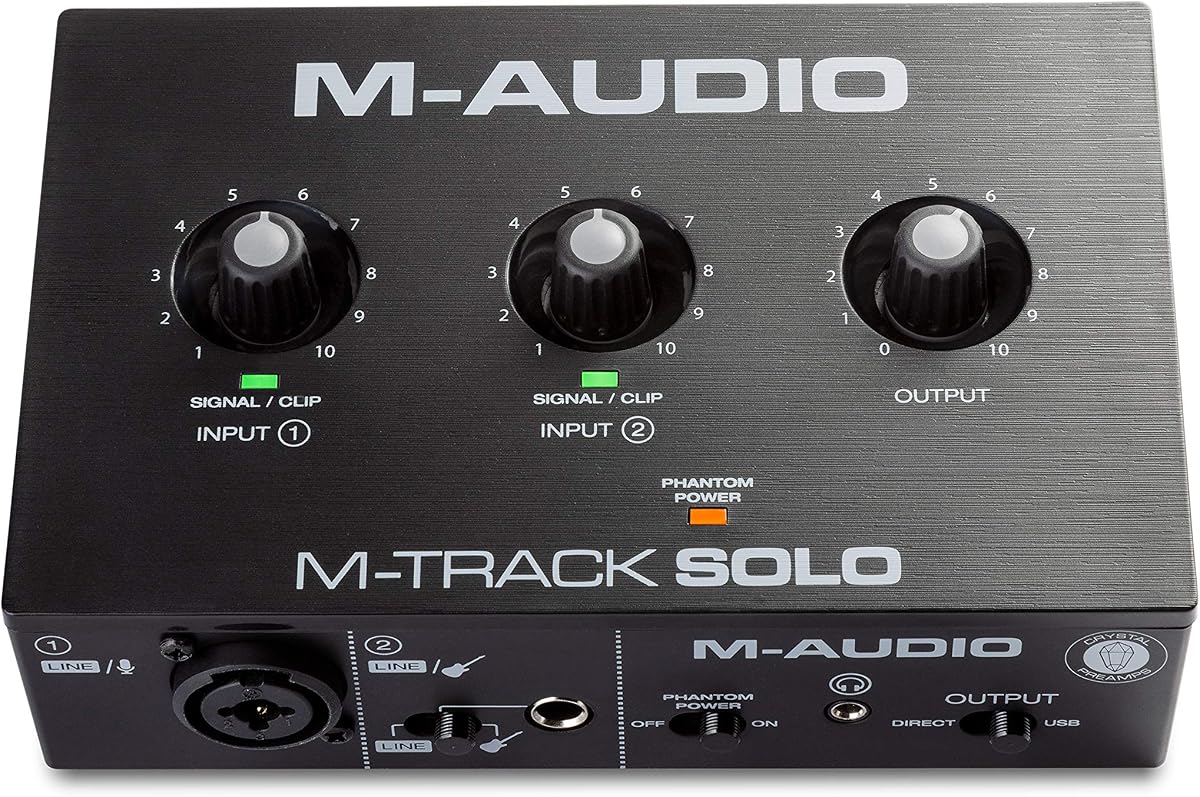
The M-AUDIO M-Track Solo is a portable USB sound card delivering 48kHz resolution for pristine recording. It covers basic needs for podcasting and streaming effectively.
We may earn a commission when you buy through this link, at no additional cost to you.
It includes one combo XLR/Line input with phantom power and one Line/Instrument input. This versatility allows you to connect a mic or guitar simultaneously.
Features include USB/Direct switch for zero latency monitoring and stereo RCA outputs. The Crystal Preamp ensures optimal sound quality from condenser microphones.
Bundled MPC Beats software provides essential production tools. It is an ideal budget option for beginners starting their first recording setup.
With fewer connections and controls this interface is easy to set up and use for quick recording sessions.
Included MPC Beats software gives you access to production tools immediately after purchase.
We may earn a commission when you buy through this link, at no additional cost to you.
The PreSonus AudioBox 96 is a value-packed USB 2.0 interface for personal recording. It features 2 high-quality Class-A mic preamps for great sound quality.
We may earn a commission when you buy through this link, at no additional cost to you.
It includes 2 high-headroom instrument inputs plus MIDI I/O for connecting keyboards. This expands your connectivity options beyond standard audio inputs.
Studio-grade converters allow up to 24-bit/96kHz recording ensuring high resolution. USB bus power makes it mobile friendly without needing additional supplies.
Comes with Studio One Artist and over $1000 worth of recording software. It is a solid choice for musicians wanting a complete setup in one purchase.
Built-in MIDI I/O allows you to connect keyboards and controllers directly without extra adapters.
Included DAW and plugin suite provides everything you need to start producing music right away.
We may earn a commission when you buy through this link, at no additional cost to you.
Selecting the right interface involves considering connectivity options, compatibility with your operating system, and the specific audio quality you need for your projects.
Ensure your PC has the necessary slot or port for the interface. For Firewire specific hardware, you may need a PCIE expansion card as modern PCs rarely include built-in Firewire ports.
Check your motherboard layout to confirm available PCIE slots before purchasing an expansion card.
Verify that the driver supports your specific version of Windows or macOS. Legacy hardware often requires legacy drivers that may not be fully compatible with newer OS versions.
Look for products explicitly mentioning Windows 10 and 11 support for better long-term reliability.
Higher bit depths and sample rates like 24-bit/96kHz or 192kHz provide better dynamic range and fidelity. This is crucial for professional recording and mastering workflows.
Choose higher specs if you intend to produce music for commercial release or critical listening.
Consider how many inputs and outputs you need for instruments and monitors. A 2-in/2-out interface is sufficient for solo artists while larger setups require more channels.
Ensure your interface has the right connectors like XLR or TRS for your existing gear.
If you use condenser microphones ensure the interface provides 48V phantom power. This is essential for powering these mics during recording sessions.
Check if the phantom power is global or switchable per channel based on your needs.
Low latency monitoring is vital for recording without hearing a delay. Look for direct monitoring features or robust drivers that minimize processing delay.
Interfaces with DSP processing can further reduce latency by handling effects on the hardware.
Many interfaces include DAWs and plugins which add value to the purchase. Ensure these tools are compatible with your workflow and operating system.
Software bundles can save you money compared to buying production tools separately.
Set a clear budget range based on your requirements. Entry-level models offer basic functionality while premium units provide studio-grade performance and stability.
Investing in a slightly more expensive model often pays off in durability and support longevity.
Always install the latest drivers before connecting the hardware to ensure compatibility. Follow the manufacturer instructions for any legacy driver setups if required by your system.
Avoid touching exposed connectors and store cables properly to prevent physical damage. Keeping your setup dry and dust-free helps maintain optimal performance over time.
Update your operating system regularly to maintain security and stability. Ensure your DAW software supports your interface for seamless integration during recording sessions.
Most modern desktops and laptops do not include built-in Firewire ports. You typically need a PCIE expansion card to add Firewire connectivity for legacy audio gear.
While USB and Thunderbolt are more common, Firewire remains vital for connecting legacy audio gear. Expansion cards allow you to use older devices with modern computers.
Firewire 400 offers speeds up to 400Mbps while Firewire 800 supports up to 800Mbps. Higher speeds allow for more data transfer but require compatible ports and cables.
Most bus-powered interfaces work via USB without extra supplies. However some legacy Firewire devices may require external power or specific cables.
Many USB audio interfaces support macOS but legacy Firewire hardware often requires specific drivers. Check product details for macOS compatibility before purchasing.
Firewire connections typically use 6-pin or 4-pin cables. Ensure you have the correct adapter or cable to match your interface and device ports.
We reviewed ten options ranging from budget expansion cards to high-end studio interfaces. Each product offers unique features suited for different recording needs and system requirements.
Prioritize compatibility with your OS and the type of connectors your existing gear uses. Choosing the right balance between price and performance ensures a smooth recording workflow.
Please check current prices and availability as these can vary over time. Verify driver support details before finalizing your purchase to avoid compatibility issues.