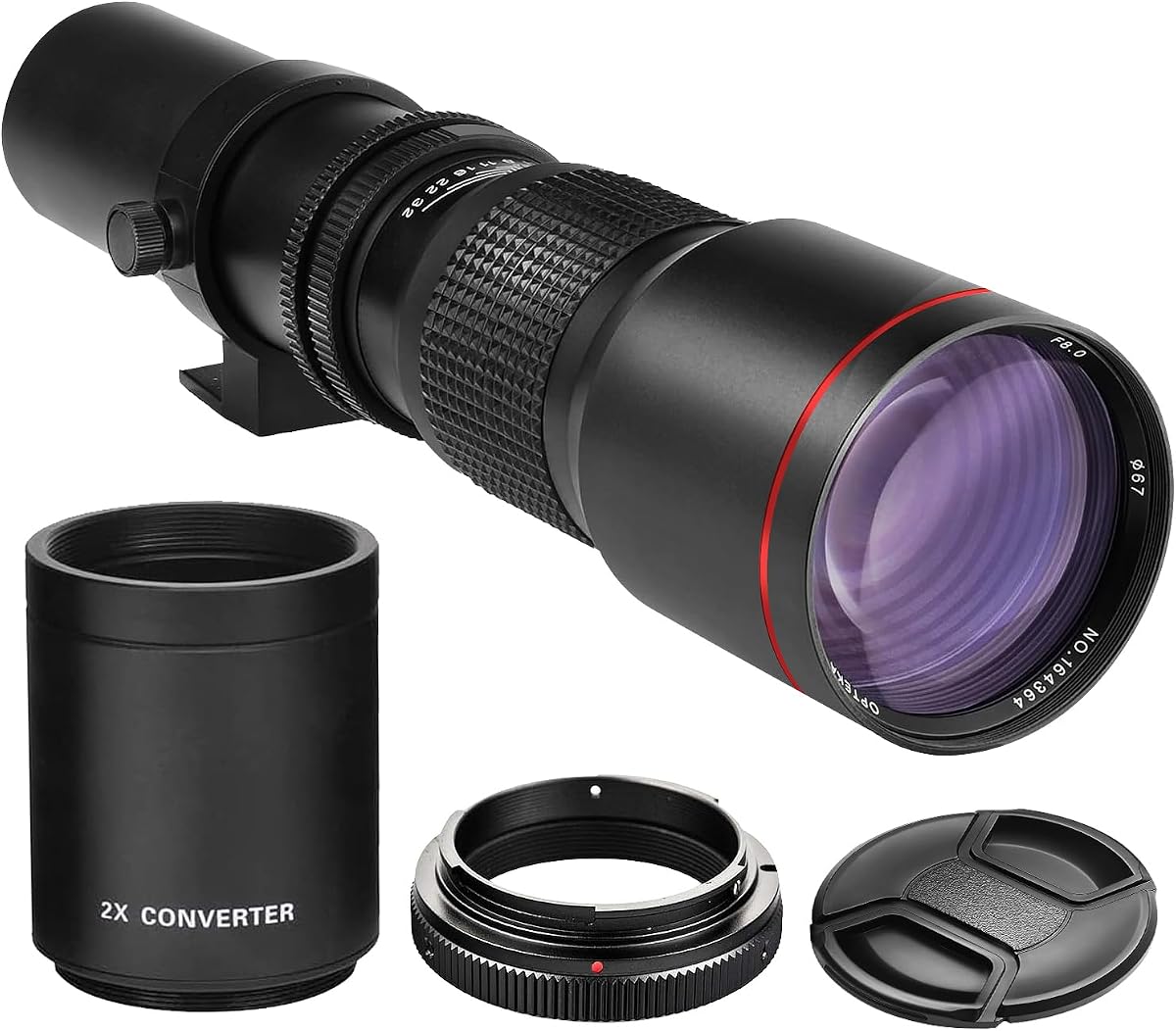
High-Power 500mm/1000mm f/8 Manual Telephoto Lens
4.0Editor score
1000mm max focal length
Lightweight manual design
Compatible with many Canon DSLRs
This guide compares the top 10 Camera Lens for Long Distance Wildlife options to help you choose the right telephoto zoom for capturing sharp, detailed shots
Choosing the right Camera Lens for Long Distance Wildlife is crucial for capturing sharp images of animals in their natural habitat without disturbing them. A good telephoto lens offers the reach needed to frame subjects tightly while maintaining optical quality and stability during handheld or tripod shooting sessions.
We evaluated ten highly rated lenses based on focal range, image stabilization, autofocus speed, build quality, and overall value. Our comparison includes options for Canon EF and RF mounts as well as Nikon systems, covering a wide spectrum from budget-friendly manual optics to professional-grade zooms.
Each pick highlights key strengths and trade-offs to help you find the best match for your camera body and photography goals. Note that prices and availability can change frequently, so check current listings before making your final purchase decision today.
4.0Editor score
4.7Editor score

4.0Editor score
The following table presents a side-by-side overview of all ten lenses included in this guide. Each entry lists essential specifications such as focal range, maximum aperture, stabilization type, and mount compatibility to help you quickly identify which option fits your specific camera system and wildlife photography needs.



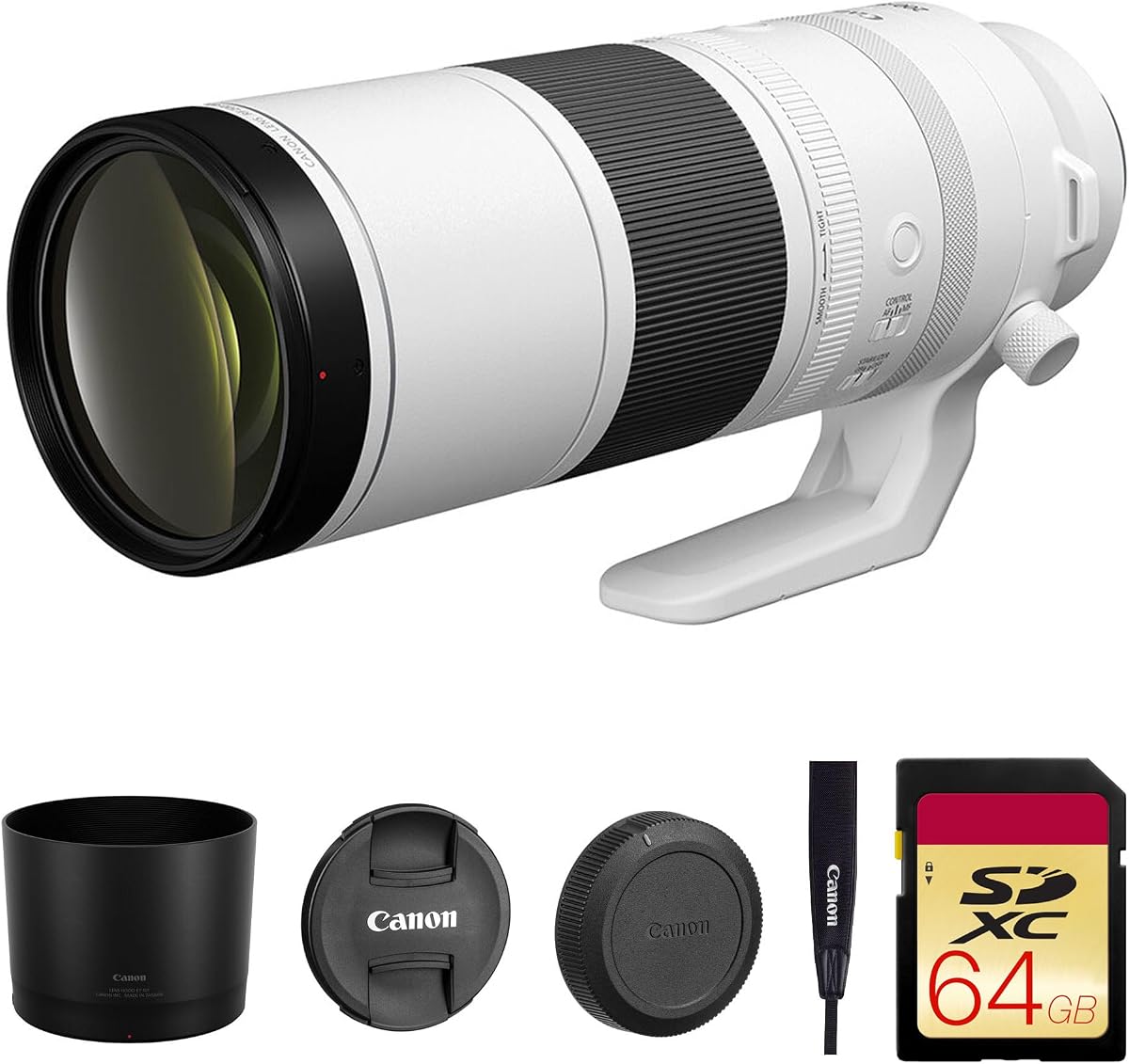
This Canon RF 200-800mm f/6.3-9 IS USM Lens Bundle is a top-tier option for wildlife shooters seeking extreme reach. With a 4.7 rating and super-telephoto zoom, it delivers sharp results even when handheld. The included 64GB SDXC card makes it ready for immediate use in the field.
We may earn a commission when you buy through this link, at no additional cost to you.
Its standout quality is the unmatched zoom flexibility from 200mm to 800mm, perfect for birding and nature photography. Built-in image stabilization ensures shake-free results, while the fast USM autofocus system captures moving subjects quickly. Despite its reach, the lens remains compact and field-ready for travel.
Trade-offs include a higher price point and compatibility limited to Canon RF mount mirrorless cameras. However, the optical quality and versatility justify the investment for serious enthusiasts. The lightweight design makes it easier to carry during long outdoor adventures compared to heavier DSLR options.
This lens is ideal for Canon RF users who prioritize reach and image quality without sacrificing portability. Whether you are tracking birds in flight or distant mammals, it provides the tools needed to frame subjects tightly. It stands out as the best overall choice for long distance wildlife photography.
The 800mm maximum focal length allows you to capture detailed shots of wildlife from a safe distance without intrusion.
Built-in stabilization supports handheld shooting at full zoom, reducing blur caused by camera shake in low light.
We may earn a commission when you buy through this link, at no additional cost to you.
The Canon RF200-800mm F6.3-9 IS USM Super-telephoto Zoom Lens is designed for mirrorless shooters needing powerful capabilities. With a 4.6 rating and 800mm reach, it excels at wildlife and nature photography. Its compact design makes it easier to manage than traditional super-telephoto lenses.
We may earn a commission when you buy through this link, at no additional cost to you.
Key strengths include the world's first AF super-telephoto zoom with an 800mm telephoto end. The optimized optical design maintains high quality across the zoom range. Compatibility with RF extenders adds even more versatility for distant subjects while retaining mobility in the field.
Trade-offs involve the variable aperture and lack of EF mount support. Still, the comfort and reach balance well for modern mirrorless users. The lightweight build ensures you can shoot handheld for extended periods without fatigue during outdoor adventures.
Buy this lens if you own a Canon RF body and want professional reach in a manageable package. It is excellent for sports, wildlife, and outdoor action. The combination of performance and portability makes it a strong contender in this category.
Advanced optics ensure sharp and clear images throughout the zoom range for consistent performance.
Works with RF 1.4x and 2x extenders to extend reach further for very distant subjects.
We may earn a commission when you buy through this link, at no additional cost to you.
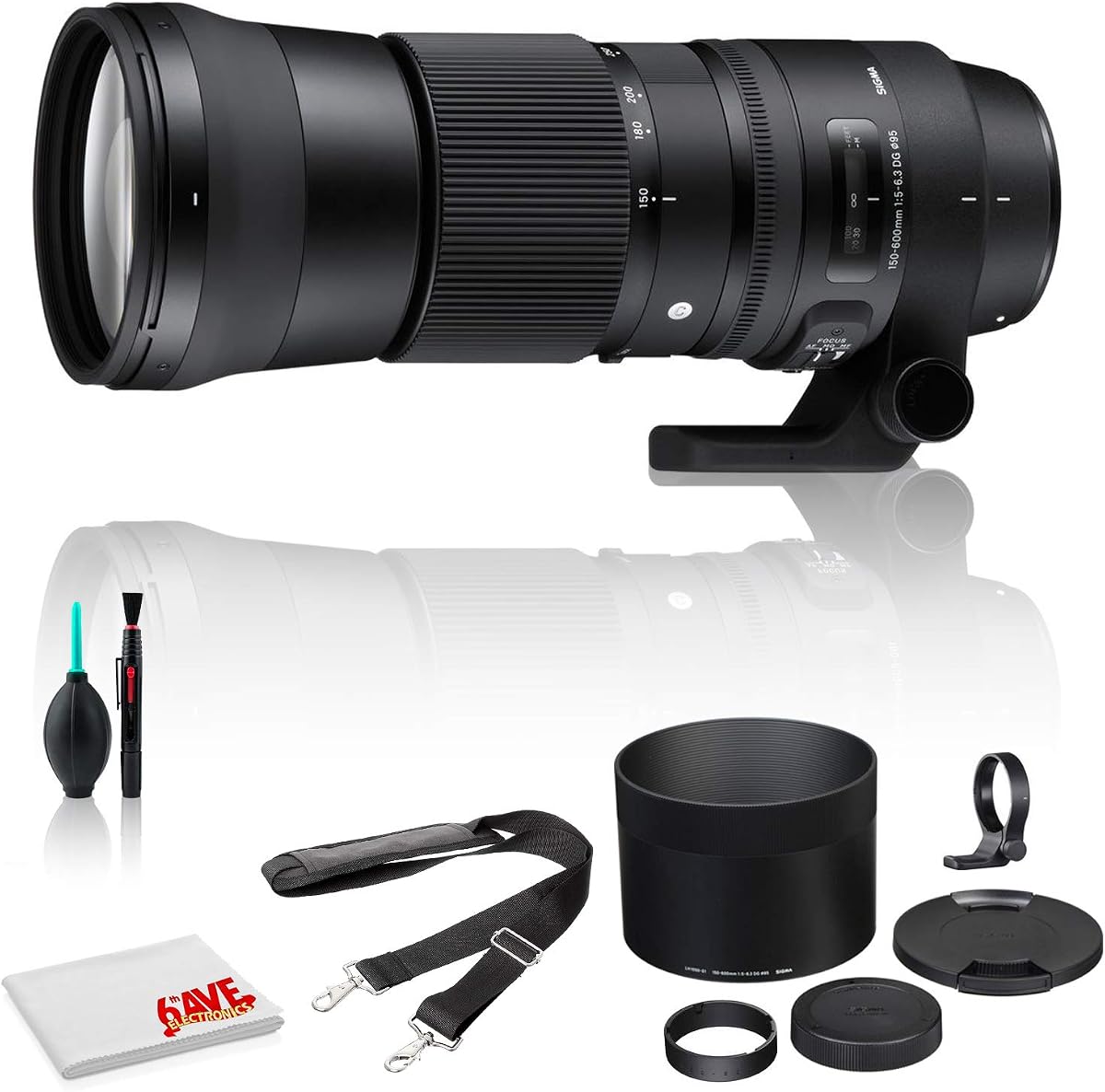
The Sigma 150-600mm f/5-6.3 DG OS HSM Contemporary Lens offers solid performance for Canon EF users. With a 4.5 rating and a bundle including a cleaning kit, it provides great value. The optical stabilization and autofocus motor ensure reliable tracking of wildlife subjects.
We may earn a commission when you buy through this link, at no additional cost to you.
Key strengths include one FLD and three SLD elements that reduce aberrations. The Hyper Sonic Motor AF system delivers speed and quiet operation. This lens is a robust choice for full-frame and APS-C DSLRs seeking extensive reach without breaking the bank.
Trade-offs include its weight and lack of mirrorless native support. However, for DSLR owners, it remains a versatile option. The included cleaning kit adds convenience for field maintenance. It strikes a good balance between cost and optical performance.
This lens suits photographers who already own an EF mount camera and need long reach. It is ideal for nature, birding, and sports. The build quality and optical features make it a trusted choice for dedicated wildlife shooters.
Special glass elements minimize chromatic aberration for sharper and more color-accurate images.
Includes a deluxe cleaning kit to keep your lens in top condition during outdoor use.
We may earn a commission when you buy through this link, at no additional cost to you.
The High-Power 500mm/1000mm f/8 Manual Telephoto Lens is the most affordable option for long distance shots. With a 4.0 rating and compatibility across many Canon DSLRs, it offers extreme reach. The manual focus allows full creative control for static subjects.
We may earn a commission when you buy through this link, at no additional cost to you.
Key strengths include its 2X teleconverter doubling power to 1000mm. It brings distant wildlife closer than expected. The robust black finish withstands outdoor rigors. For users on a budget, this lens provides unmatched magnification at a low cost.
Trade-offs are significant: it lacks autofocus and has a slow f/8 aperture. You must shoot carefully and use a tripod for best results. However, for patient photographers, the value is hard to beat. It is a practical entry into super-telephoto photography.
Buy this lens if you need extreme reach on a tight budget and don't mind manual focus. It works well for landscapes or stationary wildlife. The durability and compatibility make it a reliable companion for occasional outdoor adventures.
The included converter doubles your reach to 1000mm for extreme distance photography.
Manual focus and aperture let you fine-tune shots exactly as you envision them.
We may earn a commission when you buy through this link, at no additional cost to you.
The Canon EF 100-400mm f/4.5-5.6L IS USM Lens is a professional L-series choice for wildlife. With a bundle including a filter kit, it offers extensive reach and quality. Its optical stabilization and ring-type USM autofocus ensure sharp and reliable results in the field.
We may earn a commission when you buy through this link, at no additional cost to you.
Key strengths include one fluorite element and four aspherical elements that reduce aberrations. The panning stabilization mode tracks moving subjects well. Compatibility with extenders adds flexibility. For full-frame and APS-C DSLRs, it provides dependable image quality throughout.
Trade-offs involve its weight and lack of native RF support. However, for those with EF bodies, it remains a top pick. The removable tripod collar supports balanced shooting. Its professional build justifies the investment for serious work.
This lens is ideal for wildlife shooters needing professional optics and reliability. It suits sports and distant action. The advanced construction and stabilization deliver clarity. It is a trusted choice for photographers committed to quality images.
Special elements minimize chromatic and spherical aberrations for high clarity across the range.
A rotating collar provides balanced support for stable shooting with a tripod or monopod.
We may earn a commission when you buy through this link, at no additional cost to you.
The High-Power 420-1600mm f/8.3 HD Manual Telephoto Zoom Lens offers unmatched zoom capability for the price. With a 4.0 rating and EF mount compatibility, it brings distant wildlife into focus. The 2X teleconverter doubles the power to 1600mm for extreme shots.
We may earn a commission when you buy through this link, at no additional cost to you.
Key strengths include its 420mm-800mm focal length with a 62mm filter thread. It captures intricate detail and highlights subject matter beautifully. The f/8.3 aperture ensures crisp photos. For photographers seeking maximum range without high cost, this lens delivers.
Trade-offs involve its manual-only operation and slow aperture. You need a steady hand or tripod for best results. However, for static subjects and landscapes, it performs well. Its compatibility with many Canon models adds versatility.
Buy this lens if you want maximum reach on a budget. It is excellent for distant landscapes and birds. The manual design encourages careful composition. It is a practical option for hobbyists exploring super-telephoto photography.
The 2X teleconverter doubles power to 1600mm, allowing you to frame distant subjects tightly.
Manual focus provides full control for fine-tuning shots and creative expression.
We may earn a commission when you buy through this link, at no additional cost to you.
The Canon RF100-400mm F5.6-8 IS USM Telephoto Lens is a compact RF option for wildlife. With a 4.6 rating and up to 5.5 stops of shake correction, it delivers sharp results. The Nano USM motor ensures smooth and quiet autofocus for live subjects.
We may earn a commission when you buy through this link, at no additional cost to you.
Key strengths include a minimum focusing distance of 2.89 feet at 200mm. This flexibility supports both wildlife and general photography. The combination with IBIS boosts stabilization to 6 stops. For mirrorless users, it offers high image quality in a light package.
Trade-offs include its shorter max reach and smaller aperture at the long end. However, its portability is a major asset. You can carry it all day without fatigue. It balances performance with weight better than larger alternatives.
This lens suits RF users needing a versatile telephoto for wildlife and general use. It is excellent for travel and hiking. The quality and stabilization make it a reliable pick for serious photography on the go.
Nano USM delivers fast, smooth, and quiet autofocus for capturing action without noise.
5.5 stops of shake correction ensures sharp handheld shots even at the long end of zoom.
We may earn a commission when you buy through this link, at no additional cost to you.
The Canon EF 75-300mm f/4-5.6 III Telephoto Zoom Lens is an entry-level choice for beginners. With a 4.7 rating and lightweight build, it provides a practical first step into telephoto. The smooth zoom mechanism makes it easy to use during sessions.
We may earn a commission when you buy through this link, at no additional cost to you.
Key strengths include its compact size and 16.8 ounce weight. It fits many Canon SLR models easily. While it lacks stabilization, it remains a good training lens. For daytime and stable shooting, it can produce decent results.
Trade-offs include the lack of image stabilization and limited reach. You may need a tripod or higher shutter speeds for sharp images. However, the price and portability make it a low-risk choice. It is ideal for learning composition.
Buy this lens if you are new to telephoto and need an affordable option. It suits casual wildlife and travel shots. The ease of use helps you practice focusing. It is a solid start for those building a kit.
Compact size allows you to carry it comfortably for extended periods without fatigue.
Improved mechanism makes zooming smoother for easier adjustments during shooting.
We may earn a commission when you buy through this link, at no additional cost to you.
The Nikon AF-S NIKKOR 200-500mm f/5.6E ED VR Super Telephoto Zoom Lens Bundle is ideal for Nikon shooters. With a 4.2 rating and up to 4.5 stops of stabilization, it handles wildlife well. The bundle includes filter kits and cleaning tools.
We may earn a commission when you buy through this link, at no additional cost to you.
Key strengths include the Silent Wave Motor for rapid and silent autofocus. Vibration Reduction minimizes shake during handheld shots. A Sport Mode supports tracking moving subjects. For FX and DX sensors, it offers an effective 300-750mm range.
Trade-offs involve its weight and Nikon mount exclusivity. However, the optical quality and reach are strong. The rotating tripod collar supports balanced shooting. It is a robust tool for Nikon users seeking long-range performance.
This lens is perfect for Nikon owners hunting wildlife. Its stabilization and speed make it reliable. The bundle adds practical value for outdoor use. It balances reach and quality effectively for dedicated shooters.
Up to 4.5 stops of stabilization help minimize camera shake for sharp handheld images.
Silent Wave Motor ensures rapid and silent autofocus for better wildlife tracking.
We may earn a commission when you buy through this link, at no additional cost to you.
The Canon EF 75-300mm f/4-5.6 III Telephoto Zoom Lens (Renewed) offers a budget-friendly way to try telephoto. With a 4.7 rating and renewed quality assurance, it is a smart financial choice. The smooth zoom ring and compact design support easy handling.
We may earn a commission when you buy through this link, at no additional cost to you.
Key strengths include its low cost and wide DSLR compatibility. You save money while accessing the same optical core as the new model. It is ideal for learning or casual shots. The 58mm filter thread matches standard accessories.
Trade-offs include its shorter range and lack of stabilization. For close or static subjects, it remains useful. The price difference makes it accessible. It helps beginners build experience without a large upfront investment.
Buy this lens if you want telephoto access on a tight budget. It suits students or hobbyists. The renewed condition offers reliability. It is a practical entry point for those exploring wildlife photography.
Renewed condition provides certified quality at a lower cost than buying new.
Improved zoom mechanism ensures smoother operation for easier adjustments.
We may earn a commission when you buy through this link, at no additional cost to you.
Selecting the right Camera Lens for Long Distance Wildlife requires balancing focal length, mount compatibility, stabilization, and budget. This section breaks down the key factors to consider before making your purchase.
Focal length determines how close you can get to your subject. For wildlife, lenses reaching 400mm or higher are typically recommended to capture detailed shots without intruding on animals.
Choose the longest practical reach your camera body and budget allow to maximize your framing options in the field.
Ensure the lens matches your camera's mount system. Canon RF lenses work with mirrorless bodies, while EF lenses serve DSLRs. Nikon users should select Z or F mount options accordingly.
Check your camera model before purchasing to guarantee full functionality and autofocus support.
Image Stabilization (IS or VR) reduces blur caused by camera shake, which is critical at long focal lengths. Look for lenses offering 4+ stops of correction for better handheld results.
Prioritize stabilization to enable sharp images in varied lighting and movement conditions.
Fast autofocus systems like USM or Silent Wave Motor are essential for tracking moving animals. Manual focus lenses are cheaper but require steady hands and patience.
Select autofocus lenses for active wildlife to ensure you never miss a critical shot.
Wider maximum apertures allow more light and better background separation. Telephoto zooms often have variable apertures, so consider the lowest f-number at the long end.
Look for apertures that balance reach and low-light performance for dawn or dusk shooting.
Outdoor shooting exposes gear to dust, moisture, and temperature changes. Professional lenses often feature weather sealing and robust construction for reliability in harsh conditions.
Choose durable builds to protect your investment during extended outdoor trips.
Telephoto lenses vary widely in price from budget manual to premium professional. Consider your skill level and how often you will use the gear.
Balance performance with cost to find a lens that meets your needs without overspending.
Many products come bundled with filters, memory cards, or cleaning kits. These extras add value but are secondary to optical performance.
Focus first on lens quality then consider any included accessories as bonuses.
To use your lens effectively, mount it securely on a tripod or monopod to reduce shake. Enable image stabilization if available and focus carefully on the animal's eyes to ensure sharp results.
When shooting, use a fast shutter speed to freeze motion and keep your ISO low to maintain image quality. Track the subject smoothly and anticipate movement to capture the perfect moment.
After use, wipe the lens with a soft cloth and store it in a dry place. Use a lens hood to protect the glass from scratches and sun glare. Regular cleaning with a kit helps maintain optical clarity.
For most wildlife scenarios, a focal length between 400mm and 800mm is ideal. This range allows you to get close enough to frame subjects tightly while maintaining safety and distance. Shorter telephoto zooms like 100-400mm can work for larger animals or when you can get closer.
Yes, image stabilization is highly important for telephoto lenses. At long focal lengths, even slight hand movement causes blur. Stabilization helps you shoot handheld with sharper results, especially in lower light conditions or when using heavy lenses.
Canon RF lenses are designed for mirrorless bodies, but adapters allow them to work on some DSLR systems. However, performance may vary, and native EF lenses are better suited for DSLRs to maintain full autofocus and metering functionality.
Zoom lenses offer more flexibility for wildlife since subjects move and distance changes. Primes are sharper but less versatile. Most wildlife photographers prefer telephoto zooms to cover a range of focal lengths without changing lenses.
Essential accessories include a sturdy tripod or monopod, a camera strap for stability, and a lens hood to reduce flare. Consider extra batteries, memory cards, and cleaning kits. A camera bag with padding protects your gear in the field.
To improve sharpness, use a tripod and remote shutter release to minimize shake. Ensure your shutter speed is high enough to counter movement. Focus on the eyes, and use good lighting conditions. Regular lens cleaning also helps maintain image quality.
This guide reviewed ten excellent Camera Lens for Long Distance Wildlife options ranging from budget manual to professional L-series. The Canon RF 200-800mm stands out for modern mirrorless users seeking ultimate reach, while manual options offer affordability for beginners.
When choosing, prioritize focal length and stabilization to match your shooting style. Consider your camera mount carefully to ensure compatibility. Investing in quality optics will pay off in the clarity and detail you capture in the wild.
Remember to check current prices and availability as offers can change frequently. With the right lens and practice, you can capture stunning wildlife images that bring nature closer to home. Happy shooting in the field.