
VIMIN 10G PCI-E Network Card
4.5Editor score
Dual 10Gbps RJ45 Ports
Intel X540-T2 Chipset
Wide OS Compatibility Support
This guide compares the top 10GB Ethernet Cards for speed and reliability helping you choose the right network adapter for your PC NAS or server needs today.
Finding the right high-speed network adapter is essential for modern computing tasks like 4K editing and large file transfers. A quality 10GB Ethernet Card ensures your system keeps up with demanding bandwidth requirements without bottlenecks.
We evaluated ten top-rated cards based on chipset performance compatibility and real-world throughput potential. Our list includes options for desktops servers and compact builds focusing on stability and ease of installation for all users.
Each pick shows specific strengths like dual ports low power or fiber support to match your setup. Prices and availability change frequently so please check the current listings before making your final purchasing decision online.
4.5Editor score

4.2Editor score

4.6Editor score
Here is a side-by-side look at all ten products to help you compare key specs and choose the right adapter for your specific hardware and network environment needs.



The TP-Link TX401 stands out as a reliable 10GB Ethernet Card for most desktop users seeking speed without complexity. It scores a solid rating from users who praise its consistent performance and straightforward installation process across Windows and Linux systems.
We may earn a commission when you buy through this link, at no additional cost to you.
Its standout feature is the inclusion of a certified CAT6A cable ensuring you get the full 10Gbps speed right out of the box. The card supports automatic negotiation down to standard gigabit speeds making it versatile for mixed network environments where legacy devices are still present.
While it lacks a second port for link aggregation or failover the single port design keeps costs down and installation simple. The low-profile bracket ensures it fits in small cases though some users might want more advanced cooling for heavy sustained transfers.
This card is ideal for home labs and general workstations needing faster internet access or local file transfers. If you need a straightforward upgrade path to 10GBase-T without hunting for extra cables this TP-Link model delivers excellent value.
The bundled CAT6A cable is rated for 10Gbps ensuring you don't need to buy a separate certified cable for full speed performance.
Drivers are available for Windows and Linux making this card a versatile choice for diverse computing environments and server setups.
We may earn a commission when you buy through this link, at no additional cost to you.
The VIMIN card offers a rare budget-friendly dual-port 10G solution that appeals to users needing redundancy or link aggregation. It achieves a high rating based on the proven stability of the Intel X540-T2 controller and its ability to handle heavy network loads.
We may earn a commission when you buy through this link, at no additional cost to you.
Featuring two RJ45 ports this card allows for flexible network configurations such as teaming for higher throughput or separate networks for traffic segregation. The large heatsink helps maintain stable temperatures during continuous high-speed transfers preventing thermal throttling.
Users should note that this card does not support intermediate speeds like 2.5G or 5G which limits its flexibility in some mixed network setups. Additionally its physical size is substantial so verify your case spacing before installation.
This is an excellent choice for home servers or workstations where budget is a concern but reliability is not. If you need two 10G ports without spending premium prices the VIMIN card provides solid performance and value.
Two physical ports allow for link aggregation to increase total throughput or separate network traffic for better management.
The Intel X540-T2 chipset is a trusted component known for stable performance in various server and desktop environments.
We may earn a commission when you buy through this link, at no additional cost to you.
The Synology E10G30-T2 is designed specifically for Synology NAS units ensuring seamless integration and optimized performance within that ecosystem. It earns a top rating for reliability and the convenience of a five-year warranty that gives buyers long-term peace of mind.
We may earn a commission when you buy through this link, at no additional cost to you.
It features dual 10GbE ports that support high-performance storage applications and automatic negotiation for flexible networking. The official drivers and firmware support ensure smooth updates and stability when used with compatible Synology DiskStation Manager versions.
The premium price reflects the specialized nature of the card and the extensive support included. It is not designed for generic PCs but for users who own Synology hardware and want the guaranteed compatibility and performance.
If you own a Synology NAS this card is the obvious premium choice to unlock full 10G capabilities. The warranty and optimized support make it a safe investment for critical storage and networking needs.
The five-year warranty offers long-term protection for your investment against manufacturing defects or unexpected hardware failures.
Designed specifically for storage workloads this adapter ensures your NAS can handle high bandwidth file transfers efficiently.
We may earn a commission when you buy through this link, at no additional cost to you.
The Asus NADACA0140 brings enterprise-grade Quality of Service features to desktop users allowing for better prioritization of network traffic. It receives a good rating for its ability to maintain smooth online experiences by prioritizing critical data packets over less urgent ones.
We may earn a commission when you buy through this link, at no additional cost to you.
Supporting both Windows and a operating systems this card is suitable for mixed environments. Its compatibility with modern Linux kernels ensures it works well in server setups where open-source software is prevalent.
As a single port card it lacks the redundancy of dual-port models but the QoS technology makes it stand out for shared network usage. This is useful for gaming or streaming where latency matters.
Choose this card if you need to manage bandwidth priorities on a single 10G link. It is a solid option for users who value traffic management features without needing multiple ports.
Built-in QoS ensures that gaming or streaming traffic gets priority reducing lag during heavy network usage.
We may earn a commission when you buy through this link, at no additional cost to you.
The 10Gtek card offers a dual-port configuration with an Intel X540 controller making it a versatile option for small business servers. It scores well for providing two ports at a competitive price point along with lifetime technical support for users.
We may earn a commission when you buy through this link, at no additional cost to you.
Its design supports Windows Server and Linux environments with stable performance. The inclusion of a low-profile bracket adds flexibility for smaller server cases where space is limited.
Users installing on Windows 11 may need to perform manual setup steps which can be a hurdle for some. Additionally it does not support hot-swapping so the system must be powered off during installation.
This card is a great middle ground for users wanting dual ports without the cost of premium enterprise brands. It is reliable enough for office servers and home labs needing redundancy.
Includes both standard and low-profile brackets to fit various server and desktop case sizes.
We may earn a commission when you buy through this link, at no additional cost to you.
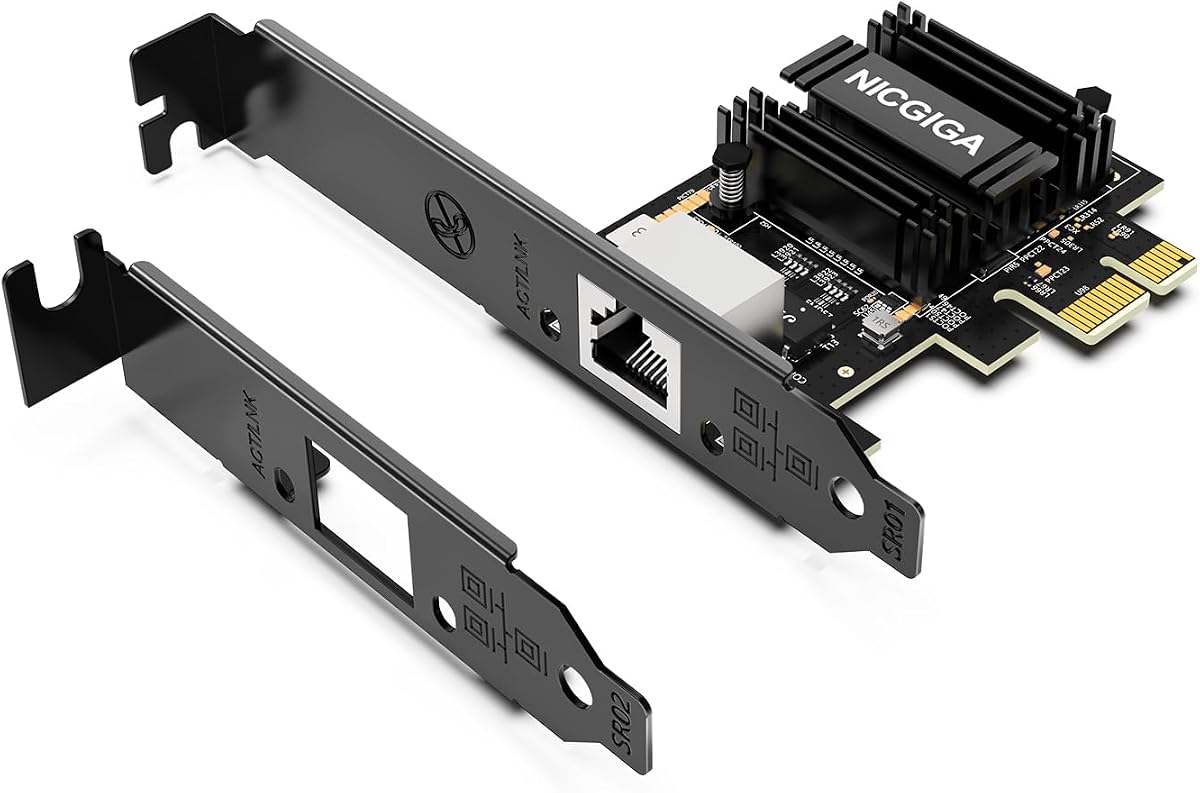
The NICGIGA card is optimized for compact systems utilizing a PCIe 4.0 x1 interface to deliver high speeds without occupying wide slots. It gets a high rating for its compatibility with Mini PCs and ITX builds where space is a premium constraint.
We may earn a commission when you buy through this link, at no additional cost to you.
It supports a wide range of network speeds from 10Gbps down to 100Mbps ensuring smooth compatibility with existing routers and switches. The Realtek RTL8127 controller is energy efficient and generates less heat than older chipsets.
While it fits in x1 slots users should ensure their system supports PCIe 4.0 for full performance. Linux support is good but older kernels might require manual driver compilation which can be tricky.
This is the top pick for mini workstation builds that need 10G networking. It balances performance and physical size better than most competitors on the market.
Using a single lane PCIe 4.0 slot leaves room for other cards like GPUs or capture devices.
We may earn a commission when you buy through this link, at no additional cost to you.
The VunLink card focuses on energy efficiency and modern speed support making it ideal for always-on NAS or server environments. It receives a high rating for its RTL8127AT chipset which balances speed with reduced heat output.
We may earn a commission when you buy through this link, at no additional cost to you.
It supports 10G/5G/2.5G/1G speeds with auto-negotiation ensuring you get the best connection possible with your current network equipment. The design includes both standard and low-profile brackets for broad case compatibility.
Users on older operating systems may need to install drivers manually but modern systems often support it plug-and-play. It is designed for efficiency so sustained loads should not cause overheating issues.
If you want a modern efficient card that handles multiple speed tiers well this VunLink model is a strong contender. It fits well in home labs and low-power setups.
Designed to consume less power than traditional cards helping lower overall electricity costs for always-on devices.
We may earn a commission when you buy through this link, at no additional cost to you.
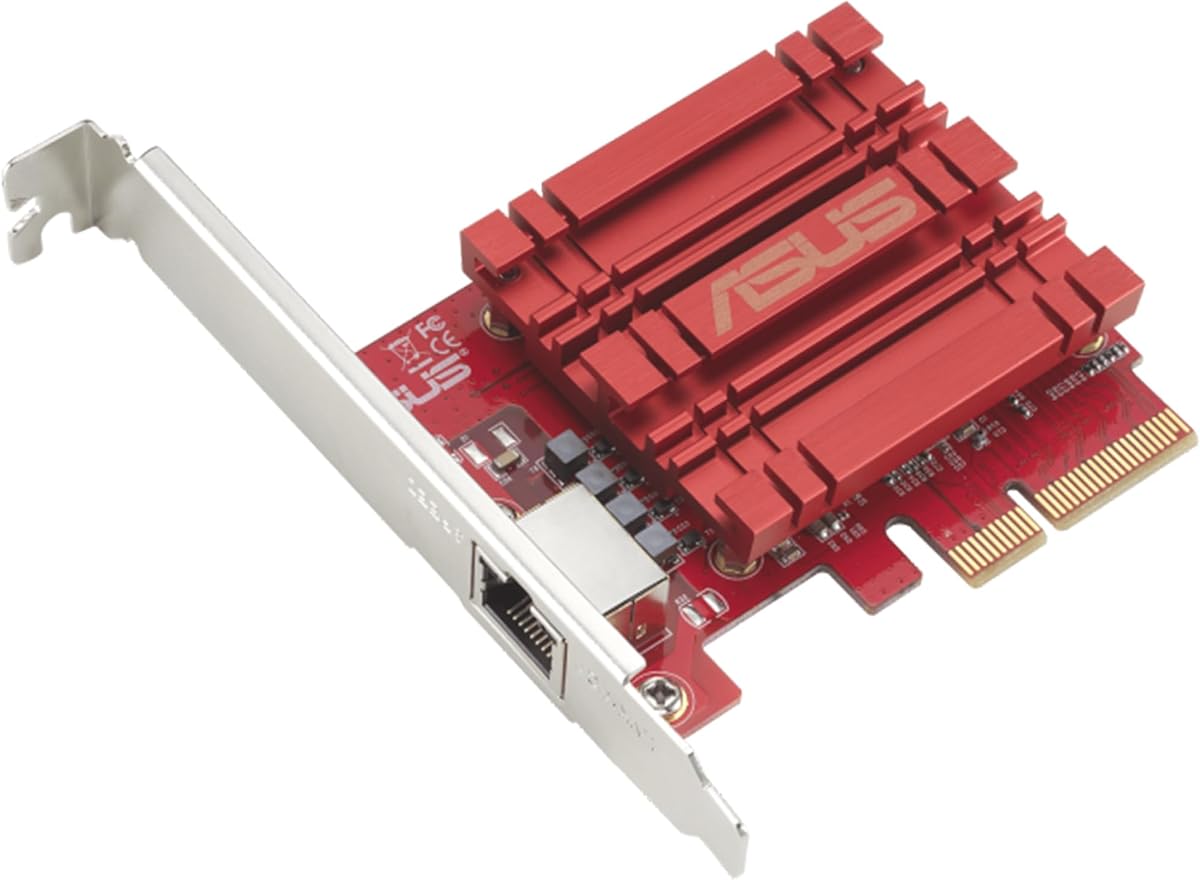
The Asus XG-C100F stands out with its SFP+ port allowing you to use fiber optics for long-distance or noise-free connections. It scores well for its robust aluminum heatsink that keeps the card cool during intense data transfers.
We may earn a commission when you buy through this link, at no additional cost to you.
Fiber optics carry signals much further than copper cables which is useful for connecting servers across rooms or buildings. The card also supports Direct-Attach copper for shorter runs without buying separate fiber.
The SFP+ transceiver is not included so you will need to purchase one separately adding to the cost. This can be confusing for first-time users looking for plug-and-play simplicity.
This card is best for advanced users needing fiber connectivity. If you need to run cables further than standard copper allows this Asus card delivers the right interface.
SFP+ port enables fiber optic cables for longer reach and immunity to electrical interference.
We may earn a commission when you buy through this link, at no additional cost to you.
The TRENDnet TEG-10GECTX offers specialized compliance with NDAA and TAA standards making it suitable for government and enterprise installations. It earns a good rating for its reliability and support for 2.5G and 5G speeds over standard cabling.
We may earn a commission when you buy through this link, at no additional cost to you.
Its PCIe 3.0 x4 interface provides stable bandwidth for full 10G performance. The 3-year manufacturer protection and responsive tech support add value for business users who need long-term reliability.
The single port design limits redundancy but the compliance features justify the choice for regulated environments. It is a safe bet for secure networks that require certified hardware.
This card is ideal for government or enterprise clients needing compliant hardware. If standard consumer gear is not enough this TRENDnet adapter meets stricter standards.
NDAA and TAA compliant ensures the card meets US government procurement requirements.
We may earn a commission when you buy through this link, at no additional cost to you.
The Cable Matters USB-C adapter offers a non-PCIe solution for users without open expansion slots. It receives a decent rating for its ability to provide wired 10G speeds on laptops and small devices that lack internal PCIe slots.
We may earn a commission when you buy through this link, at no additional cost to you.
Its RTL8159 controller focuses on low heat production which is critical for portable devices. It supports auto-negotiation for compatibility with various network speeds and works well with macOS and Windows.
Real-world speeds depend heavily on your USB-C port capabilities so verify your laptop supports USB 3.2 Gen 2×2 for best results. It is not as stable as internal cards but highly versatile for travel.
This adapter is perfect for laptops needing a wired upgrade. If you cannot install a PCIe card this portable option provides a reliable 10G connection via USB.
Compact design makes it easy to carry and use with laptops or desktops without internal slots.
We may earn a commission when you buy through this link, at no additional cost to you.
Selecting the right 10GB Ethernet Card requires understanding your hardware limits and networking needs. This guide outlines the essential factors to consider for a smooth upgrade.
The chipset inside the card determines stability and performance. Intel and Realtek controllers are common for their driver support and consistent throughput.
Always check reviews for your specific chipset to ensure it matches your OS and workload.
Decide if you need one or two ports. Dual ports allow for link aggregation or separate networks while single ports save cost.
If you want failover or higher total throughput choose a dual-port model.
Most cards use PCIe slots but USB-C adapters exist for laptops. Ensure your motherboard has a compatible PCIe lane for internal cards.
For laptops without slots look for USB 3.2 Gen 2×2 adapters.
Check if drivers are available for your specific OS version. Linux users should confirm kernel support before buying.
Windows 10 and 11 are generally well supported by major brands.
Measure your case space before buying. Low-profile brackets are essential for small form factor PCs.
Full-height brackets fit standard towers but may block GPU clearance.
For 10G speeds over copper you need Cat6a or Cat7 cables. Cheaper cables may not reach full speeds.
Look for packages that include a certified cable to save extra cost.
High-speed transfers generate heat. Cards with heatsinks run more stable during long downloads.
Avoid cards without cooling in enclosed cases.
A longer warranty indicates manufacturer confidence in the product. Look for at least a one or three year term.
Premium brands often offer longer support periods for enterprise use.
Power down your computer and open the case before installing the card. Insert it firmly into a matching PCIe slot and secure it with the screw provided to ensure a good connection.
Once installed boot your system and install any necessary drivers from the manufacturer website. Windows often detects the card automatically but custom drivers improve performance on Linux systems.
After setup connect your network using a certified Cat6a cable and check your link speed in system settings. Keep vents clear to prevent overheating during heavy file transfers.
Yes for reliable 10Gbps speeds over copper you should use Cat6a or Cat7 cables. Standard Cat5e or Cat6 may work for short distances but often cannot sustain full 10G speeds consistently.
The card will automatically negotiate down to the speed your router supports. You will still have gigabit connectivity even if your router does not support 10G speeds yet.
Yes a PCIe 3.0 x1 slot provides enough bandwidth for full 10G speeds. Higher versions like PCIe 4.0 provide more headroom but 3.0 is sufficient for most users.
Yes but gaming on public internet usually does not require 10G speed. The main benefit is local network transfers like streaming large files to a media server.
No these cards work with standard desktop Windows and Linux versions. Server operating systems are only needed if you plan to run specialized server roles like NAS.
You can keep your internal card and use the new one for specific high-speed tasks. Most modern systems allow multiple active network adapters simultaneously.
You will need a USB-C to Ethernet adapter that supports 10G speeds. Ensure your laptop port supports USB 3.2 Gen 2×2 for best performance.
We found the TP-Link TX401 offers the best balance of ease of use and performance for most desktop users. For those needing dual ports the VIMIN and 10Gtek models provide excellent value.
When choosing prioritize chipset reliability and physical size to match your case. Ensure your router and cables support the speeds you intend to use for optimal performance.
Prices for these adapters fluctuate often so verify current listings before purchasing. Always check that your system meets the hardware requirements before buying.