
Luster Leaf 1625 Digital Soil Thermometer
4.2Editor score
Simple digital temperature reading
Ideal for early season planting
Affordable and reliable tool
This guide compares ten top-rated digital soil thermometer models to help gardeners and farmers find the most accurate tool for monitoring soil conditions
Choosing the right digital soil thermometer is essential for any gardener who wants to ensure their plants receive optimal care. These devices provide precise readings of soil temperature, which directly impacts seed germination and root development. Without accurate data, you might plant too early or too late, leading to stunted growth or crop failure.
We evaluated ten distinct digital soil thermometer models based on accuracy, durability, ease of use, and additional features like moisture or pH sensing. Our analysis focuses on real-world performance in both indoor and outdoor settings. We considered user feedback and technical specifications to determine which tools offer the best value for different gardening needs.
Each product selection below highlights specific strengths and ideal use cases for various types of growers. Whether you are managing a small indoor herb garden or a large outdoor farm, there is a model here that fits your requirements. Please note that prices and availability can change frequently, so check current listings before purchasing.
4.2Editor score

4.2Editor score

4.2Editor score
This table provides a side-by-side comparison of all ten selected digital soil thermometer models. It highlights key specifications such as probe length, display type, and additional sensing capabilities to help you make an informed decision quickly.




The YAMRON 4-in-1 Soil Moisture Meter is a versatile tool designed to provide comprehensive soil health data. With a rating of 4.2 stars, it stands out for its ability to measure moisture, pH, temperature, and sunlight simultaneously. This multifunctional approach helps growers make informed decisions about plant care without needing multiple devices.
We may earn a commission when you buy through this link, at no additional cost to you.
Its standout feature is the large LCD screen with a white backlight, ensuring readability in any lighting condition. The 45-degree rotating head design allows users to view data without bending over, which is particularly helpful for gardeners with physical limitations. The probe technology ensures quick and accurate readings after a brief wait time.
While the device offers extensive functionality, it does require four AAA batteries which are not included. Additionally, it is not designed for testing liquids directly, so care must be taken when using it in wet conditions. These trade-offs are acceptable given the breadth of data it provides for a single price point.
This model is ideal for home gardeners who want an all-in-one solution for plant health monitoring. It is perfect for those who manage both indoor potted plants and outdoor garden beds. For anyone seeking a reliable digital soil thermometer with added features, the YAMRON 4-in-1 is a strong recommendation.
The four-in-one sensor provides a complete picture of soil conditions including acidity and light levels. This holistic view helps users adjust watering and fertilization schedules more effectively.
The rotating head and large backlighted screen make reading data effortless even in low light or awkward positions. This ergonomic design reduces physical strain during daily gardening tasks.
We may earn a commission when you buy through this link, at no additional cost to you.
The Luster Leaf 1625 Digital Soil Thermometer is a straightforward tool focused on delivering accurate temperature readings. It has earned a 4.2-star rating for its reliability and ease of use. This model is specifically designed to help gardeners determine the right time for planting and transplanting based on soil temperature.
We may earn a commission when you buy through this link, at no additional cost to you.
Its primary strength lies in its simplicity and affordability. Unlike complex multi-function devices, this thermometer does one job well: measuring soil temperature. This makes it an excellent choice for beginners or those who only need temperature data without extra features. The digital display ensures clear and quick readings.
The trade-off is the lack of additional capabilities like moisture or pH sensing. Users will need separate tools if they want to monitor other soil conditions. However, for the specific task of temperature checking, this device performs consistently well without unnecessary complexity.
This thermometer is perfect for gardeners on a budget who need a reliable way to check soil warmth. It is particularly useful for early season planting and transplanting tasks. If your primary concern is ensuring soil is warm enough for seeds or seedlings, the Luster Leaf 1625 is the best budget option.
This device specializes in temperature measurement to avoid confusion and extra costs associated with multi-function devices. Simplicity is the key value proposition for users who only need heat data.
Priced lower than most competitors, this thermometer offers significant value for those seeking basic temperature monitoring. It removes the barrier to entry for gardeners new to soil measurement tools.
We may earn a commission when you buy through this link, at no additional cost to you.
The Moisture Meter for Plants 7-in-1 Digital Soil Tester Kit is a highly advanced tool for serious growers. With a 4.4-star rating, it offers seven distinct measurement functions including moisture, pH, temperature, and fertility. This comprehensive data collection allows for precise control over plant growing conditions.
We may earn a commission when you buy through this link, at no additional cost to you.
Its key strength is the integration of fertility and TDS functions, which help users understand soil nutrient levels beyond simple moisture content. The large backlit screen ensures data is visible even in dim lighting. The probe technology delivers fast and accurate results for both indoor and outdoor environments.
The main trade-off is the complexity and cost compared to simpler thermometers. It may be overwhelming for casual gardeners who only need basic temperature readings. Additionally, maintaining accuracy requires regular care and calibration. Despite this, the depth of data provided is unmatched in this price range.
This kit is best for enthusiasts or professionals who need detailed soil data to optimize plant health. It is ideal for users managing a variety of plants with different nutrient needs. If you want to go beyond simple temperature checks, this seven-in-one kit offers superior insights.
The fertility and TDS functions allow users to assess soil nutrient content and water quality. This helps in preventing over-fertilization and ensuring plants receive adequate nutrients.
Using the latest probe technology, this device provides accurate measurements across all seven parameters. This reliability makes it suitable for serious horticultural applications.
We may earn a commission when you buy through this link, at no additional cost to you.
The Reotemp K83B1 12 Inch Soil & Compost Thermometer is designed specifically for composting enthusiasts. With a high rating of 4.7 stars, it is praised for its durability and accuracy in monitoring compost pile temperatures. It includes a free digital composting guide to help beginners get started effectively.
We may earn a commission when you buy through this link, at no additional cost to you.
Its primary strength is the twelve-inch stainless steel stem, which penetrates deep into compost bins or soil for accurate readings. The corrosion-resistant case and waterproof design ensure it withstands the moist and abrasive environment of a compost pile. It works in both Fahrenheit and Celsius scales.
The trade-off is that it uses an analog display rather than a digital screen, which some users might prefer for quick digital readouts. It is also specialized for composting, so it may not be the best choice for general soil temperature measurement. However, for compost management, it excels.
This thermometer is ideal for anyone serious about composting who needs to monitor heat levels for efficient decomposition. It is perfect for backyard composters and small farm operations. If you want to optimize your compost production, the Reotemp K83B1 is the top recommendation.
Monitoring compost temperature is crucial for breaking down material quickly and killing pathogens. This device helps users track the heat cycles needed for effective composting.
The stainless steel construction and waterproof case allow this thermometer to last through harsh compost environments. It resists corrosion and physical damage better than standard soil probes.
We may earn a commission when you buy through this link, at no additional cost to you.
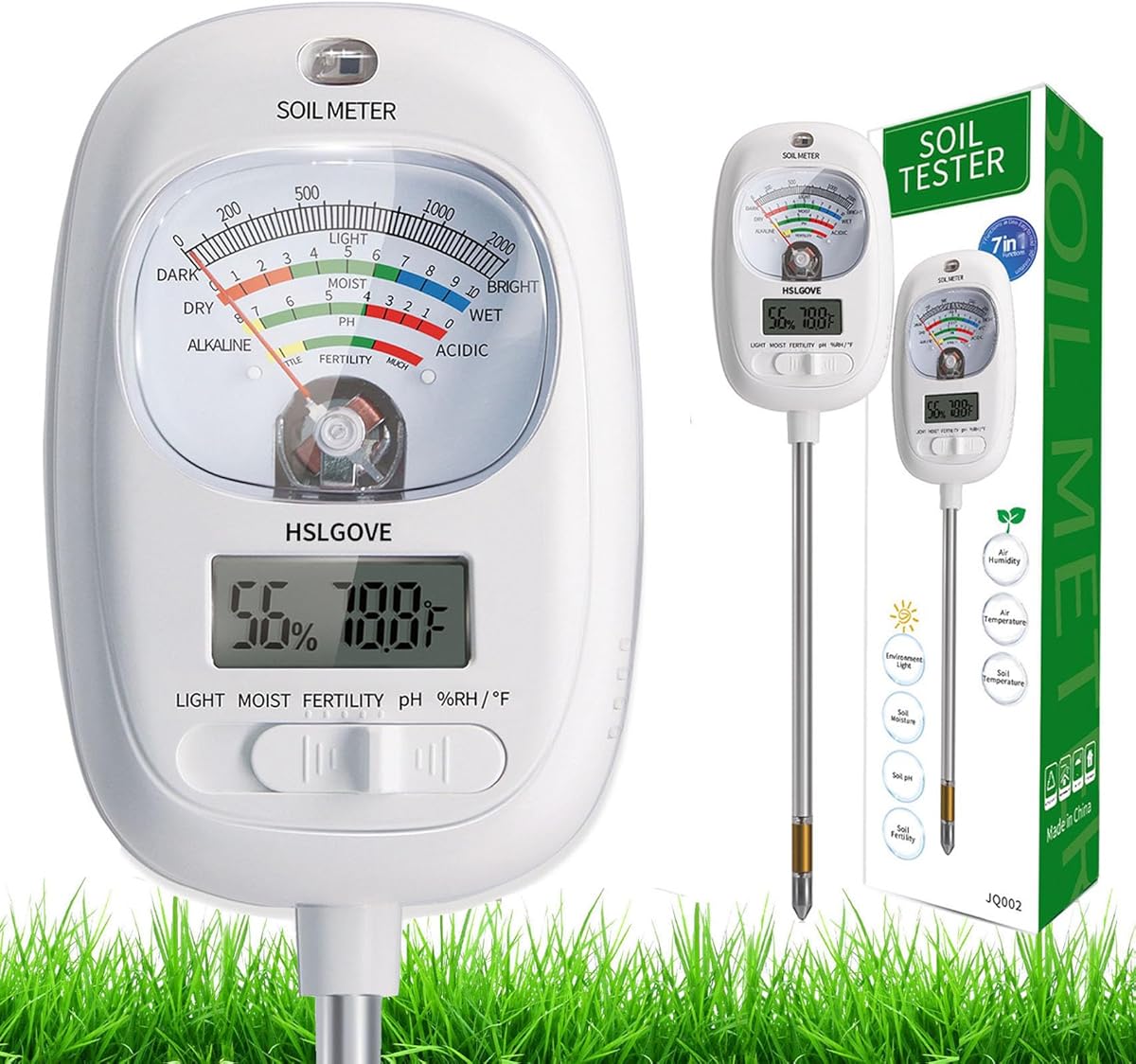
The HSLGOVE Soil Test Kit is a comprehensive seven-in-one device designed to provide extensive gardening data. It features a unique dual-screen design that allows simultaneous monitoring of soil and air conditions. With a 4.4-star rating, it is well-regarded for its versatility in both indoor and outdoor settings.
We may earn a commission when you buy through this link, at no additional cost to you.
Its key benefit is the ability to measure air temperature and humidity alongside soil metrics. This helps users understand the full growing environment, which is crucial for sensitive plants and seedlings. The patented dual-dial design provides clear visual access to data without switching modes frequently.
One trade-off is the requirement for three batteries and a slight learning curve to switch between functions. The probe is six point eight inches, which is suitable for medium to large potted plants but might not reach deep garden beds. Despite this, it offers excellent value for its range of features.
This kit is ideal for gardeners who want to monitor microclimates alongside soil health. It is perfect for indoor plant enthusiasts and seedling growers. If you need both soil and air data in one device, the HSLGOVE Soil Test Kit is a great choice.
Knowing air temperature and humidity helps you create optimal conditions for seedlings and indoor plants. This data complements soil readings for holistic plant care.
The dual dial design reduces the need to toggle buttons repeatedly. You can view moisture and temperature at a glance for quick decision making.
We may earn a commission when you buy through this link, at no additional cost to you.
The Urban Worm Soil Thermometer is a specialized tool designed for worm composting and general gardening. It has a 4.6-star rating for its simplicity and clarity. The five-inch stainless steel stem is perfect for penetrating worm bins and small soil areas to measure temperature accurately.
We may earn a commission when you buy through this link, at no additional cost to you.
Its standout feature is the color-coded tick marks that indicate optimal temperature ranges for worms. This makes it incredibly easy to monitor without interpreting numbers. If the temperature is in the green zone, the worms are happy, while red indicates they need cooling or warming.
The trade-off is that it is analog and lacks digital precision or connectivity. It is not meant for general digital temperature readings but rather for visual temperature checks. However, for its intended purpose, it is highly effective and durable against moisture and soil.
This thermometer is best for vermicomposting enthusiasts who need to maintain specific worm-friendly temperatures. It is also useful for small garden patches. If you are managing a worm bin and want a quick visual check, the Urban Worm Soil Thermometer is the ideal tool.
Color-coded zones remove the need for reading specific numbers. You can instantly tell if the environment is safe for worms at a glance.
Worms thrive within a specific temperature range, and this device helps keep them there. Maintaining this range ensures healthy decomposition and reduces mortality.
We may earn a commission when you buy through this link, at no additional cost to you.
The ECOWITT WN34BS Soil Temperature Sensor is a premium device for remote and automated monitoring. With a 4.2-star rating, it stands out for its ability to transmit data wirelessly to a gateway or app. This allows users to check soil temperature from anywhere using a smartphone or computer.
We may earn a commission when you buy through this link, at no additional cost to you.
Its key strength is the IP65 waterproof design and wireless transmission capabilities. You can leave the sensor in the soil for long-term monitoring and receive alerts if temperatures drop dangerously. The eleven-point-eight-inch probe ensures deep soil measurement for accurate readings in garden beds.
The trade-off is that it requires a separate Wi-Fi gateway to function fully, which adds to the initial cost. It is not a standalone thermometer but part of a larger ecosystem. However, for tech-savvy gardeners, the convenience of remote data is invaluable.
This sensor is ideal for farmers or large garden owners who need to monitor multiple locations. It is perfect for greenhouse management or frost protection systems. If you want to track soil temperature remotely and set alerts, the ECOWITT WN34BS is the best premium choice.
The device integrates with weather apps to provide live data and historical graphs. This helps users analyze trends over time for better planting decisions.
Email alerts notify you when temperatures drop, allowing you to protect plants before damage occurs. This automation reduces the need for manual checks during cold weather.
We may earn a commission when you buy through this link, at no additional cost to you.
The Digital Soil EC Meter is a specialized tool designed to measure electrical conductivity and soil temperature. With a 4.1-star rating, it helps users determine salt content and nutrient levels in the soil. This data is critical for preventing over-fertilization and ensuring healthy root growth.
We may earn a commission when you buy through this link, at no additional cost to you.
Its main advantage is the automatic temperature compensation and IP67 waterproof electrode. The corded sensor allows for precise placement without damaging the device. The backlight LCD screen ensures clear readings even in low light, and the device is designed for professional use.
The trade-off is that it focuses solely on EC and temperature, ignoring moisture or pH. It also requires calibration solutions to maintain accuracy. For general gardeners, this might be too specialized, but for those managing nutrient schedules, it is essential.
This meter is best for professional growers or hydroponic users who need precise nutrient data. It is ideal for managing fertilizer application to avoid salt buildup. If you need to monitor soil health at a chemical level, this EC meter is highly recommended.
Electrical conductivity reflects dissolved salts which can indicate nutrient availability or toxicity. Monitoring this helps optimize feeding schedules for better yields.
The IP67 rating and corded design make this tool durable for frequent professional use. It can withstand harsh field conditions better than standard plastic meters.
We may earn a commission when you buy through this link, at no additional cost to you.
The 4-in-1 EDGEVEIL Soil Moisture Meter is a wireless system that allows you to monitor plants from a distance. With a 4.5-star rating, it features a main display that can connect to up to twelve sensors. This makes it ideal for managing large collections of plants without walking around constantly.
We may earn a commission when you buy through this link, at no additional cost to you.
Its key strength is the triple-probe TDR sensor which provides stable and consistent moisture readings. The wireless range of up to 328 feet lets you check conditions from your couch or office. It also measures temperature, light, and moisture on a single large screen.
The trade-off is the higher cost and complexity compared to standard meters. You need to purchase multiple sensors to utilize its full potential. However, for those managing many plants, the convenience of centralized monitoring is unmatched in the market.
This system is perfect for home gardeners with extensive indoor and outdoor collections. It is ideal for people who want to check plants without moving around. If you want a smart and scalable solution for plant monitoring, the EDGEVEIL system is the best choice.
Connecting multiple sensors to one display saves time and effort. You can see the health of your entire garden on one screen in real-time.
The triple-probe TDR sensor provides stable readings compared to single-probe meters. This reduces errors caused by soil inconsistencies or sensor placement.
We may earn a commission when you buy through this link, at no additional cost to you.
The 7-in-1 Digital Soil Meter is a heavy-duty tool designed for comprehensive environmental testing. It measures pH, sunlight, fertility, and temperature, along with air humidity. While it has a slightly lower rating of 3.9 stars, it offers a five-probe system for enhanced data precision.
We may earn a commission when you buy through this link, at no additional cost to you.
Its key benefit is the split HD display which allows easy reading without bending down. The corrosion-resistant materials ensure durability in tough soil conditions. It also supports expandable probes for distributed monitoring across large areas like farms or greenhouses.
The trade-off is the bulkiness and lower user satisfaction compared to more refined competitors. It may be overwhelming for simple tasks. However, for those needing robust and expandable systems, it provides the necessary hardware and features to manage large scale planting.
This meter is best for large garden owners or commercial growers needing distributed monitoring. It is ideal for users who want to expand their sensor network. If you need a durable and comprehensive tool for large areas, the 7-in-1 Digital Soil Meter is a solid option.
The ability to add probes allows you to track soil conditions across large plots. This is vital for uniform crop management in commercial settings.
The split display shows key metrics side by side for quick reference. This design minimizes physical strain during frequent soil checks in the field.
We may earn a commission when you buy through this link, at no additional cost to you.
Selecting the right digital soil thermometer requires understanding your specific gardening needs. This guide outlines the key factors that distinguish different models and helps you find the perfect fit.
Determine whether you need a simple thermometer or a multi-function device. Basic models measure only temperature, while advanced kits include moisture, pH, light, and fertility sensors. Multi-function devices reduce the need for multiple tools but are often more expensive.
Choose a single-parameter tool for budget and simplicity or a multi-sensor kit for comprehensive soil health analysis.
Look for large LCD screens with backlighting for easy reading in various lighting conditions. Some models feature rotating heads or split screens to improve ergonomics. Clear displays reduce eye strain and ensure accurate data recording.
Prioritize models with large, backlit displays if you plan to use the device frequently in low light.
Check the material of the probe to ensure it resists corrosion and moisture. Stainless steel probes are generally more durable than plastic ones. Waterproof ratings like IP65 or IP67 indicate resistance to harsh outdoor environments.
Select a device with a stainless steel probe and high waterproof rating for long-term durability.
Advanced models offer wireless transmission and remote monitoring capabilities. These are useful for tracking soil temperature over time without visiting the site. Wireless systems often require a gateway or app setup.
Consider wireless models if you need remote alerts or data logging for frost protection.
Simple interfaces with clear mode buttons make testing faster and easier. Avoid overly complex menus if you need quick results. Some devices allow data averages or multiple spot readings automatically.
Opt for intuitive interfaces that let you get readings within seconds of insertion.
Check the battery requirements and expected lifespan. Some devices use standard AAA batteries which are easy to replace. Others may have rechargeable batteries or low-battery alerts to prevent interruption.
Choose a model with accessible battery options to ensure you can keep it working when needed.
Set a budget that matches your gardening scale. Basic thermometers are affordable and sufficient for simple planting. Multi-function kits cost more but offer better value for serious growers.
Balance cost against features to find a device that meets your needs without overspending.
Consider whether you will use the device indoors or outdoors. Indoor models may be smaller and less robust. Outdoor models need higher durability and waterproofing to survive rain and soil.
Ensure the device is rated for your specific environment to prevent damage or inaccurate readings.
Insert the probe into the soil to the recommended depth, typically 4 to 6 inches, and wait for the reading to stabilize. Avoid pushing the probe into hard, dry soil as this may damage the sensor.
Clean the probe after each use to remove dirt and debris. Wipe it with a soft cloth and store it in a dry place to prevent corrosion. Regular cleaning ensures consistent and accurate measurements over time.
Replace batteries when the device signals low power to avoid data loss. For models with waterproof features, rinse them gently after use in muddy conditions but avoid submerging electronic components unless specified.
A digital soil thermometer ensures you plant at the right temperature for germination and growth. It helps prevent frost damage and informs decisions on watering and transplanting. Accurate temperature data leads to healthier plants and better yields.
Most probes should be inserted about 4 to 6 inches deep for accurate root zone temperature. This depth avoids surface temperature fluctuations caused by weather or sunlight. Always follow the manufacturer's specific instructions for your model.
Most soil thermometers are not designed for direct liquid testing unless specified. Submerging them may damage the sensors or electronics. Some waterproof models can handle brief exposure but not full immersion.
Calibration frequency depends on usage but should be done at least once a season. Use the provided calibration solution to check accuracy. Regular calibration ensures your readings remain reliable for planting schedules.
Check soil temperature in the morning before the sun heats the surface. This gives the most accurate representation of root zone conditions. Consistent timing helps track trends accurately over time.
Yes, many digital soil thermometers are designed for both indoor and outdoor use. Ensure the model you choose supports your specific planting setup. Indoor models tend to be smaller and easier to handle.
The YAMRON 4-in-1 and ECOWITT WN34BS stand out as top choices for overall versatility and wireless monitoring respectively. These models provide essential features for both casual gardeners and serious enthusiasts.
Prioritize durability and display readability to ensure your tool lasts and serves you well. For simple temperature checks, budget-friendly options like the Luster Leaf 1625 are sufficient for your needs.
Always check current prices and availability before purchasing to get the best deal. Our guide helps narrow down options so you can choose confidently for your gardening journey.